























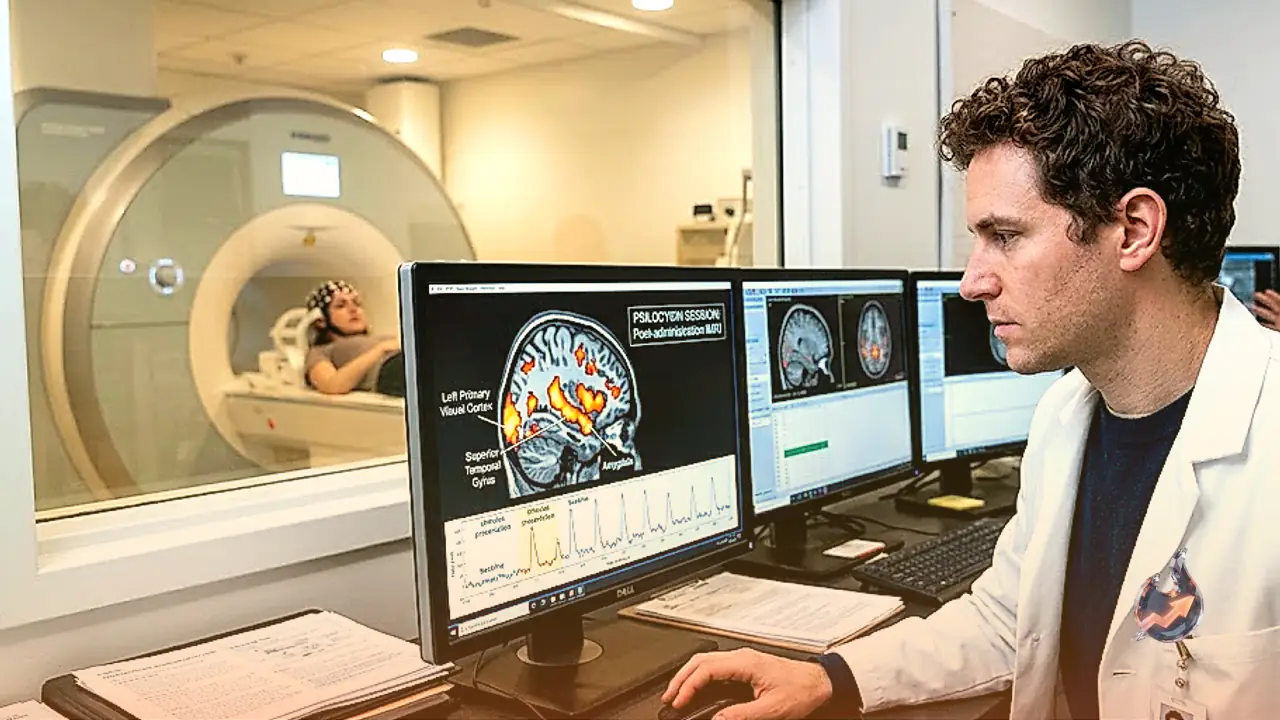

In one of the largest neuroimaging studies conducted on the effects of psilocybin, researchers have uncovered a hidden order within apparent neural chaos. Published in the journal Nature, the research indicates that while psilocybin blurs certain boundaries inside the brain, our neurological reactions to what we experience in that exact moment actually become much more distinct and clear.
The research team tracked moment-by-moment changes across 332 distinct regions of the brain using functional magnetic resonance imaging alongside electroencephalography, which are two established methods for measuring brain activity. The study involved 62 participants who possessed no prior experience with psychedelics. Each participant ingested 19 milligrams of psilocybin via an oral capsule before engaging in activities such as meditating, listening to music, or watching a movie.
Utilizing artificial intelligence tools, the researchers successfully identified specific neural patterns corresponding to each activity the participants undertook. Surprisingly, the intensity of the psilocybin experience directly correlated with the clarity of those neural signals. Rather than becoming lost within an increasingly unpredictable and erratic trip, the participants' brains seemed to register reality by leaving a far more distinct imprint.
These compelling findings manifested not only in biological measurements but also in the personal accounts shared by the participants themselves. Individuals who exhibited the most defined patterns of brain activity frequently described experiencing profound levels of immersion and unity with their surrounding world, noting that boundaries separating themselves from their environment occasionally felt completely blurred.
Devon Stoliker, the lead author of the study and a researcher at Monash University's School of Psychological Sciences in Melbourne, Australia, explained that under psilocybin, brain networks processing our inner world and the external environment become less distinct yet reorganize into structured patterns reflecting actual experiences.
Beyond offering a biological explanation for the intense sense of oneness frequently reported during psychedelic experiences, these findings introduce crucial nuance to the prevailing assumption that psilocybin merely induces neurological chaos. Such a refined understanding holds immense importance for the rapidly emerging field of psychedelic therapy.
Adeel Razi, a professor at Monash University and senior author of the study, emphasized in a press release that context serves as far more than mere background during a psychedelic experience. For clinical treatment, this reinforces why the surrounding environment and patient activities during a session truly matter.