























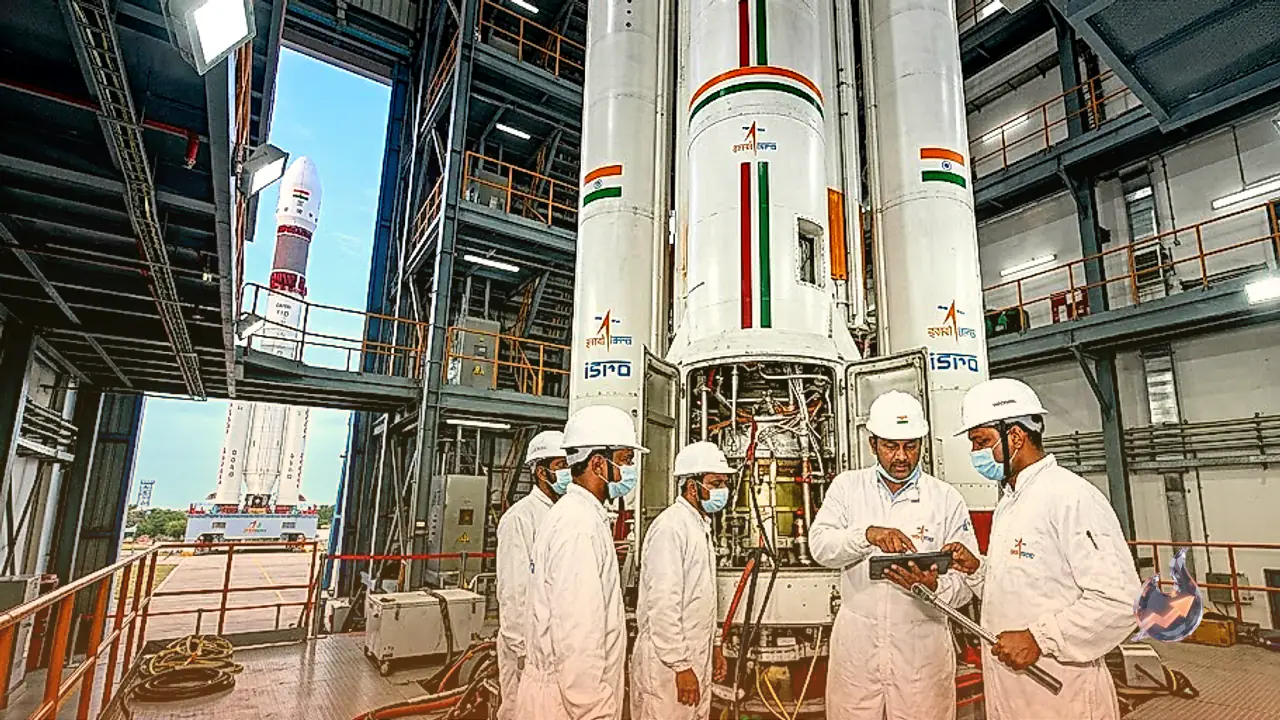

The Indian Space Research Organisation is gearing up to launch its state-of-the-art Earth observation satellite named EOS-05 into space. This critical mission will be carried into orbit aboard the GSLV-F17 rocket, marking another major milestone for the national space agency. The lift-off is scheduled to take place from the Satish Dhawan Space Centre in Sriharikota at 02:55 AM on September 4. To ensure flawless execution of the launch sequence, a rigorous 27-hour countdown has already commenced, drawing intense attention from scientists and space enthusiasts across the nation.
First Imaging Satellite to Enter Geosynchronous Orbit
This upcoming mission holds exceptional significance for India as EOS-05 is set to become the country's very first imaging satellite to be permanently positioned in a geosynchronous orbit. All eyes are firmly locked on ISRO's towering 51.7-meter-tall rocket, which is affectionately nicknamed the naughty boy within scientific circles. Following a few setbacks and mixed outcomes in some of its past missions, the space agency is banking heavily on this particular launch to stage a resounding comeback. Experts in aerospace technology believe that this satellite is destined to be a absolute game changer when it comes to disaster management and precise weather forecasting across the region.
Understanding the Advantage of Geosynchronous Orbit
Conventional satellites generally maintain a continuous orbit around the Earth, which prevents them from keeping a constant, uninterrupted watch over any single specific geographic location. In contrast, the primary advantage of a geosynchronous orbit is that the stationed spacecraft remains locked onto a remarkably large area at all times. EOS-05 will operate directly on this advanced technological principle, allowing it to maintain an unbroken vigil over India and its surrounding territories. This persistent monitoring capability will generate highly accurate and timely data concerning shifting weather patterns and critical agricultural developments.
The Fascinating Story Behind the Naughty Boy Nickname
The GSLV rocket earned its popular naughty boy moniker due to a somewhat turbulent historical track record during its early operational phases. During its initial developmental flights, the vehicle encountered multiple technical hurdles and setbacks, resulting in six out of its first eighteen missions failing to achieve complete success. However, Indian space scientists have subsequently implemented sweeping technological refinements and rigorous upgrades to dramatically improve its reliability. This powerful launch vehicle is tasked with successfully placing a heavy satellite weighing 2,367 kilograms safely into its designated orbital slot. Live coverage of the launch sequence can be streamed directly via ISRO's official platform, while further technical updates and details are published on ISRO's official website.
Revolutionizing Disaster Management from Space
The newly minted satellite is exceptionally proficient at transmitting real-time data feeds, a capability that will prove invaluable during emergency situations and natural calamities. Former ISRO scientist Dr. B.R. Guruprasad elaborated on the immense utility of the mission, noting that the satellite will maintain a constant watch over the Earth from an astonishing altitude of 30,000 kilometers. By providing an uninterrupted vantage point from such a vast distance, the spacecraft will enable authorities to detect early warning signs of impending floods, cyclones, or other severe natural disasters, thereby significantly mitigating potential loss of life and property.
Overcoming Past Hurdles to Reclaim Momentum
A series of operational challenges encountered over the past several months has transformed this launch into a vital prestige mission for ISRO. Back in January, a PSLV mission experienced complications that left its satellite stranded short of its correct orbital path, while some earlier flights had suffered anomalies linked to motor pressure irregularities. Now, the agency is determined to leverage the capabilities of its trusted heavy-lift rocket to firmly regain its lost momentum and reassert its technological prowess on the global stage.
Engineering Brilliance of the Seventeen-Storey Launch Vehicle
Standing approximately seventeen storeys tall, the GSLV-F17 stands proudly as one of India's tallest and most formidable rocket systems. Its complex architecture incorporates a seamless blend of solid, liquid, and cryogenic propulsion technologies, meticulously perfected by scientists through decades of intensive indigenous research. During its flight profile, the rocket will initially carry the satellite into a sub-geosynchronous transfer orbit, after which the spacecraft will utilize its own onboard thrusters to maneuver into its final operational position.