























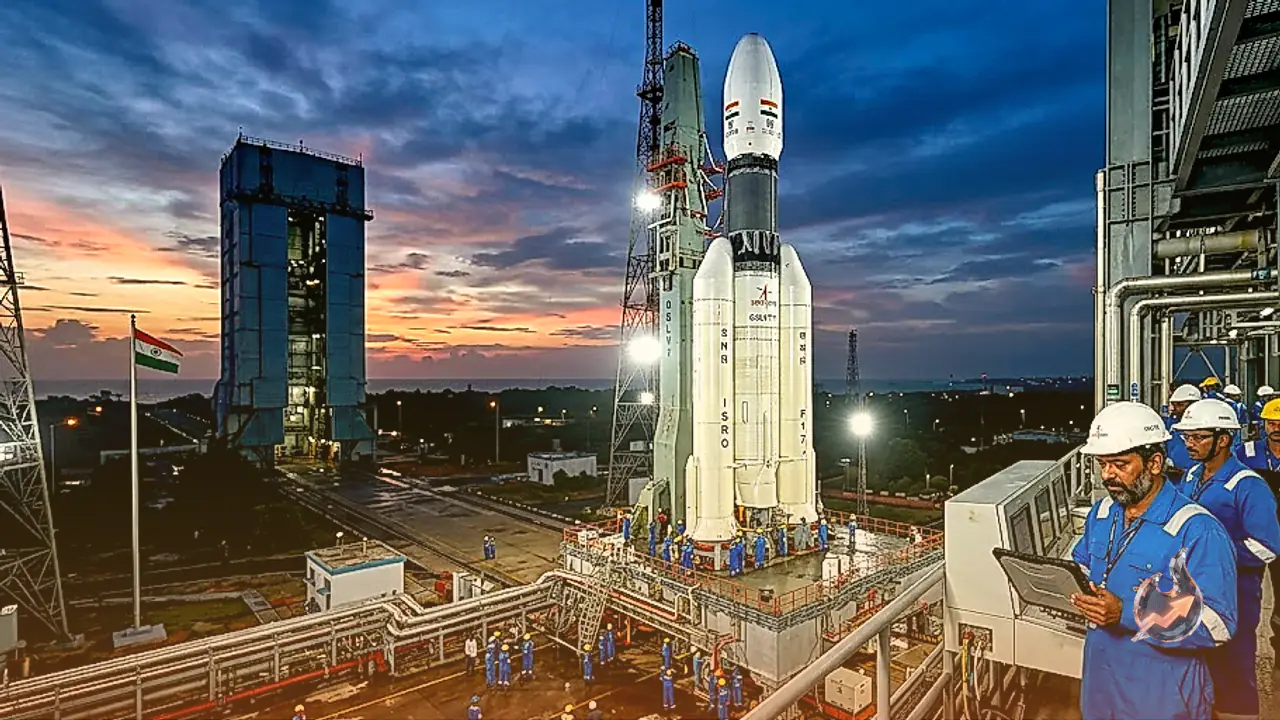

A major chapter is set to be added to India's space program as the Indian Space Research Organisation prepares for a landmark launch. The nation's first geo-imaging satellite is ready to embark on its space journey, carrying the mission designation GSLV-F17 / EOS-05.
Liftoff from Sriharikota
The upcoming mission will blast off from the second launch pad at the Satish Dhawan Space Centre in Sriharikota, Andhra Pradesh. Union Minister Jitendra Singh shared the update on the social media platform X, confirming that the mission is scheduled for lift-off on September 4 at 02:55 AM IST. In the dead of night, India's powerful rocket will pierce through the skies in a remarkable display of engineering.
Understanding the EOS-05 Satellite
The EOS-05 is a highly sophisticated Earth observation spacecraft, heralded as the country's first imaging satellite operating from a geosynchronous orbit. In the scientific community, it is also known as GISAT-1A. This heavy-duty satellite weighs approximately 2367 kilograms, marking the 19th flight of the GSLV rocket.
Strategic Value for Agriculture and Security
The spacecraft will deliver near real-time and high-resolution imagery of the Indian subcontinent. This capability will significantly enhance the monitoring of natural disasters. Furthermore, the data generated by the satellite will prove to be a game-changer for the agricultural sector and national security.
How Public Viewers Can Watch Live
For space enthusiasts and the general public, ISRO has established a special viewing facility known as the Launch View Gallery, located at the space center in Sriharikota. Those wishing to witness the launch up close can complete an online registration process by visiting the official website of the Satish Dhawan Space Centre.
Individuals unable to travel to the site can still watch the event from home. The live telecast will begin on ISRO's YouTube channel starting at 02:25 AM on September 4, allowing global audiences to witness the historic launch.
Rocket Technology and Launch Mechanics
The mission utilizes the GSLV-F17 rocket, featuring a payload fairing with a four-meter diameter ogive version built using advanced composite technology. This robust vehicle will place the satellite directly into a sub-geosynchronous transfer orbit. The success of this flight will further bolster ISRO's impressive operational track record.