



















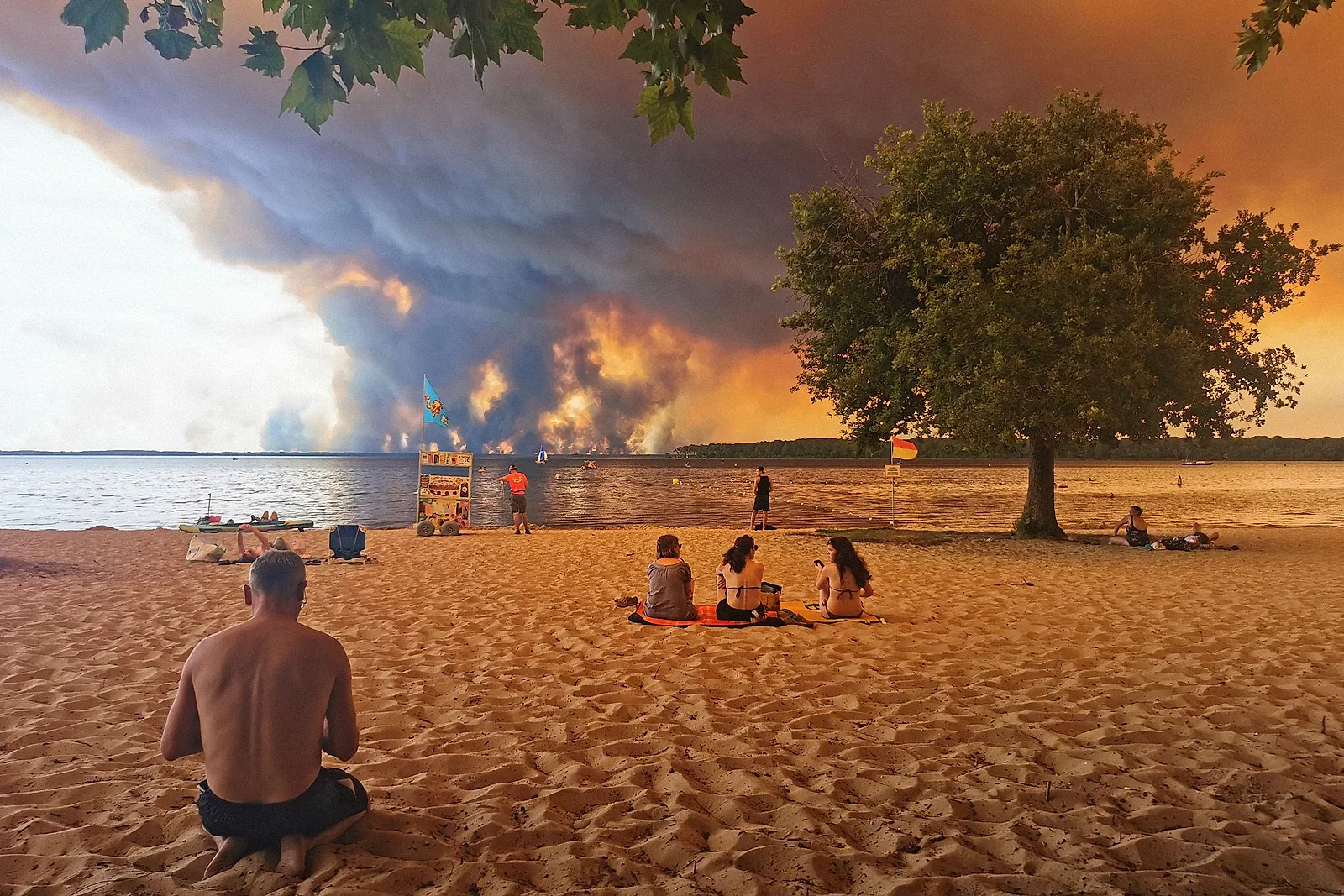

Catastrophic wildfires burning across Western Europe have forced hundreds of thousands of people to evacuate their homes in France and Spain. Beyond the destructive blazes on the ground, emergency responders and meteorologists are witnessing an extraordinary atmospheric event in French airspace: the nation's first recorded pyrocumulonimbus cloud, created directly by the intense thermal energy of the infernos.
Understanding the Science of Fire Clouds
Meteorologists refer to these rare atmospheric formations as pyrocumulonimbus or cumulonimbus flammagenitus. The creation of a fire cloud requires extreme surface heat combined with dry ground conditions and cool, relatively moist air higher in the atmosphere. As superheated smoke ascends miles above the raging flames into the chilly upper air, water vapor condenses around suspended ash particles to form liquid droplets. As the ascending air column continues its upward movement, these droplets freeze into ice crystals.
Despite taking the form of massive clouds, pyrocumulonimbus structures offer virtually no moisture relief to the parched land below. Instead, these violent weather systems generate dangerous lightning strikes that can trigger secondary blazes miles away. They also produce intense downdrafts that surge downward to accelerate ground flames, and in extreme scenarios, fire clouds can even generate localized tornadoes.
Unprecedented Wildfire Destruction Across France
While pyrocumulonimbus clouds have previously been recorded in countries like the United States, Canada, and Australia, they had never been documented in France until this outbreak. Although France regularly experiences summer fires, the overall magnitude and violence of this season's blazes far exceed historic norms.
Data from the European Forest Fire Information System reveals that last week marked the single most destructive week for French wildfires in the past 20 years, based on reliable satellite tracking. The destroyed area during this single week more than doubled the previous weekly record set over the last two decades. So far this season, wildfires have scorched more than 220,000 acres across France, a figure that is six times the annual average and 61,000 acres higher than the previous annual record high.
Describing the terrifying conditions faced by crews on the frontlines, a spokesperson for the French firefighter association stated that firefighters were facing an operational impossibility, calling the blazes a natural force beyond our control.
Climate Change and Rising Global Fire Risks
The alarming fire activity in France reflects a broader global trend driven by climate change. The continuous burning of fossil fuels has elevated global temperatures, causing explosive forest fires to become increasingly frequent and severe around the world. A 2024 scientific study revealed that the global incidence of extreme wildfires more than doubled between 2003 and 2023. Furthermore, six of the seven most extreme fire years recorded during that two-decade span occurred after 2016.
Extreme Heat Forecast to Intensify
Following a brief weekend relief when temperatures temporarily moderated, weather conditions are expected to deteriorate quickly. Temperatures are projected to surge back above 104 degrees Fahrenheit (40 degrees Celsius) in France and hit 108 degrees Fahrenheit in Spain later this week. These scorching temperatures mean emergency personnel must brace for further extreme fire weather, including the renewed threat of clouds generated by the fires themselves.