






















Plastic waste has turned into a massive peril for our planet, refusing to decompose easily while posing continuous health hazards. Addressing this profound crisis, scientists at Southern Illinois University have achieved a remarkable breakthrough. Under a project supported by NASA, these researchers have successfully transformed common plastic and agricultural refuse into edible, palatable 3D-printed cookies. This innovative process harnesses the power of yeast, which converts plastic compounds directly into consumable protein. The pioneering technology was recently showcased at a meeting of the American Chemical Society. This invention is designed not only to assist astronauts on deep-space missions but also to help eradicate starvation across the globe.
The Connection Between Plastic and Food
While the concept sounds straight out of a science fiction narrative, it is entirely factual. Microbiologist Lahiru Jayakodi, who leads this research project, explained that both food and plastic share a fundamental carbon-based composition. Guided by this scientific rationale, the team directed their attention toward PET plastic, the material most commonly used for manufacturing water bottles. Because this specific plastic contains an extraordinarily high concentration of carbon, converting it into protein molecules becomes a feasible objective. Although laboratory chemical additives could accomplish this transformation, the researchers deliberately opted for a natural approach by utilizing yeast.
How Yeast Breaks Down Waste
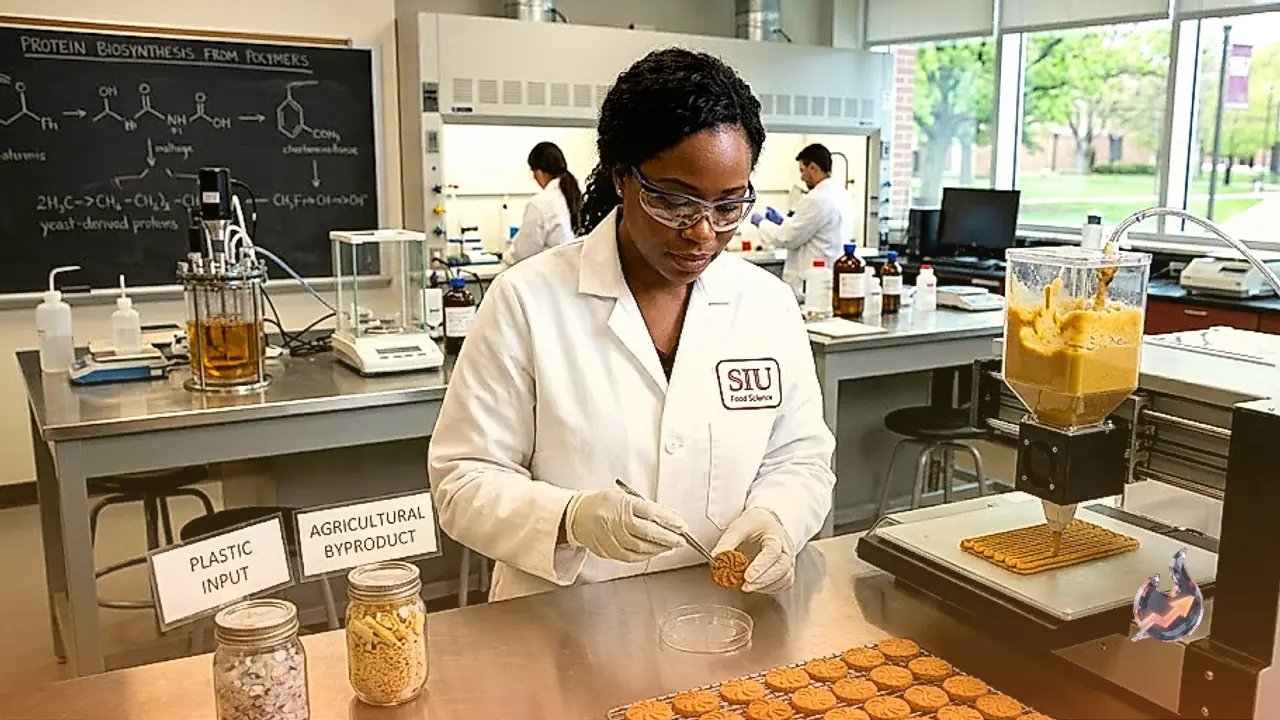
The scientific team reprogrammed baking yeast, tailoring it to consume both plastic materials and agricultural byproducts like corn stalks. The procedure begins by heating the plastic and farm debris at extremely high temperatures in a process known as oxidative hydrothermal dissolution. This step breaks down the stubborn waste into minuscule fragments. Following this, the reprogrammed yeast is introduced into the resulting solution. The active yeast feeds on the debris, synthesizing essential food molecules such as fats, acids, and proteins.
Creating Microbites and Their Taste
Once the yeast completes its transformation cycle, a variety of food components are yielded. These components are combined with sweeteners and starches to form a workable paste. Using a specialized 3D printer, this paste is then shaped into high-protein cookies. The researchers have officially named these innovative snacks microbites. Preliminary testing indicates that the aroma of these cookies is exceptionally appealing. From a scientific standpoint, they are completely safe to consume, though official regulatory approval for human trials remains pending. Furthermore, the researchers are currently working on developing vanilla flavoring and vitamin A integration.
Combating Future Food Shortages
Jayakodi and his team believe this technology will serve as a definitive game-changer in the near future. It will prove immensely valuable in isolated environments such as submarines and space stations, which explains why NASA's Deep Space Food Challenge provided funding for the endeavor. However, the most profound benefits will manifest directly on Earth. According to various reports, global demand for food is projected to surge by 56 percent by the year 2050. This surge threatens nearly one-third of the global population with severe starvation. Consequently, this innovation offers a brilliant method to combat that impending crisis. Lahiru Jayakodi noted that they are utilizing microbes to resolve a crisis entirely created by human activity.