






















The sacred month of Shravan has officially commenced, marking a period of intense devotion, spiritual sadhana, and fasting across the country. With the first Monday fast scheduled for August 2, temples and households resonate with prayers dedicated to Lord Shiva. During this auspicious timeframe, many devotees experience vivid dreams involving serpents, which is considered one of the most frequent dream occurrences in Shravan. While encountering a snake in sleep can trigger immediate anxiety, ancient interpreters of dream literature, known as Swapna Shastra, explain that these nocturnal visions are not inherently inauspicious. Instead, the precise spiritual meaning hinges on the creature's color, demeanor, surroundings, and the emotional state of the dreamer at that moment.
Divine Grace and Material Prosperity Associated with Calm Serpents
From a religious perspective, the serpent holds an exalted position as the sacred ornament wrapped around the neck of Lord Shiva. In scriptural traditions, Nag Devta represents spiritual awakening, cosmic energy, divine protection, and inner strength. Consequently, when a person beholds a calm, non-threatening serpent in their dream during Shravan, scholars interpret it as a highly favorable omen. Such a vision signifies the special benevolence of Mahadev and the serpent deity. It frequently portends the successful completion of long-delayed tasks, financial advancement, and positive life transitions. Furthermore, if the snake appears sitting quietly in front of the dreamer without demonstrating hostility, it reinforces incoming fortune and peace of mind.
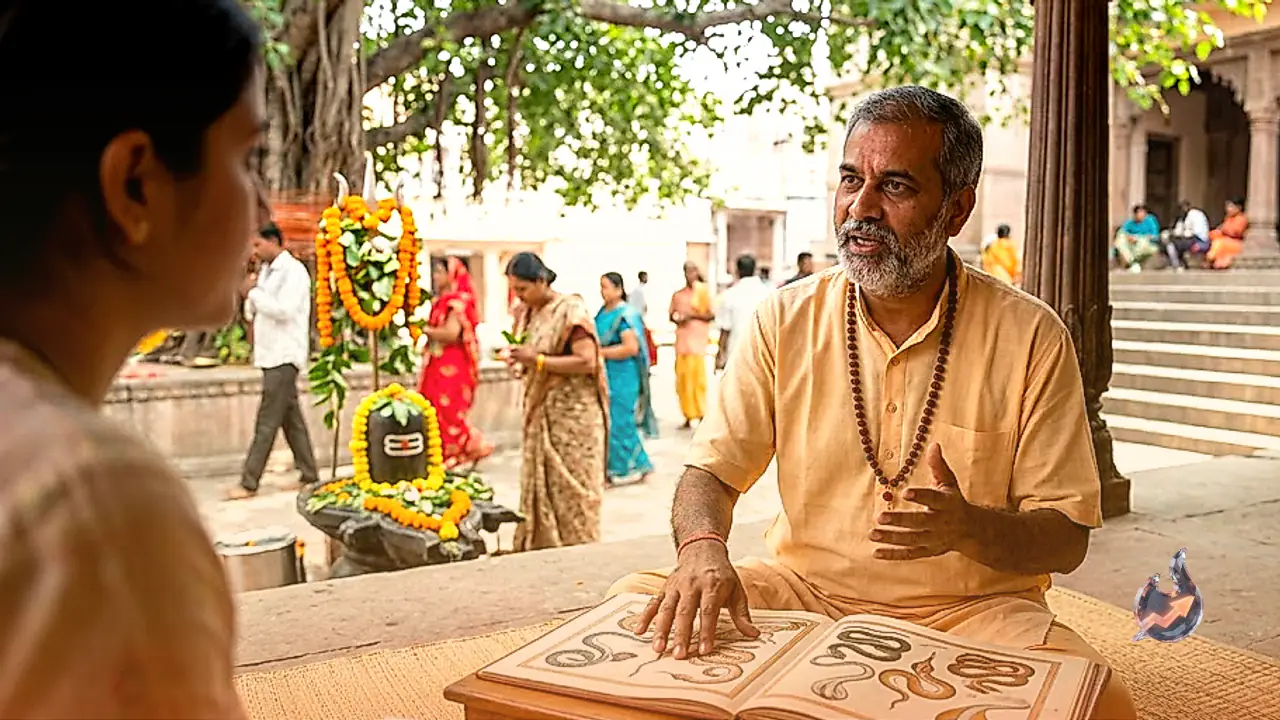
Even greater spiritual significance is attached to dreams where a serpent is seen residing near a Shivling or alongside Lord Shiva himself. Swapna Shastra categorizes this specific imagery as an extraordinary blessing. Devotees who witness this vision are believed to be on the verge of significant spiritual elevation, the fulfillment of deeply cherished desires, and direct divine protection from worldly obstacles.
Deciphering Color Symbolism: The Impact of Black and White Snakes
The color of the serpent in a dream provides critical insight into the subconscious mind and future developments. Swapna Shastra attributes distinct interpretations to black and white snakes encountered during this holy period.
- Black Serpents: Viewing a black snake is often tied to internal psychological states. It typically reflects underlying mental stress, suppressed anxieties, or hidden fears that an individual may be ignoring in waking life. Astrological interpreters suggest that such a dream serves as a prompt to address unresolved issues and confront emotional burdens rather than allowing them to linger.
- White Serpents: Conversely, encountering a white snake in a dream is regarded as an exceptionally auspicious sign. It symbolizes purity, divine intervention, and auspicious luck. A white serpent indicates that through the grace of Lord Shiva and Nag Devta, the dreamer is entering a phase of life filled with prosperity, peace, and positive developments.
Addressing Aggressive Serpents, Chase Scenarios, and Snakebites
Distressing scenarios where a snake displays aggression, chases the dreamer, attempts to strike, or creates an atmosphere of terror carry specific warnings. According to Swapna Shastra, being pursued by an aggressive serpent symbolizes looming real-life challenges, intense psychological pressure, or an omnipresent fear troubling the individual's thoughts. Religious guidelines advise that rather than surrendering to panic upon waking from such nightmares, one should immediately seek spiritual refuge. Devotees are encouraged to remember Lord Shiva, continuously chant the sacred mantra Om Namah Shivaya, and offer reverent greetings to Nag Devta to neutralize negative energies.
Similarly, dreaming of a snake bite functions as a stern cosmic alert. Scriptural analysis interprets a snakebite vision as a clear warning to cease any ongoing unethical behavior, abandon wrong paths, and realign one's actions with the principles of righteousness and dharma. While some traditions also associate a snakebite with profound structural changes in life, the immediate psychological reflection highlights anxiety, vulnerability, and feelings of insecurity that demand moral rectification.
Marital Reconciliation and Family Unity Through Nag-Nagin Pair Visions
Witnessing a pair of serpents, commonly referred to as Nag-Nagin, during the month of Shravan holds profound implications for personal relationships. Swapna Shastra views the appearance of a snake couple as a very positive omen for married life. It suggests that ongoing conflicts, misunderstandings, and strain between spouses will soon be resolved, making way for harmony and mutual understanding. Beyond domestic peace, this dream serves as a spiritual call for partners to unite their efforts, align their goals, and work constructively toward securing a prosperous future for their children and family unit.