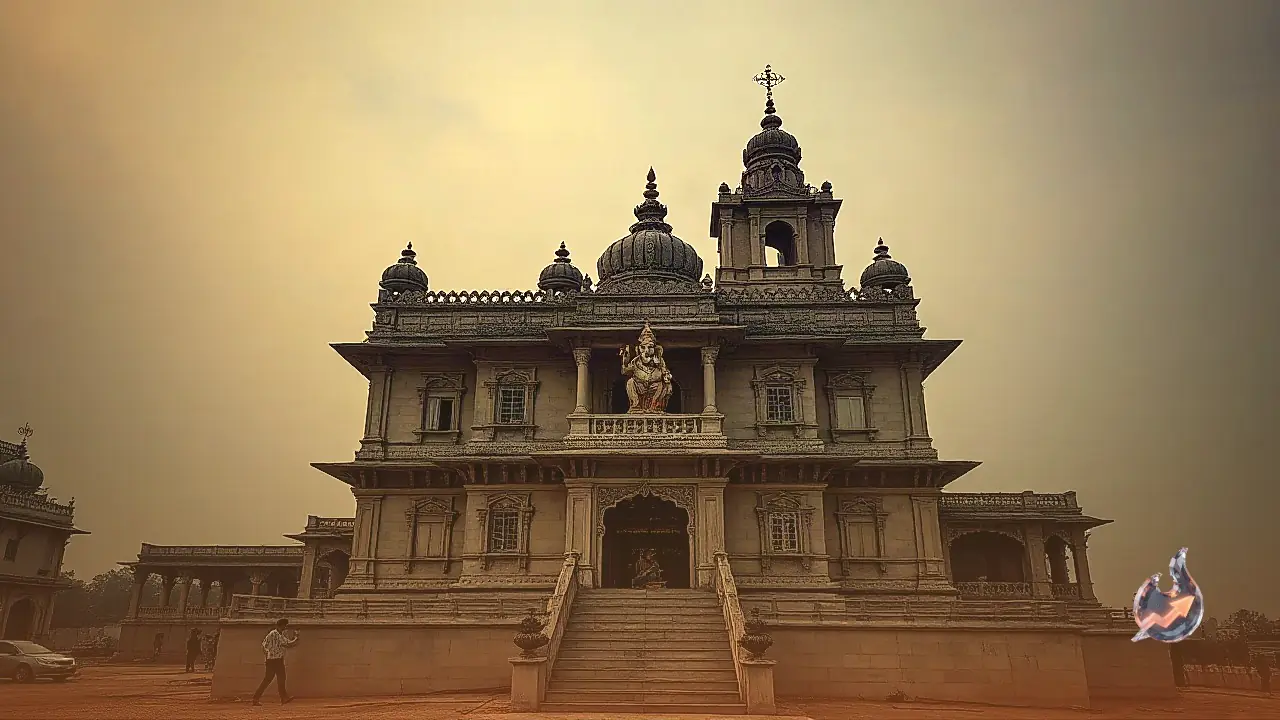


















The cinematic success of the film Hanuman Ansh in theaters has once again brought the life and spiritual legacy of Neem Karoli Baba into prominent public discussion. Whenever this revered saint is mentioned, memories instantly shift to Kainchi Dham, located amid the scenic hills of Nainital district in Uttarakhand. Today, Kainchi Dham stands as a major center of faith and spiritual solace for devotees from across India and around the globe. However, the story of his worldly journey extends far beyond this Himalayan retreat. The final chapter of his physical life was written in Vrindavan, where he departed his mortal body on September 11, 1973, to attain Mahasamadhi. This historically significant event prompts many seekers to ask why a saint so closely identified with Kainchi Dham chose Vrindavan for his supreme state of liberation.
Kainchi Dham as the Core Seat of Penance and Simplicity
Situated in the Nainital district of Uttarakhand, Kainchi Dham is celebrated as Neem Karoli Baba's primary site of penance and ashram establishment. At this sanctuary, Baba cultivated an environment of quiet meditation and selfless service that naturally drew millions of visitors over the decades. Throughout his lifetime, Baba remained personified by utmost simplicity and an absence of pretense. He was frequently seen wrapped in a plain blanket, leading his followers to affectionately call him 'Kambal Wale Baba' or the saint with the blanket. Rather than delivering lengthy speeches or complex philosophical lectures, he conveyed profound life lessons using simple, relatable language.
Global Resonance and High-Profile Admirers
At the core of Neem Karoli Baba's spiritual philosophy were the universal values of love, compassion, and selfless service. Visitors to his ashrams were consistently encouraged to embrace these ideals in their daily routines. Over time, the spiritual influence of Kainchi Dham expanded beyond national boundaries, resonating deeply with seekers in the United States and other Western countries. Among his prominent admirers are Apple co-founder Steve Jobs and Facebook co-founder Mark Zuckerberg, both of whom sought inspiration from Baba's teachings and visited his holy shrine during crucial periods in their lives.
Deep Devotion to Lord Hanuman and the Sanctity of Vrindavan
Neem Karoli Baba's life was intricately entwined with intense devotion to Lord Hanuman. In the broader Indian spiritual tradition, Vrindavan holds immense sanctity as the holy abode of Lord Krishna, serving as a sanctuary for saints and spiritual seekers for centuries. Baba maintained a deep spiritual connection with Vrindavan over many years. Because of his profound veneration for Hanuman and his alignment with the divine atmosphere of Vrindavan, the holy land remained central to his spiritual journey, ultimately serving as the setting for his earthly farewell.
The Final Days and Mahasamadhi on September 11, 1973
In the late summer of 1973, Neem Karoli Baba experienced declining health. In early September, he traveled towards Agra, where his physical condition deteriorated rapidly. Recognizing the severity of his illness, companions transported him by train to Vrindavan. Upon arrival, he was immediately admitted to the Ramakrishna Mission Hospital for medical treatment. Despite emergency care from attending doctors, he could not be saved, and on September 11, 1973, Neem Karoli Baba left his physical frame in Vrindavan. Devotees honor this moment not as a conventional demise, but as a deliberate 'Mahasamadhi'. Today, his primary shrine in Vrindavan continues to attract spiritual pilgrims seeking his blessings.