























Sports history contains rare figures who defy human anatomy to rewrite what is considered possible, yet few journeys have ended in such devastating ruin. South African para-athlete Oscar Pistorius once captivated audiences across the globe after rising to the pinnacle of track and field despite having both legs amputated below the knee during infancy. Running on specialized curved carbon-fiber prosthetic blades, he earned the worldwide moniker of Blade Runner. His crowning moment arrived at the 2012 London Olympic Games, where he broke barriers by lining up against non-disabled runners in Olympic competition. That ground-breaking achievement, combined with multiple major titles across both disabled and non-disabled categories, turned him into an iconic symbol of athletic perseverance. However, the international admiration built over years of grueling track competition would vanish within months due to a catastrophic domestic tragedy.
Valentine's Day 2013 and the Tragic Death of Reeva Steenkamp
The trajectory of Pistorius' life took an irreversible turn on the night of February 14, 2013, during Valentine's Day celebrations. Inside his residence situated in Pretoria, South Africa, Pistorius was spending the evening with his partner, celebrated model Reeva Steenkamp. The night spiraled into sudden horror when Steenkamp was shot dead inside the home. The revelation that one of the planet's most recognizable sporting heroes had turned a weapon on his girlfriend sent shockwaves through the global sports community and sparked relentless international media attention. What had been celebrated as an extraordinary life story instantly descended into a dark criminal proceeding.
The Intruder Defense and Prosecutors' Arguments in Court
The subsequent trial developed into an extensive legal saga that unraveled the events of that fatal night in microscopic detail. In his testimony, Pistorius mounted an explanation centered on sheer panic and mistaken identity. He testified that he believed a burglar had broken into the residence during the night and locked themselves inside the bathroom cubicle. Claiming he was overwhelmed by fear and perceived an immediate mortal danger, Pistorius maintained that he discharged his firearm through the closed bathroom door without realizing that Steenkamp was actually the person inside. He pleaded that her death was a dreadful accident rather than premeditated violence.
Prosecutors representing Steenkamp's interests mounted a fierce counter-argument against the intruder theory. They asserted before the bench that the shooting was no innocent misunderstanding, but rather a lethal act driven by fury or gross criminal recklessness. Evidence submitted by the state pointed to a fierce argument that had erupted between the couple shortly before the weapon was discharged. The state emphasized that firing multiple bullets through a closed door demonstrated a clear intent to kill whoever was positioned on the other side. Following prolonged proceedings and appeals, the judicial system rejected his claim of an unavoidable mistake, convicted him of serious negligence and murder, and substantially increased his prison sentence to reflect the severity of the crime.
Parole Terms and Life Following His January 2024 Release
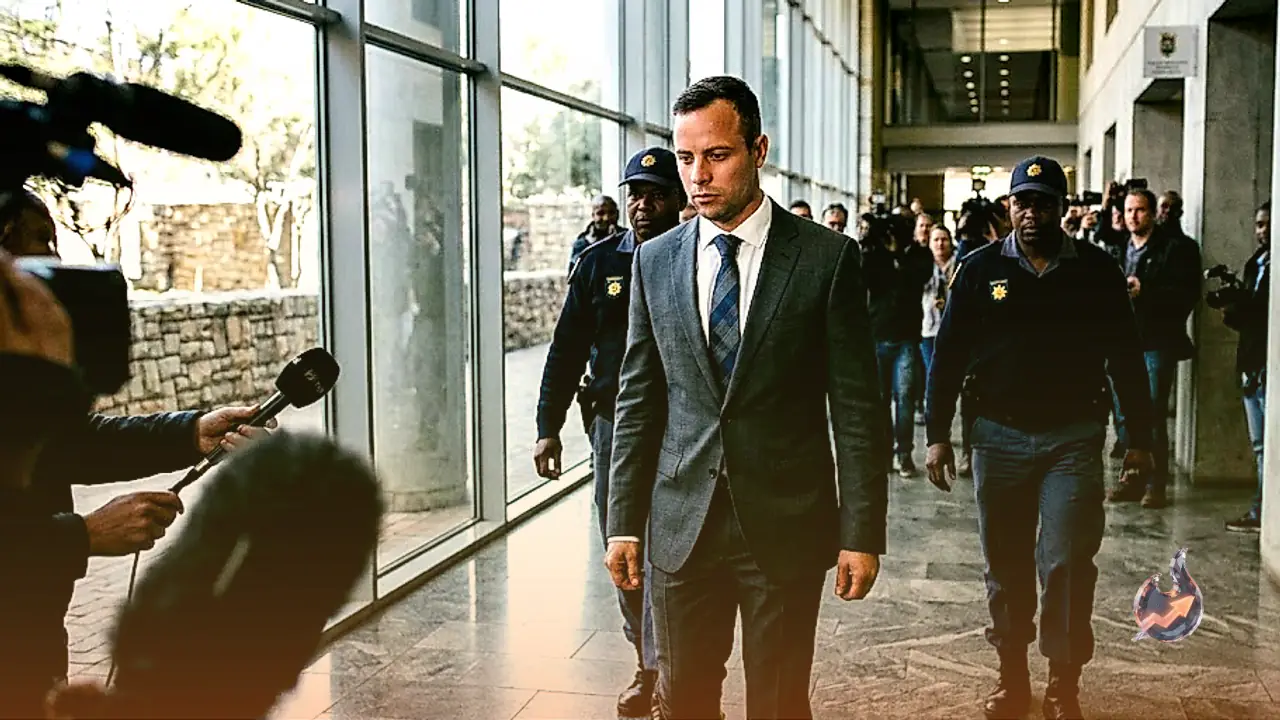
After serving years behind bars and satisfying statutory correctional benchmarks, Pistorius reached eligibility for conditional release. In January 2024, correctional authorities approved his discharge on parole under strict supervisory stipulations. Freedom outside prison walls has come with severe restrictions designed to govern his reintegration into civilian life. Under these conditions, Pistorius remains legally barred from giving interviews or speaking with members of the press, while also being mandated to abide by behavioral requirements supervised by state officials. His downfall stands as a stark testament to how quickly elite prestige and historic achievement can be extinguished by unrestrained anger and lethal actions.