






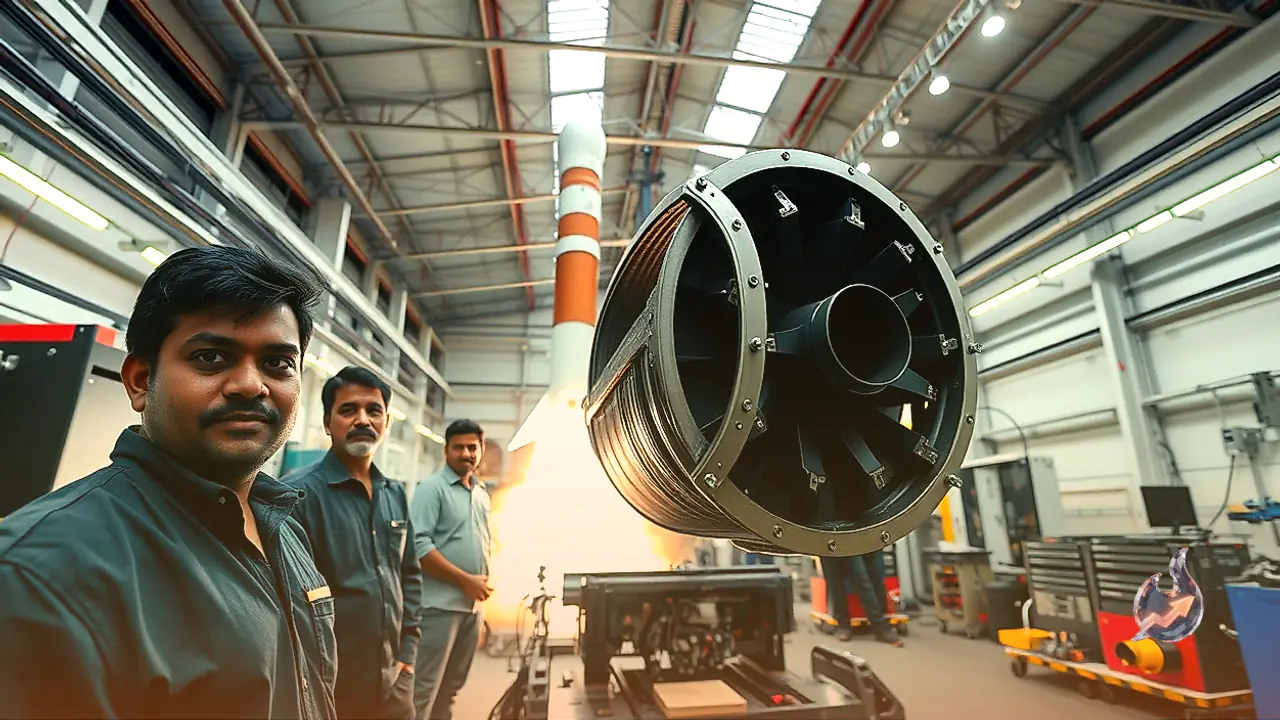















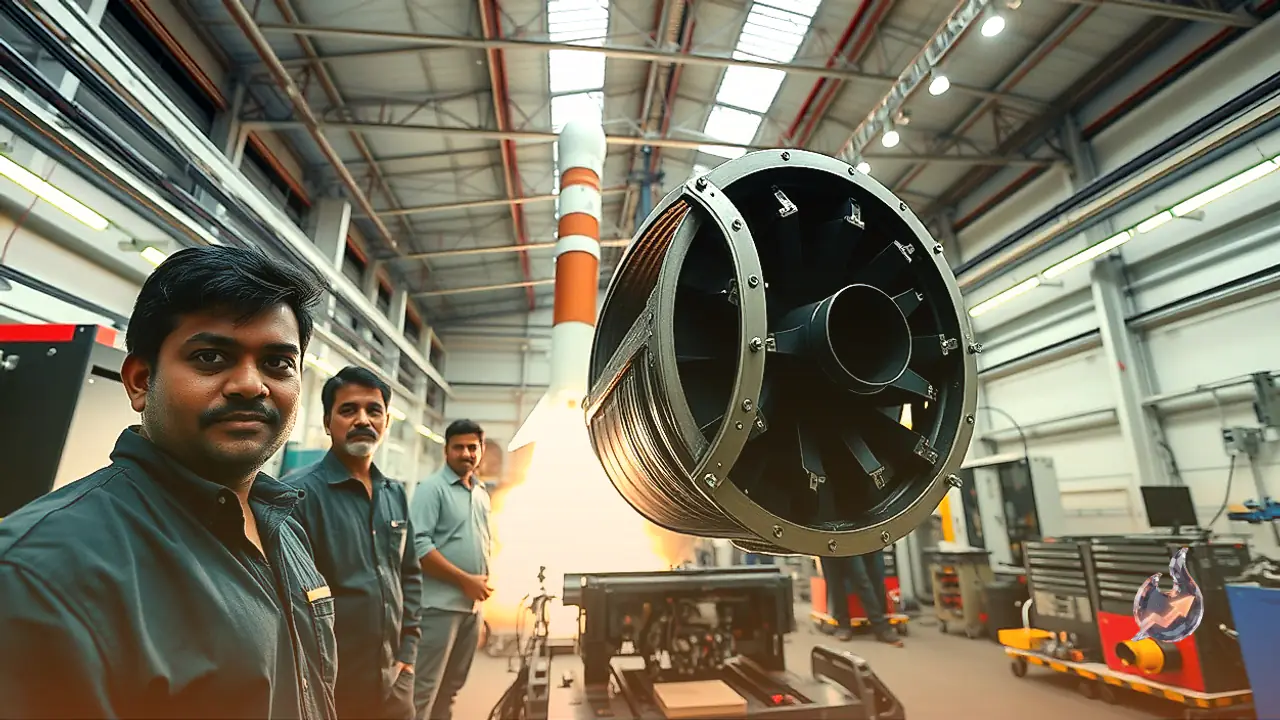

Indian aerospace startup Agnikul Cosmos has delivered an unprecedented technological breakthrough that is sending strong waves across the global space industry. By harnessing advanced 3D printing technology, the company designed and fabricated an entire single-piece rocket engine. This milestone has not only firmly established the startup's credentials within private space exploration but also brought significant global prestige to India's aerospace ecosystem.
The Historic Launch of a Single-Piece Architecture
The defining feature of this propulsion system is its integrated, unified architecture. Traditionally, rocket engines have comprised hundreds of individual components manufactured separately and assembled through painstaking, high-risk fabrication techniques. Agnikul replaced this fragmented model by printing the entire operational engine in one continuous process, demonstrating the viability of the approach during a pivotal mission launched on May 30, 2024.
Manufacturing Slashed from Twelve Weeks to 75 Hours
Transitioning to an additive 3D printing approach has generated dramatic savings in both production expenditures and turnaround schedules. Conventional aerospace manufacturing pipelines routinely demand between 10 to 12 weeks to assemble a standard rocket engine. In sharp contrast, Agnikul printed its single-piece engine in just 75 hours. Reducing lead times to a window of roughly 3 to 4 days substantially curbs commercial launch expenses and unlocks rapid turnaround capabilities for mission operators.
Agnibaan Launch Vehicle and Chennai Roots
Headquartered in Chennai, Tamil Nadu, Agnikul Cosmos was established approximately seven years ago in 2017 by founders Srinath Ravichandran and Moin SPM. The enterprise specializes in developing dedicated launch vehicles tailored for small satellite payloads.
Its flagship launch craft, the Agnibaan rocket, was engineered from the outset for maximum modular customization. The low-cost launch vehicle is capable of delivering payloads weighing up to 100 kilograms directly into low Earth orbit (LEO). This performance profile positions Agnibaan as an attractive and cost-efficient vehicle for deploying commercial small satellites without relying on large shared rideshare missions.
Patented Technology Reshaping Spaceflight Economics
Ahead of its launch milestone, Agnikul secured an official patent for its proprietary 3D printing rocket engine technology. By securing this intellectual property, the enterprise proved that high-complexity aerospace engineering can bypass conventional supply-chain bottlenecks. The broader space sector has welcomed this innovation as a foundational shift toward making satellite launches dramatically cheaper, faster, and more accessible.