














Generating commercial electricity from nuclear fusion depends heavily on securing an uninterrupted supply of specialized fuel, and addressing that precise bottleneck is the mission of Licube. The innovative startup has licensed specialized technology from Japan's Hirosaki University to extract and purify lithium-6, the specific isotope required by fusion facilities to breed their own operating fuel, directly from naturally occurring lithium deposits.
The Critical Fuel Challenge Facing Fusion Plants
Most fusion reactors under active development are engineered to run on a precise blend of two hydrogen isotopes: deuterium and tritium. While deuterium is readily available in abundance, natural tritium is exceptionally scarce. Within the fusion engineering community, it is widely acknowledged that the existing global inventory of tritium falls far short of what would be required to power every planned facility.
To overcome this severe limitation, reactor designers rely on an on-site breeding approach inside the plant itself. The fusion reaction continuously releases high-speed subatomic particles known as neutrons. Engineering teams plan to line reactor interiors with a blanket composed of lithium. When an energetic neutron collides with a lithium atom, that atom fissions into helium and tritium. Operators can then harvest, filter, and circulate that newly created tritium straight back into the plasma chamber as sustained fuel.
Overcoming the Scarcity of Lithium-6
Not every variety of lithium can execute this transformation effectively. Natural deposits consist of two distinct isotopes categorized by atomic weight: lithium-6 and lithium-7. Lithium-6 is vastly superior at capturing neutrons and generating tritium, yet it represents merely about 7.5% of raw lithium in nature, leaving the heavier lithium-7 to make up the rest. Separating these two isotopes is notoriously difficult, and global industrial infrastructure currently possesses very little capacity to perform the separation, leaving clean energy developers without sufficient lithium-6.
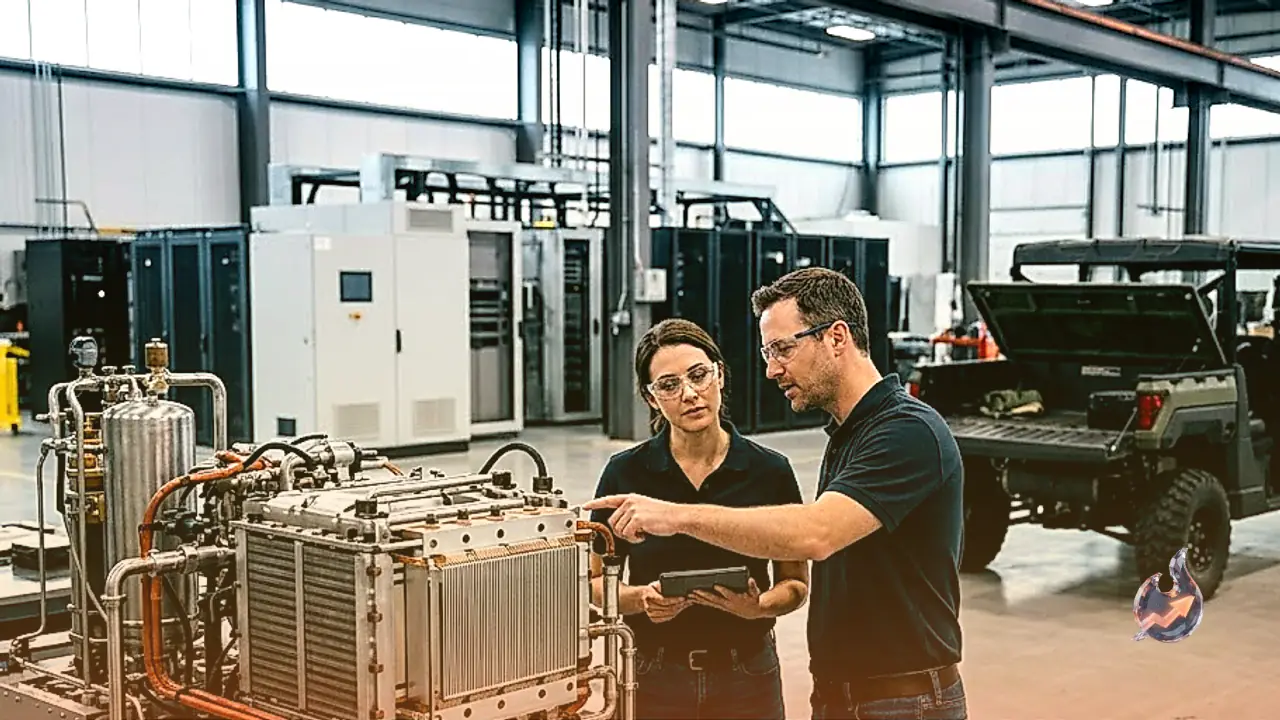
Licube performs this separation using an electrolyzer device that drives targeted chemical reactions via electrical currents. Under Licube's process, raw lithium is dissolved into a liquid carrier placed on one side of a specialized ceramic membrane. As an electric current passes through the membrane from one side to the other, the lighter lithium-6 ions travel at a faster rate than the heavier particles. Licube then siphons off that specific solution to isolate the lithium-6. The ultimate target is to enrich the mineral to a minimum purity of 99.995% lithium-6, delivering a high-grade product ready for installation in fusion breeding blankets.
Market Projections and Immediate Commercial Applications
Resolving this supply gap positions the startup in front of an immense business opportunity. Yohei Kiguchi, co-founder and chief executive officer of Licube, projects that if nuclear fusion comes online as intended, the specialized fuel requirement will evolve into a $50 billion sector by 2040. Although fusion technology could ultimately secure a lucrative share of the multi-trillion-dollar worldwide energy economy, commercial builders remain several years away from commissioning their initial utility-scale power stations.
Acknowledging that this timeline could experience delays, Kiguchi explained that while fusion represents the ultimate market, realization of that future could take a few extra years. To generate near-term revenue before commercial fusion matures, Licube intends to deploy its separation process to supply refined lithium to the semiconductor manufacturing, pharmaceutical development, traditional fission reactor, and aerospace industries.
Inspiration Drawn from the ITER Facility
The concept for launching Licube originated when Kiguchi paid a visit to ITER, the massive international experimental fusion reactor currently under construction in southern France. After stepping down from his previous leadership position at Enechange, an energy-switching platform network based in Japan, he had settled in Monaco, located only a couple of hours' drive from the research facility. That firsthand exposure convinced him that he had stepped away from industry far too early, driving his determination as an energy specialist to pursue an even larger breakthrough.