






















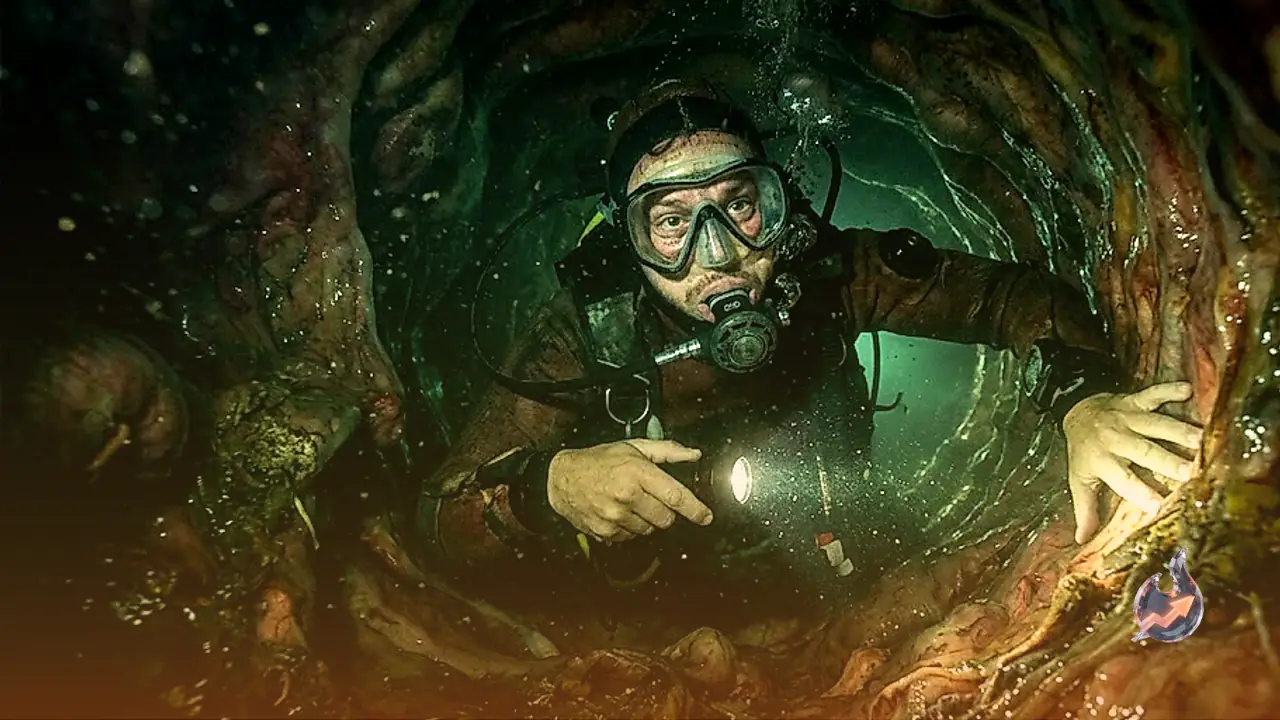

When exploring singular survival cinema, this Whalefall review highlights a story that dares to push the boundaries of cinematic tension into the oceanic deep. Set against the pitch black chasm of Monterey Bay, the narrative opens with a natural clash that has never been documented on real camera: a massive sperm whale pursuing a giant squid into the depths. Scuba diver Jay Gardiner finds himself trapped in the worst possible circumstance at the worst imaginable moment. Entangled in the thrashing tentacles of the squid, Jay is violently swept directly down into the jaws of the monstrous beast. Even though marine biology notes that a sperm whale throat is hardly wider than a dinner plate, the film casts aside anatomical technicalities to deliver a thrilling and surreal cinematic spectacle.
A Trapped Diver Inside a Living Prison
The sequence of events leading Jay into this nightmarish trap is laid bare right from the start. Jay descends into the water following the death of his estranged father, who committed suicide by drowning, aiming to locate his remains and bring some semblance of closure to his grief. Instead of peace, he finds himself sealed inside the most horrific and suffocating place possible. The stomach interior transforms into a gruesome biological escape room where Jay must depend solely on his instincts and quick thinking to stay alive. A glowing, bioluminescent jellyfish unexpectedly becomes a silent guide and comforting companion, serving a role reminiscent of iconic solitary companions in classic survival tales.
Visceral Body Horror and Atmospheric Terror
The interior of the leviathan is bathed in a sickly, phosphorescent green glow, accompanied by the deafening thud of an enormous heart beating like an ominous countdown clock. The production embraces intense body-horror elements, filling the screen with oozing fluids, crushing walls of muscle, and deep claustrophobia that intentionally disorients the audience. For a mainstream release, such an uncompromising approach feels strikingly avant-garde, delivering an immersive sensory presentation unlike standard disaster or creature features.
The Weight of Unresolved Family Trauma
To break up the relentless physical terror inside the beast, the story weaves in recurring memories of Jay and his father. His dad was an unrelenting sea dog and uncompromising idealist, and the whale itself functions as an overt metaphor for the crushing, stifling dynamic of their broken relationship. Director Brian Duffield, known for crafting intense narrative tension with minimal dialogue in his earlier alien story, employs a similar stripped-down visual language here. Jay remains largely silent with a breathing regulator firmly clenched between his teeth, enduring agonizing squid wounds, searing gastric acid burns, and ruptured eardrums while expressing sheer dread through expressive glances.
Bold Creative Choices That Stick the Landing
The creative swings extend to surreal apparitions of the father offering tough guidance from beyond the grave. While these reflective family interludes occasionally disrupt the desperate momentum of the survival race, the daring narrative gamble pays off with a genuinely moving final frame. For anyone tired of predictable formulas, the film delivers a daring, original dive into pure sensory horror that stands apart from typical releases.