




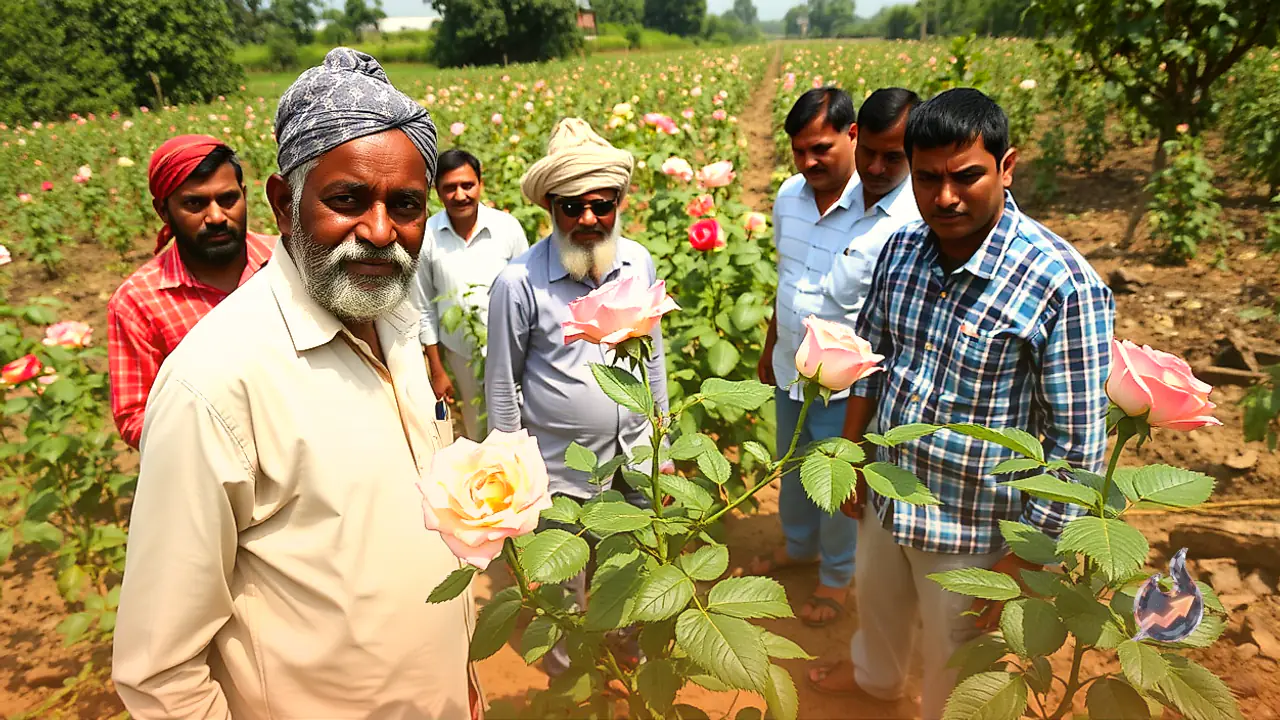















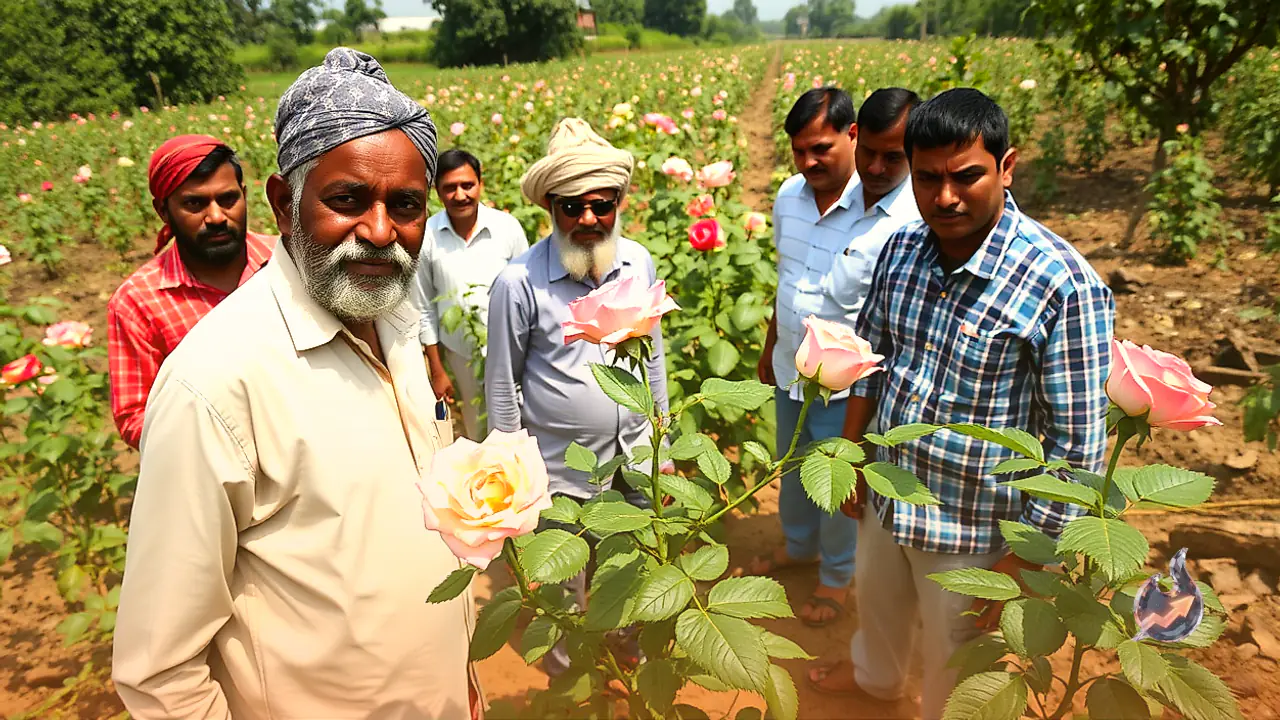

Horticulture is increasingly proving to be a reliable vehicle for consistent daily agricultural earnings. In Bilhari village, located in the Nowgong area of Madhya Pradesh's Chhatarpur district, farmer Chetram Kushwaha has turned commercial floriculture into a sustainable enterprise. For the past 10 years, since 2015, he has been cultivating roses on his land. Prior to this venture, he grew only marigolds. Seeking higher and more regular returns, he resolved to integrate rose farming alongside marigolds. To acquire the necessary expertise, he underwent formal agricultural training at Krishi Vigyan Kendra Nowgong before planting his first crop.
Continuous Flowering and Daily Harvest Advantages
Roses hold a premier status in floriculture, and their main commercial strength lies in uninterrupted flowering throughout the calendar year. According to Chetram, unlike seasonal crops that offer income only after months of waiting, rose bushes yield fresh produce every single day. Furthermore, market realizations for roses remain consistently superior compared to other conventional loose flowers, guaranteeing regular cash inflow directly into the farmer's hands.
Nursery Prep, Cutting Techniques, and Spacing Guidelines
Growers looking to take up rose farming can either prepare their own plant nursery or purchase ready-to-plant saplings for field transplanting. The saplings are propagated through cuttings. Proper land geometry is critical during transplanting: the distance between parallel rows must be maintained at 4 feet, while the spacing between individual plants should be exactly 1.5 feet. Once transplanted into the field under these specifications, flowering commences within just 1 month and continues round the year.
Input Costs and Capital Outlay per Bigha
Breaking down the capital requirements for land preparation and planting, Chetram explains that a 1-bigha plot accommodates approximately 2,500 rose saplings. Factoring in an average acquisition cost of 10 rupees per sapling, the total expenditure required to plant 2,500 shrubs across 1 bigha stands at roughly 25,000 rupees. This initial plantation expense sets up a productive asset that yields returns over multiple seasons.
Daily Yield Dynamics and Harvesting Protocol
A well-managed 1-bigha plantation of 2,500 shrubs yields an average daily harvest of 10 to 20 kilograms of cut blooms. Growers can harvest flowers on a daily basis year-round. Yield numbers temporarily dip when the bushes sprout fresh vegetative branches, but harvest volumes promptly recover once the new branches mature. Timing is equally vital during harvest operations: blooms must be picked either in the early morning hours or late in the evening to preserve freshness and moisture.
Market Pricing Trends and Net Daily Revenue
Wholesale prices for roses fluctuate with festive and social calendar demands. During peak wedding and festival seasons, wholesale market rates surge between 150 rupees and 300 rupees per kilogram. Even in the off-season or regular trading periods, rates stay resilient at 50 to 80 rupees per kilogram. Based on these sustained price bands, a 1-bigha plot generates daily earnings ranging between 1,000 and 2,000 rupees, with earnings scaling substantially higher during peak celebratory cycles.