



















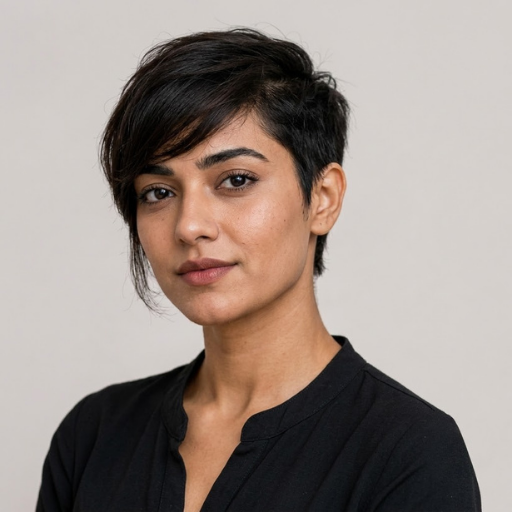
The global technology landscape has transformed into an intense battleground for artificial intelligence dominance, with leading tech corporations competing fiercely not just over advanced tools, but for top-tier scientific talent. In one of the most eye-catching compensation offers in tech history, Mark Zuckerberg's Meta has extended a salary package worth approximately Rs 800 crore (around $95 million) to Indian-origin AI researcher Trapit Bansal. An alumnus of IIT Kanpur, Bansal has been recruited as a founding researcher for Meta's newly formed AI research division. This staggering package underscores the unprecedented premium tech giants are willing to pay for elite researchers capable of pioneering breakthrough machine learning systems.
Strong Base in Mathematics and Statistics at IIT Kanpur
Trapit Bansal's journey to becoming one of the most sought-after minds in artificial intelligence is a testament to long-term dedication, rigorous academic discipline, and a focus on fundamental principles over quick shortcuts. While many aspiring tech professionals opt directly for computer science degrees, Bansal laid his intellectual foundation in pure quantitative disciplines. Between 2007 and 2012, he completed a 5-year Integrated MSc in Mathematics and Statistics from the prestigious Indian Institute of Technology (IIT) Kanpur. Because modern artificial intelligence and machine learning architectures are built upon complex mathematical theorems, statistical modeling, and probability theory, this deep foundational knowledge gave him a distinct edge in understanding theoretical AI mechanics.
Following his graduation from IIT Kanpur, Bansal moved to Bengaluru to join the Machine Learning Lab at the Indian Institute of Science (IISc). Serving as a research assistant for two years, he worked extensively on advanced machine learning concepts, gaining hands-on exposure to practical algorithmic modeling. This period at IISc bridged the gap between abstract mathematical theories and real-world computational frameworks, preparing him for high-level doctoral research in the United States.
Doctoral Research at UMass Amherst and High-Profile Internships
To deepen his expertise, Bansal relocated to the United States to pursue graduate studies at the University of Massachusetts Amherst (UMass Amherst), earning both a Master's degree and a PhD in Computer Science. During his doctoral program, he concentrated his research on Natural Language Processing (NLP), Deep Learning, and Meta-Learning. His cutting-edge academic papers attracted immediate attention from global tech leaders, leading to elite research internships at four of the world's most influential technology organizations.
During his academic career, Bansal completed specialized research internships across the tech spectrum. At Facebook (now Meta), he worked on deep learning applications for Natural Language Processing. At Google, his research focused on deep learning and knowledge graphs. At Microsoft, he explored advanced NLP and meta-learning methodologies, while at OpenAI, he contributed to multi-agent reinforcement learning projects. Each internship exposed him to industry-scale data structures and complex algorithmic challenges, building a rare breadth of experience across major corporate AI labs.
Key Role in OpenAI's o1 Reasoning Models and Transition to Meta
In 2022, Bansal officially joined OpenAI's technical team as a core researcher. Working alongside legendary AI scientist Ilya Sutskever, he played a central role in developing advanced AI models rooted in reinforcement learning and complex reasoning. Bansal's contribution is widely recognized as pivotal in creating OpenAI's acclaimed o1 reasoning model family, which dramatically enhanced machine capabilities in logical reasoning, mathematics, and multi-step problem solving.
Recognizing his exceptional track record in frontier AI research, Meta recruited Bansal in 2025 as a founding researcher for its strategic AI research division, backing the offer with the landmark Rs 800 crore package. In an industry where many seek rapid career growth through brief training courses, Bansal's decade-long commitment to fundamental mathematics, intensive research, and rigorous academic training serves as an inspirational benchmark. His success highlights that deep domain mastery and persistent effort remain unmatched catalysts for global professional recognition.