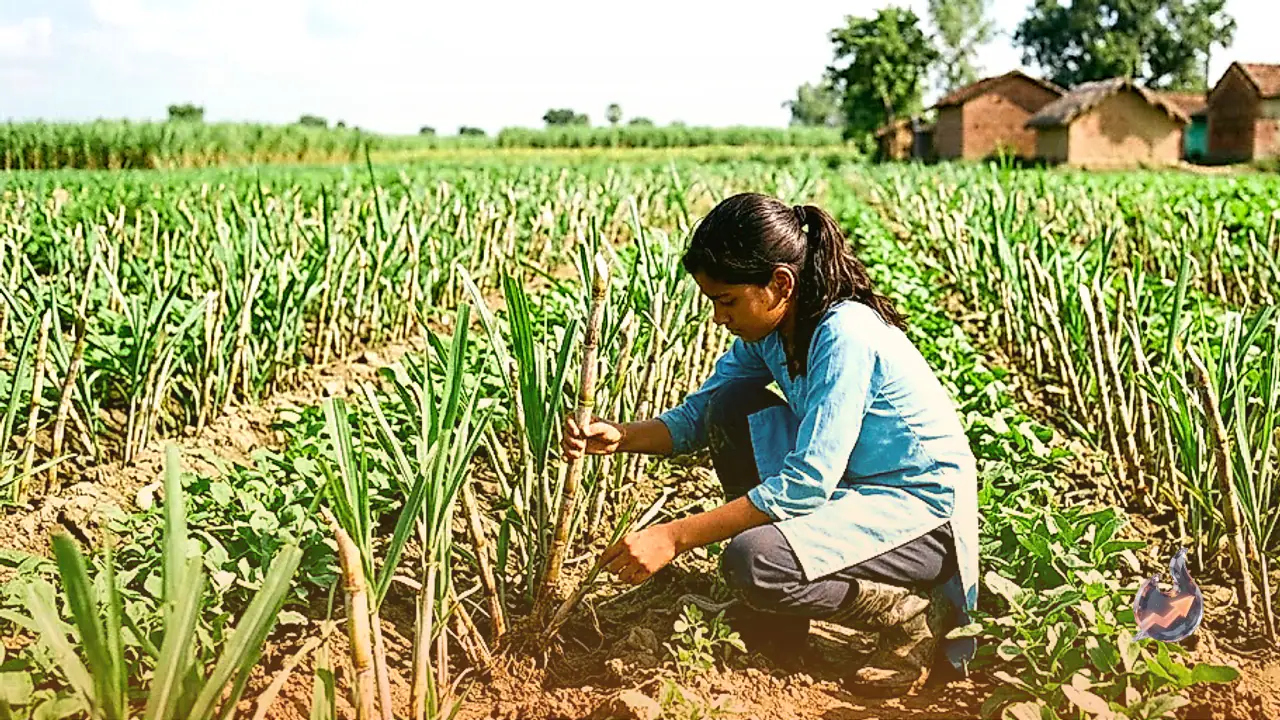























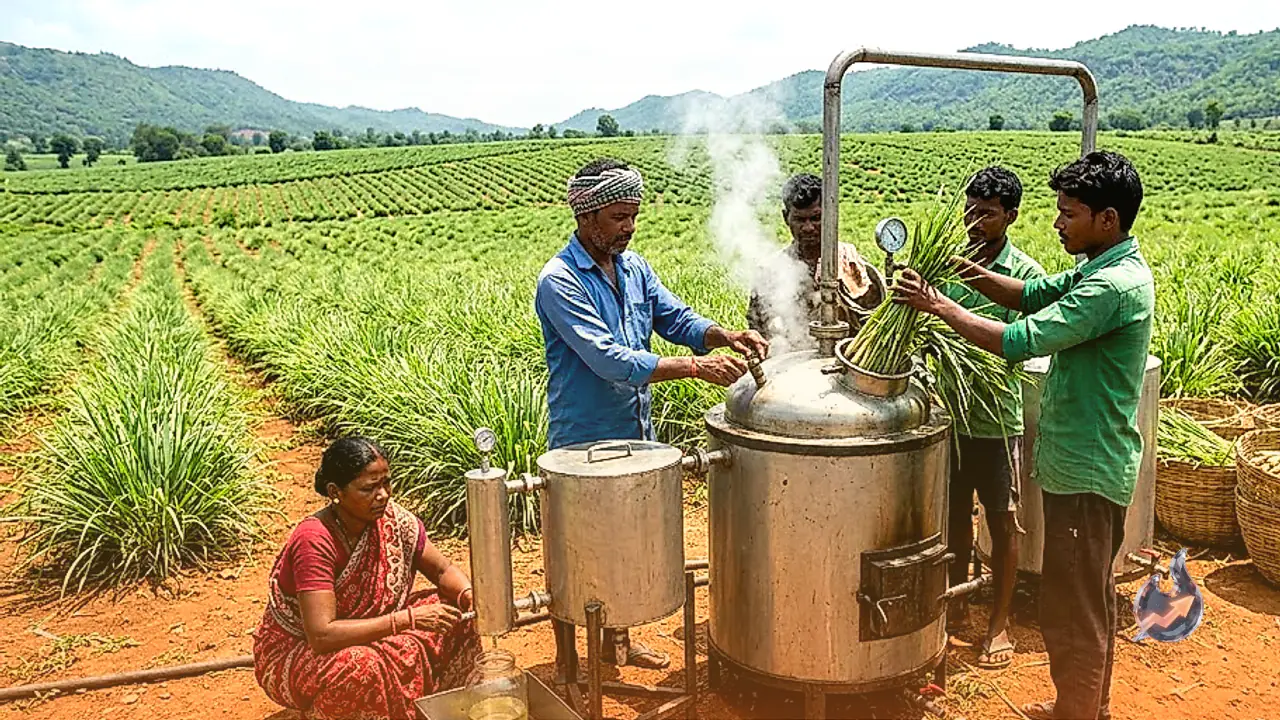

Guni village, located in Khunti district near Ranchi, the capital of Jharkhand, is setting a remarkable benchmark in commercial agriculture. Lemon grass is being systematically cultivated across a vast expense of approximately 120 acres in this hamlet. The standout feature of this agricultural initiative is that farmers do not need to transport their harvested crop to distant industrial facilities, as a processing plant has been established directly amidst the fields. The high-quality essential oil extracted through leaf steam processing is providing a strong economic foundation for local growers.
Strategic Advantage of Installing an In-Field Processing Unit
The scale of lemon grass farming in Guni village covers around 120 acres. Typically, harvesting aromatic crops requires transporting raw material to external processing hubs, which increases logistics costs and risks degrading the oil quality as leaves dry up over time. However, setting up the distillation unit right inside the farming fields has effectively eliminated these operational hurdles. Immediately after harvest, fresh leaves are fed straight into the processing plant, ensuring maximum oil recovery and superior aroma retention.
The Four-Stage Essential Oil Extraction Methodology
According to Indra, a local farmer practicing lemon grass cultivation, the complete production cycle of this essential oil is carried out through four distinct operational steps
- Harvesting and Steam Generation: The process begins by cutting fresh or slightly withered lemon grass leaves from the fields. After basic cleaning, the leaves are densely packed into a distillation tank. Simultaneously, water is boiled inside a large boiler unit to generate high-pressure steam.
- Evaporation and Condensation: High-pressure steam is injected into the bottom of the distillation tank and moves upward through the leaf material. Thermal energy causes the essential oil locked within leaf cells to evaporate. This mixture of steam and oil vapor is then directed through a cold water coil known as a condenser, where cooling transforms the vapor back into liquid.
- Oil and Water Separation: The condensed liquid flows directly into a specialized vessel called a Florentine separator. Since lemon grass essential oil has a lower density than water, it naturally floats to the top to form a clear upper layer. The oil is then skimmed off cleanly from the water surface.
- Quality Verification and Commercial Packaging: Following separation, the extracted oil undergoes detailed quality testing. Evaluators test the batch for color consistency, characteristic fragrance, and physical density. Upon passing all quality checks, the essential oil is bottled and packaged for commercial distribution in the market.