



















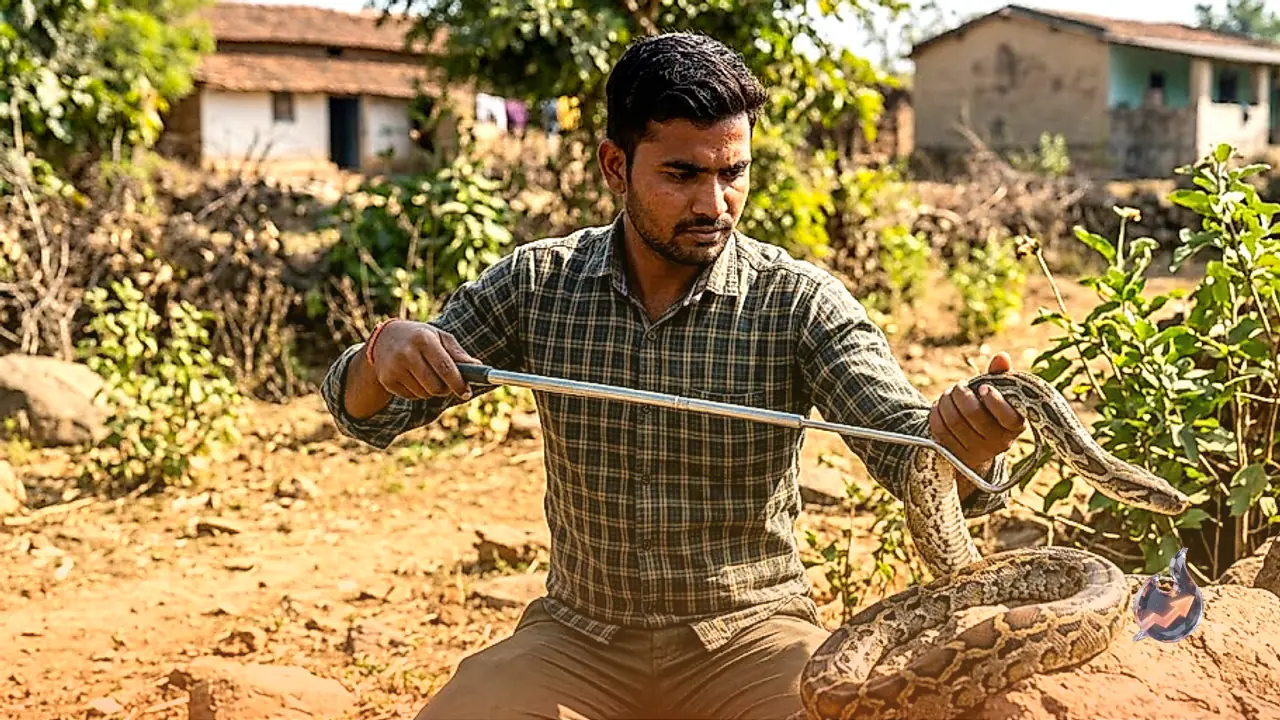

In Madhya Pradesh's Chhatarpur district, Akash Singh Rathore has spent the last six years rescuing venomous reptiles and returning them safely to the wild. To date, he has successfully caught and relocated 1,400 snakes and 300 monitor lizards. Driven by a passion for wildlife conservation, he has set a target of saving 5,000 snakes. To fund his daily life, Rathore works at a private bank while using his off-duty hours to protect both residents and animals.
The Turning Point: Exposing Local Fraud
Akash had no initial plans to become a snake handler. His decision stemmed from an unethical practice he discovered in Chhatarpur city. An older local snake catcher charged residents Rs 2,000 per visit, exacting payments even from impoverished families. Beyond the high fee, the man engaged in deliberate trickery. After catching a snake, he would break its teeth and release it near the same household, ensuring the family would encounter it again and pay for another rescue.
Troubled by this exploitation of vulnerable people, Akash resolved to step in. He underwent formal training in safe snake handling and began answering distress calls across the region six years ago.
Travelling 100 Kilometers to Save Lives and Raise Awareness
Whenever a distress call arrives, Akash rides out immediately on his motorcycle, sometimes travelling up to 100 kilometers to reach distant villages. When assisting affluent households, he accepts voluntary coverage for fuel expenses. However, he refuses all payments and petrol charges from low-income families.
Snakebites cause multiple fatalities in Chhatarpur district each year, largely due to a lack of public understanding regarding local species. To counter this, Akash conducts informal educational sessions during his rescues. He explains which snake species inhabit the region, helping residents distinguish between venomous and non-venomous types to reduce panic and unnecessary killings.
Balancing Banking Work, Mentorship, and Lack of Official Support
Recognizing that snake handling cannot generate a reliable income, Akash balances his emergency rescues with a regular job at a private bank. To build a reliable network of ethical rescuers in the city, he is currently mentoring and training two individuals in safe handling techniques.
Hoping to turn his passion into a full-time career, Akash approached the state forest department and personally discussed his work with Forest and Environment Minister Dilip Ahirwar. Although no official employment or government position materialised, Akash remains committed to continuing his rescue calls and training efforts using his personal savings.