





















Across rural Uttar Pradesh, women are increasingly breaking barriers by establishing self-reliant rural enterprises. In Moradabad district, an entrepreneur named Priyanka has transformed commercial fish farming into a sustainable livelihood for her household. Over the past two years, she has dedicated herself to inland aquaculture, managing three distinct water bodies stocked with diverse aquatic species that provide a steady financial backbone for her family.
Stepping Up Alone After Group Members Left
Her journey into commercial aquaculture originally began as a collaborative effort under the banner of the Radha Rani Samuh, where she served as president. The initial plan was to operate the venture as a community self-help collective. However, as the demands of the business unfolded, the other women gradually withdrew from the project. Left without institutional peer support, Priyanka chose not to abandon the initiative and instead resolved to steer the venture entirely on her own.
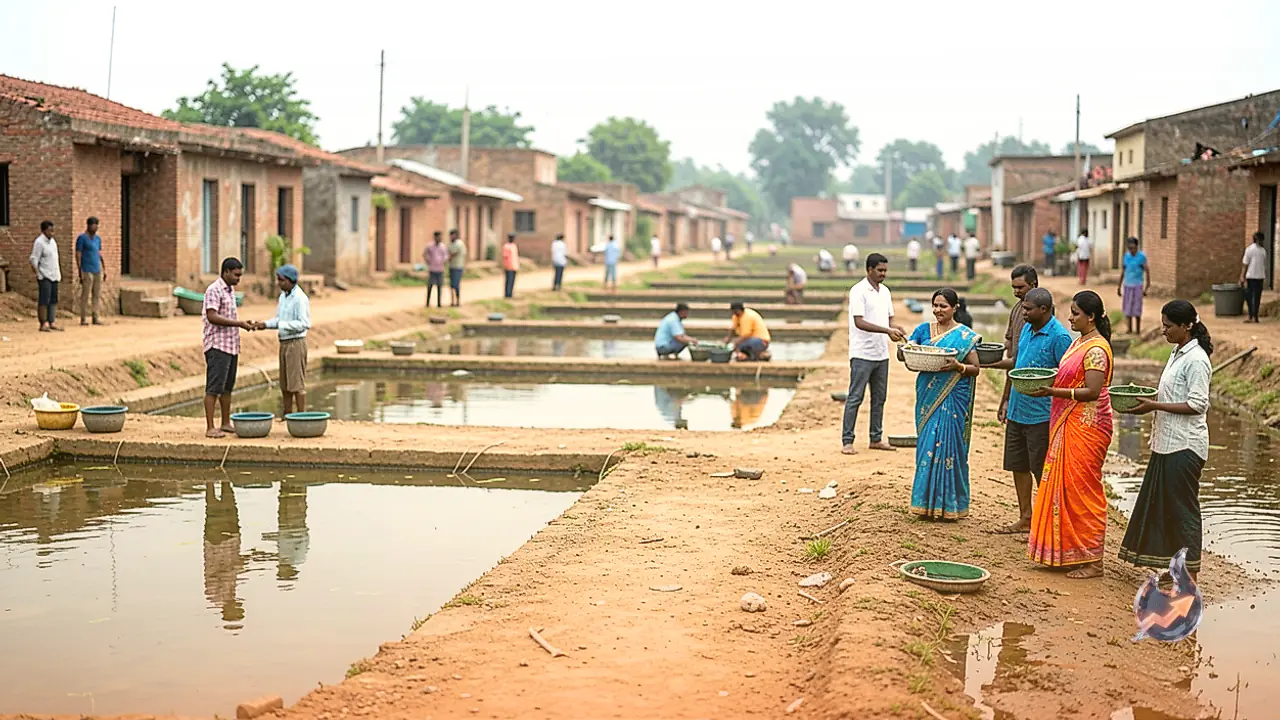
To secure access to suitable water assets, she negotiated official village pond leases spanning periods of five and ten years. With legal control of the ponds secured, she immediately initiated the laborious task of rehabilitating the neglected water bodies into productive aquatic habitats.
Capital Investment and Pond Rehabilitation
The leased sites required significant structural restoration before any stock could be introduced. Priyanka supervised extensive cleaning operations to excavate accumulated silt, decomposed sediment, and discarded waste from the pond beds. Once the basins were cleared, fresh water was filled, and fingerlings sourced from outside markets were released into the ponds.
Establishing the venture required a substantial upfront capital outlay. Between paying the lease fees, executing the civil clean-up, acquiring healthy fish seed, and securing high-grade feed and medical supplies, the initial expenditure ran between 4 lakh and 5 lakh rupees. The learning curve was steep. During the harsh winter season, a drop in temperatures coupled with initial operational inexperience caused fish mortality, teaching her early lessons about rigorous water condition management.
Health Maintenance and Water Management
Maintaining biological balance remains one of the central operational challenges of fish farming. Priyanka closely monitors regular feeding schedules to ensure consistent fish growth. Because water conditions in certain public village ponds occasionally proved unstable, she expanded operations to include private ponds to maintain tighter quality control. To protect the stock against aquatic infections, she sources veterinary medicines directly from Noida rather than settling for unverified local alternatives.
Farm-Gate Commercial Strategy
Rather than transporting the harvest to distant wholesale markets, Priyanka adopted a lean sales model right at the pond bank. When the stock reaches market weight, local fishermen are contracted to harvest the ponds directly. The fish are sold on site at farm-gate prices ranging between 80 and 100 rupees per kilogram, completely eliminating transportation overheads and retail hassles.
While the business generates cumulative revenues running into lakhs of rupees annually, the predictable monthly surplus stands comfortably between 10,000 and 15,000 rupees after covering recurring operational overheads. This consistent cash flow has turned the enterprise into a dependable economic foundation for her household.
Species Diversification and Expansion Plans
To maximize pond productivity across different water depths, Priyanka cultures five to six distinct fish varieties simultaneously. Her primary stock includes popular species such as Rohu, Silver Carp, and Chinese Carp. This polyculture approach ensures that feed and biological space within the water column are utilized efficiently. Priyanka plans to refine her feeding and aeration systems in the coming months, aiming to boost survival rates and raise her household returns even further.