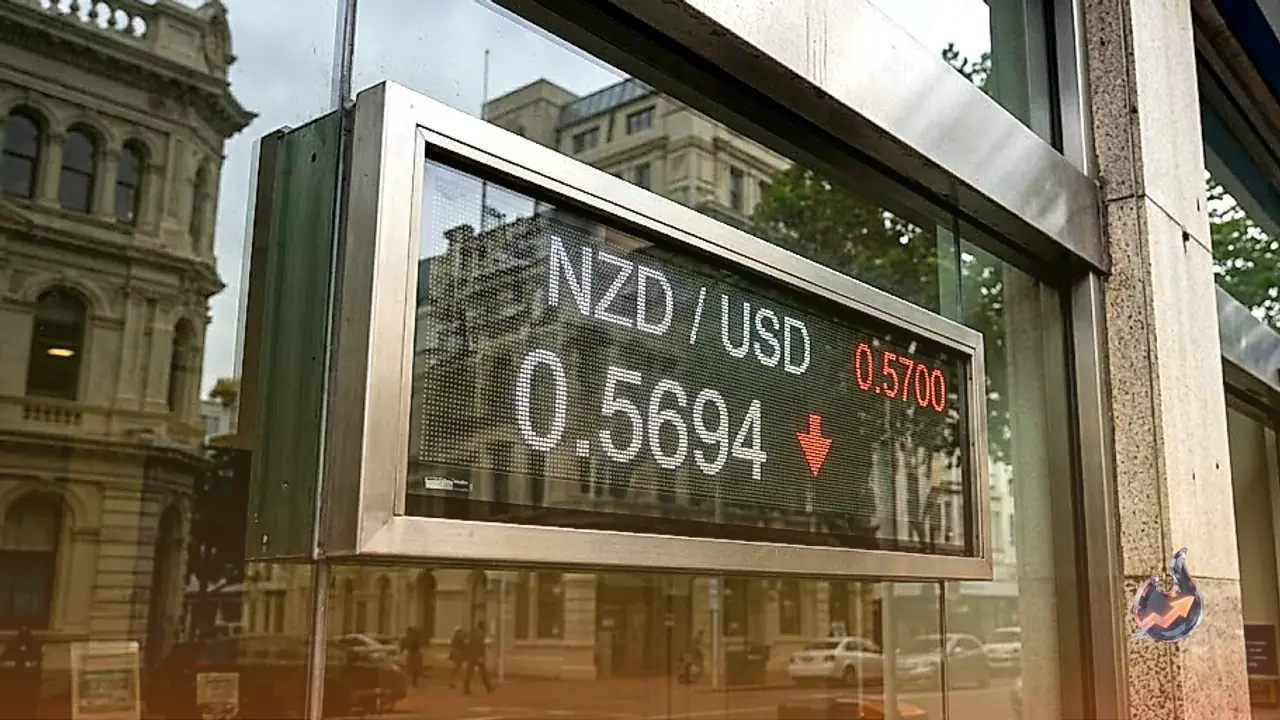

























The United States currency traded on a firm footing on Wednesday, consolidating recent advances across global foreign exchange sessions. The US Dollar Index (DXY), which gauges the performance of the Greenback against a basket of six international peers, hovered close to 101.80 throughout Asian dealing after booking modest upward progress during the previous session. Persistent strength in oil prices has renewed concerns regarding persistent price pressures across the globe, driving institutional demand toward traditional safe-haven instruments and keeping the dollar well supported against major trading counterparts.
Energy Fluctuations and Diplomatic Friction
Price action in the crude complex served as a primary catalyst for currency market participants, who closely weighed ambiguous signals surrounding diplomatic dialogue between Washington and Tehran. Although official discussions remain open, investor sentiment faced friction following top-tier deliberations conducted in Tehran. Field Marshal Asim Munir, the army chief of Pakistan, conferred with senior Iranian military and diplomatic officials regarding bilateral ties as well as the progress of talks involving the United States. Clarifying the situation, an involved diplomat pointed out that while initiatives targeting dispute resolution remain active, any assertion of an immediate comprehensive breakthrough remains premature, preserving an elevated geopolitical risk premium.
The Structural Reach of the American Currency
The US Dollar serves not only as the sovereign medium of exchange for the United States but also as an indispensable de facto transaction instrument across numerous economies where it circulates alongside domestic cash. It occupies an unrivalled position in cross-border finance, representing over 88% of daily global foreign exchange turnover, which translated to an average daily transaction volume of $6.6 trillion according to comprehensive 2022 benchmarks. The British Pound previously functioned as the preeminent global reserve anchor until the aftermath of World War II, when the US Dollar stepped into that primary role. For extensive phases of its operational history, the currency maintained direct convertibility into gold until the formal dissolution of the Gold Standard under the Bretton Woods Agreement in 1971.
Federal Reserve Mandates and Interest Rate Mechanics
Monetary policy actions executed by the Federal Reserve stand as the dominant driver of valuation trends for the US Dollar. The central bank operates under a dual congressional statutory directive to guarantee price stability through inflation management and to cultivate conditions supporting maximum sustainable employment. Its chief instrument for achieving these dual priorities remains adjustments to the target policy interest rate. When consumer and wholesale costs climb excessively above the central bank's targeted 2% threshold, policymakers routinely hike borrowing costs, typically boosting the exchange value of the Greenback. Conversely, if price pressures dip under 2% or labor market data reveals concerning rises in joblessness, the institution frequently cuts lending benchmarks, creating downward valuation pressure.
Rate Expectations and Liquidity Operations
Current positioning indicators derived from the FedWatch Tool demonstrate that financial markets assign an 83.9% probability to an interest rate pause at the upcoming policy meeting next week. Fed Chair Warsh refrained from offering definitive advance signals concerning the October policy gathering, explicitly refusing to prejudge the outcome of the committee's deliberations. Outside standard rate adjustments, the central bank maintains authority to implement extraordinary liquidity mechanisms such as quantitative easing (QE). This non-standard procedure involves purchasing substantial volumes of sovereign bonds from commercial institutions using freshly created dollar reserves, a measure deployed during the 2008 Great Financial Crisis to resolve severe interbank liquidity freezes, which usually depresses the dollar's value. Conversely, quantitative tightening (QT) occurs when the central bank terminates security purchases and lets bond maturities roll off without replacement, a mechanism that generally offers fundamental support to the currency.
Global Currency Pairs and Commodities Under Pressure
Across specific currency pairs, AUD/USD maintained an upward bias across four uninterrupted sessions, changing hands above 0.7000 during Asian trading hours to print three-week peaks. Assertive commentary delivered by Reserve Bank of Australia Deputy Governor Andrew Hauser concerning stubborn price inflation provided firm structural backing for the Australian currency, though lingering geopolitical uncertainty involving US-Iran talks limited broader gains by inviting dollar buying. USD/JPY recorded modest dip-buying demand while remaining confined within an established multi-week consolidation structure around 158.50, as ambiguity surrounding the schedule of future rate hikes by the Bank of Japan prevented yen buyers from establishing sustained momentum. Meanwhile, the price of gold extended its decline across a fourth consecutive session, easing 0.2% to trade around $4,115 amid higher Treasury yields prompted by sharp multi-week rallies in crude benchmarks.
Digital Assets and Approaching Economic Releases
The cryptocurrency complex experienced steady price behaviour following positive closes in the preceding session, with the three largest tokens by valuation, Bitcoin, Ethereum, and Ripple, consolidating their positions. This modest stabilization hints at the potential for an extended upward trend as selling pressure subsides. Bitcoin traded near $82,930 on Wednesday, preserving a positive short-term technical trajectory following Tuesday's upward reversal. International market attention is also turning toward Europe, where the United Kingdom Office for National Statistics is slated to publish September Consumer Price Index metrics at 06:00 GMT on Wednesday, accompanied by official Producer Price Index data and comprehensive retail sales figures.