


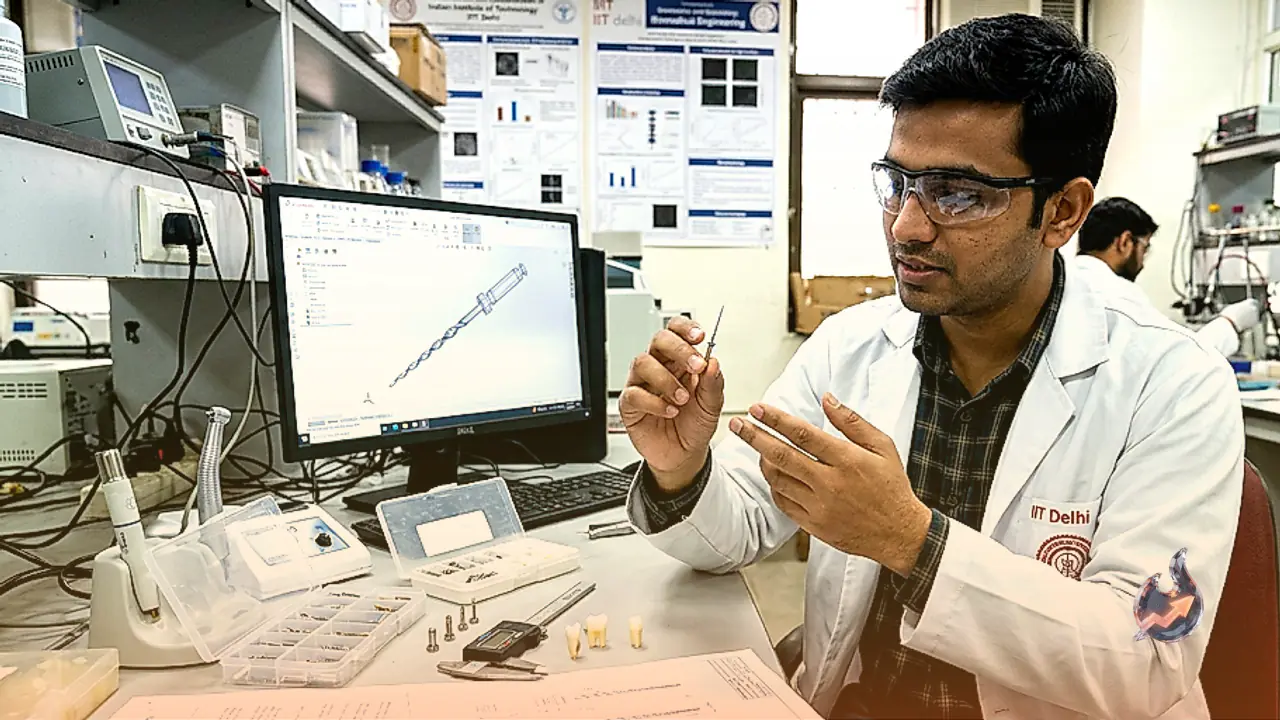
















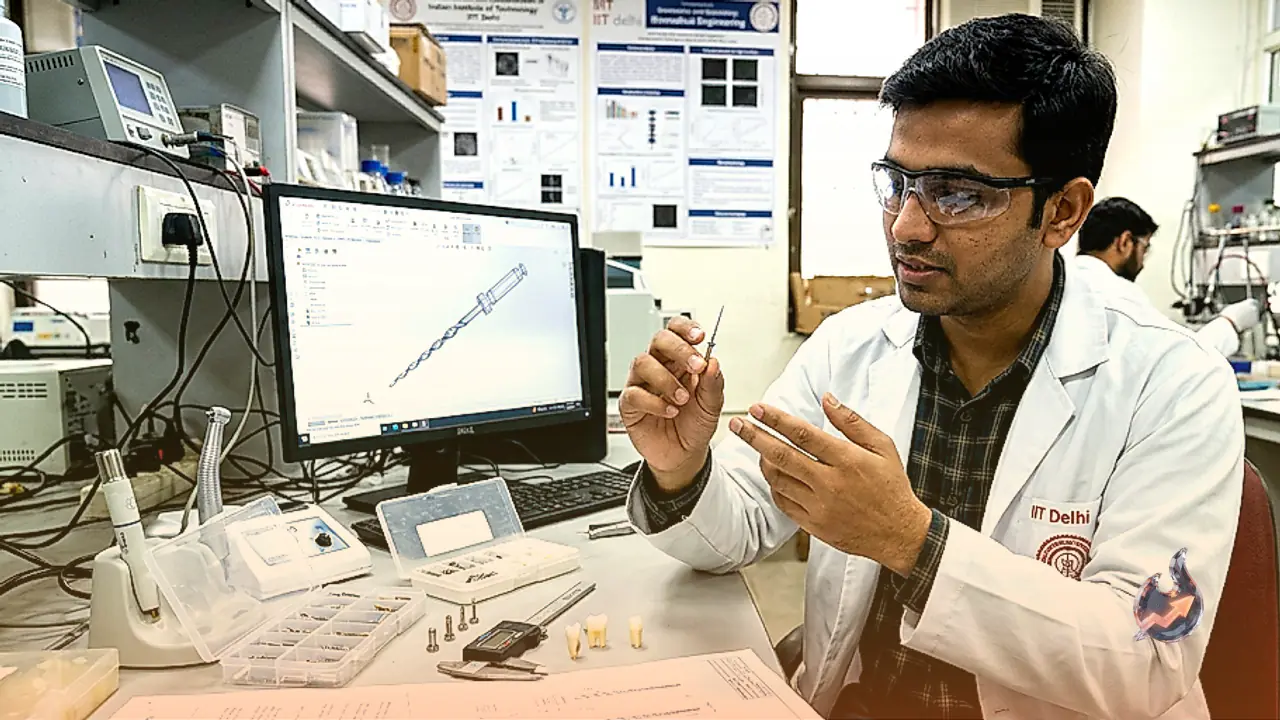

A new technological solution has emerged in New Delhi to reduce the complexities associated with root canal treatments. During dental procedures, doctors often spend a considerable amount of time identifying the exact location of decay or trouble within a tooth. This traditionally requires relying on X-rays and various heavy machinery before the actual treatment procedure can even begin. To simplify this lengthy and cumbersome process, Ehsan Khan, a PhD student at IIT Delhi, has stepped forward. Working under the guidance of his professor, he has engineered a specialized device designed to provide dentists with precise information and make dental treatments much smoother. This unique tool is not only capable of pinpointing the exact position inside the tooth but is also expected to be introduced to the market in the near future.
What is an endodontic file and its role
Explaining the utility of the device, Ehsan Khan noted that an endodontic file is a particularly thin, pointed, and flexible instrument utilized in dental care. It is primarily deployed during root canal treatments to properly shape the root canal and help eliminate infections and bacteria trapped inside. Typically, these instruments are constructed from materials such as stainless steel and nickel-titanium. Put simply, it is a vital tool employed by dentists to clean the interior of a tooth's root, but this newly enhanced version will now also guide practitioners to the exact position required for the intervention.
Clinical trials and upcoming market launch
Presently, clinical trials for this novel device are underway, and students at Maulana Azad Medical University are being introduced to the technology through live demonstrations. The creator mentioned that if all subsequent evaluations proceed smoothly, the product will soon be rolled out commercially. While the final price point has not yet been determined, the apparatus functions as an advanced dental navigation system. The prototype was recently showcased at the IIT Delhi open house, where visitors and fellow students examined the technology and gathered detailed insights about its operation.