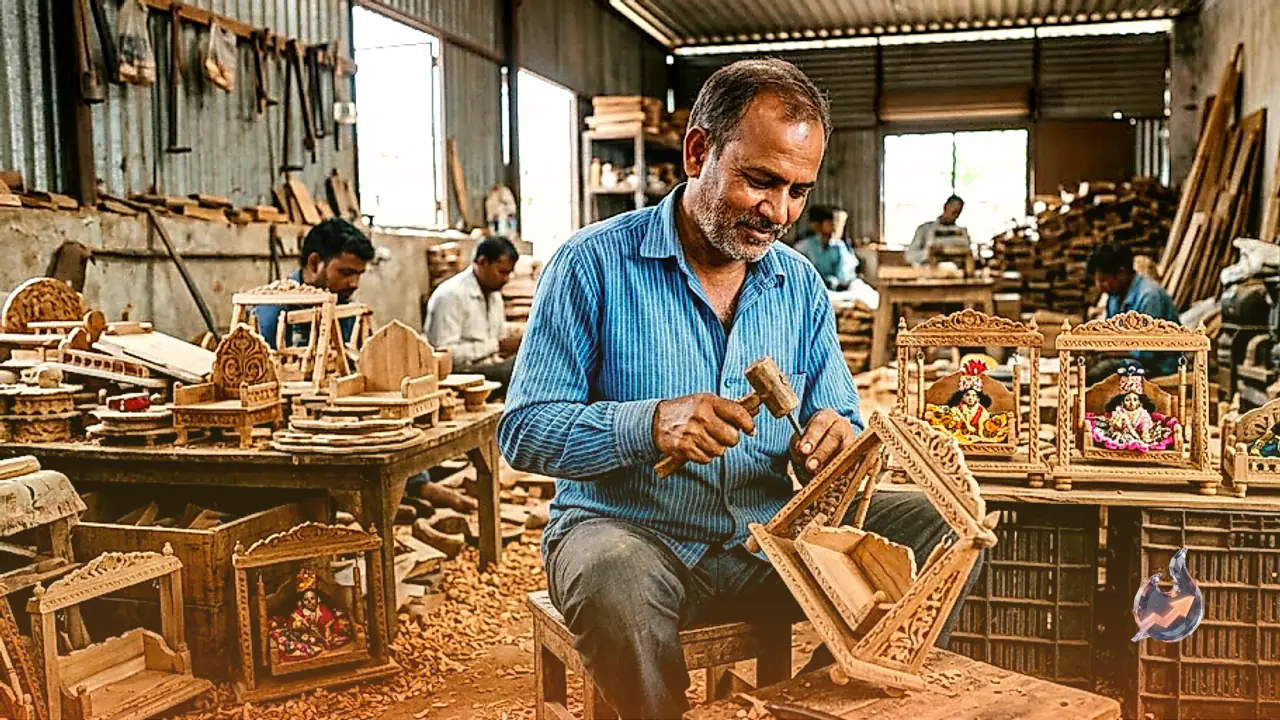


















For individuals seeking employment away from home due to limited local opportunities, an innovative agricultural initiative in the Jehanabad district of Bihar presents a compelling path forward. Dev Sharan Prasad, a resident of Makhdumpur block, once faced the grim necessity of working as a migrant laborer in distant regions. Challenges such as a lack of strategic planning, insufficient technical knowledge, and inadequate capital often force rural workers into migration. However, Prasad converted these obstacles into an opportunity by creating an integrated farming framework on his ancestral land that yields continuous financial returns.
Integrating Six Diverse Enterprises on a Single Plot
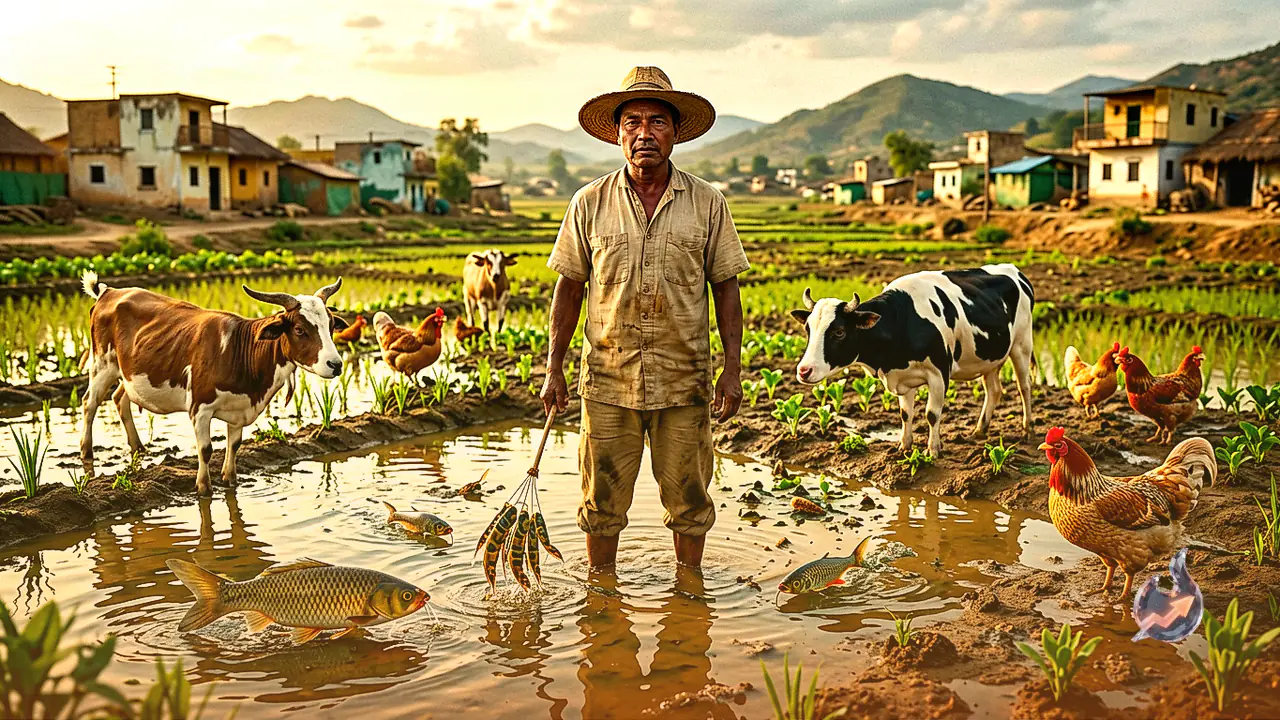
Prasad transformed his 25 kattha land parcel, which spans over 1 acre, into a comprehensive integrated fish farming unit. Recognizing that relying on a single conventional crop exposes farmers to market risks and seasonal income gaps, he designed a diversified system. His farm simultaneously houses six distinct livestock and aquaculture enterprises: fish farming, prawn cultivation, goat rearing, cattle farming, poultry raising, and quail farming. This multi-pronged structure ensures that the enterprise is not dependent on the cycle of any single agricultural commodity.
Strategic Space Management and Farm Layout
To accommodate multiple activities within 25 kattha of land, Prasad implemented a meticulous spatial layout. Every segment of the property serves a dedicated purpose without interfering with other operations. The embankments around the water body are utilized for the main fish farming infrastructure. The primary entrance area is allocated to goat rearing. Furthermore, cattle housing is positioned in one dedicated corner of the plot, while prawn cultivation is organized in another corner. This structured arrangement optimizes land utilization and operational efficiency across the entire farm.
Economics of Continuous and Multi-Source Cash Flow
The core philosophy of Prasad's model rests on creating alternative, rotating income streams throughout the year. He emphasizes that single-crop farming yields single-source returns, whereas integrating five or six active enterprises opens five distinct revenue channels. Under this rotational system, sales from quail farming on one day are complemented by income from poultry, dairy, or aquaculture on subsequent days. Quantifying the potential, Prasad notes that if each enterprise yields between 1 rupee and 50 rupees daily, the cumulative daily revenue across five active streams reaches 250 rupees. This daily aggregation translates into a stable and substantial annual income.
Inspiration and Strategic Guidance for Rural Farmers
Prasad advocates that aspiring entrepreneurs and fellow farmers adopt a mindset geared toward multi-source income generation. Rather than viewing capital or information constraints as permanent barriers, he demonstrates how small-scale farmers can achieve self-reliance directly from their home villages. By establishing a systematic farming model, rural workers can avoid distress migration and secure steady, year-round livelihoods.