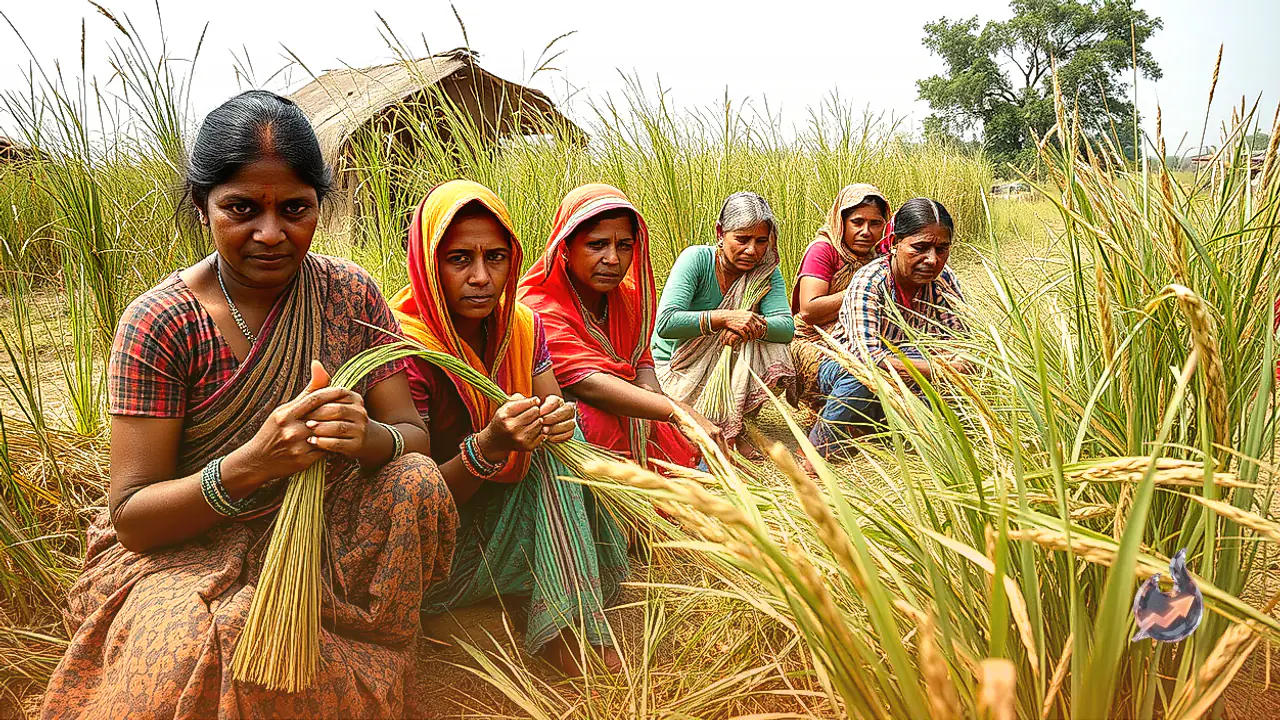


















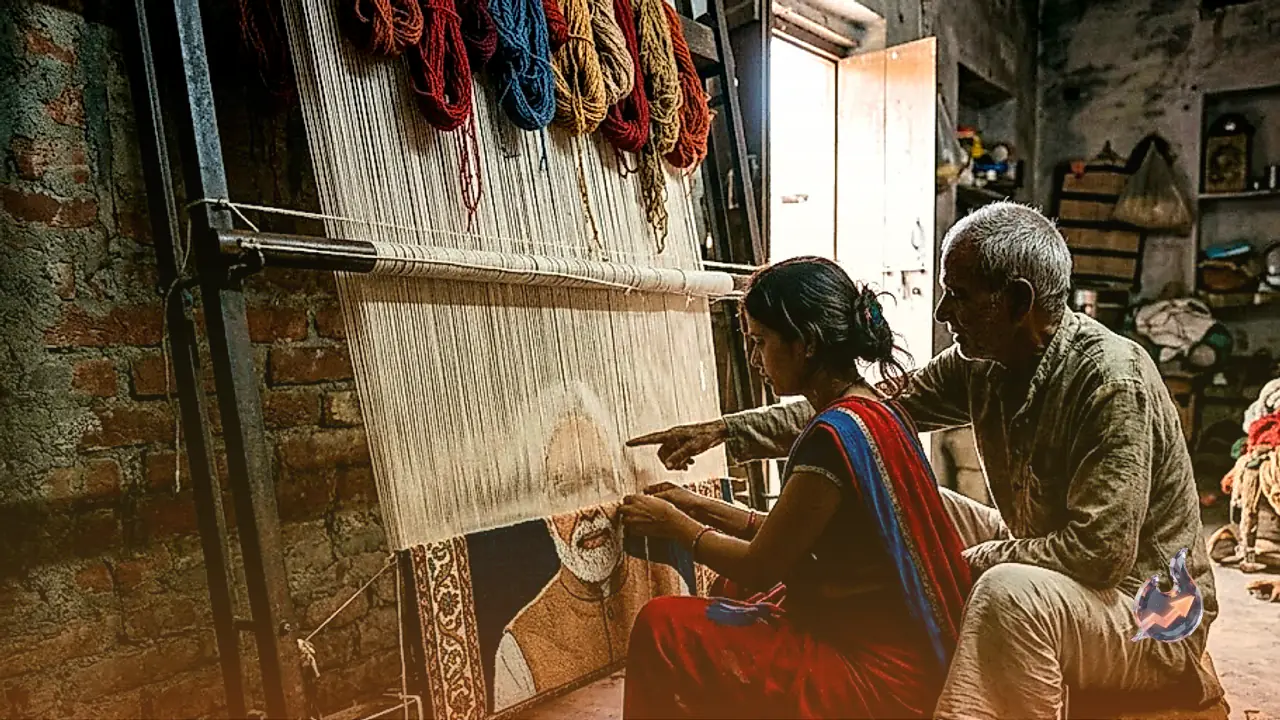

Traditional craftsmanship is enabling rural women to script their own financial independence through persistent effort. In the Kapsethi village of Uttar Pradesh's Mirzapur district, an artisan named Gyan Devi has transformed a generational craft into a dependable source of livelihood. Having acquired the intricate skill of carpet weaving, she has demonstrated her specialized artistry by weaving a detailed portrait of Prime Minister Narendra Modi directly onto a carpet. Through her dedicated daily weaving work, she now generates a consistent daily income ranging between 500 and 600 rupees, establishing herself as an example of self-reliance for other women in the community.
Carrying Forward a Generational Family Craft
Carpet manufacturing was a central part of Gyan Devi's household during her upbringing. Her family operated a substantial carpet business, with her father alongside other relatives actively engaged in the meticulous craft of knotting and weaving. Observing this work during her early years created a keen desire within her to master the trade. Her father personally guided her through the technical nuances and complex details of the weaving process. Even after her marriage, she ensured that her connection to the artisan tradition remained intact, continuing her work alongside household responsibilities.
Encounter with the Prime Minister and Artistic Pursuit
During a visit to Gujarat, Gyan Devi received an opportunity to meet Prime Minister Narendra Modi in person. The encouragement and inspiration she gathered during this interaction motivated her to undertake an ambitious artistic project within her craft. Channeling her weaving skills, she crafted a carpet featuring a portrait of the Prime Minister. The endeavor highlighted her technical capability in handling intricate figurative patterns on the loom.
Balancing Domestic Life with Regular Earnings
Managing day-to-day household chores alongside her craft, Gyan Devi maintains a steady production schedule at her loom. Her daily earnings consistently stand between 500 and 600 rupees, translating into an aggregate monthly income of 15,000 to 16,000 rupees. While policy initiatives continue to encourage female entrepreneurship across various trades, Gyan Devi emphasizes that true self-reliance stems from personal initiative. While acknowledging the encouragement received, she maintains that individuals must actively strive for economic independence rather than relying solely on external or state assistance.