























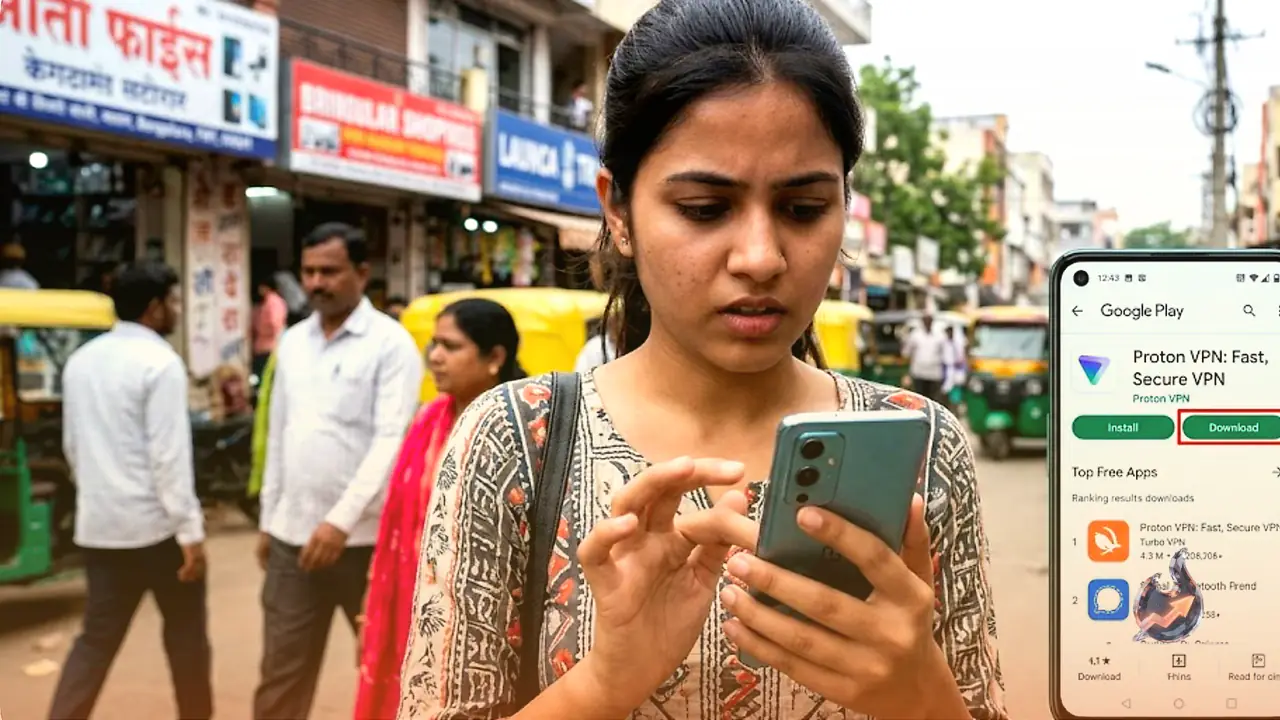

When the Indian government placed a temporary block on Telegram on June 16, millions of users moved quickly to find their way around it. Data from app intelligence firm App Figures shows that on June 17, the total downloads of the top 100 VPN apps in India reached 9.19 lakh, the highest single-day figure for VPN apps in the country since the start of 2025.
The Numbers That Tell the Story
The June 17 figure was 76% higher than the average daily VPN downloads recorded between June 9 and 15, and 63% above the average for the first half of the month from June 1 to 15. Even on June 16 itself, the day the ban was enforced, downloads had already climbed to 6.45 lakh as news of the restriction spread and users began hunting for solutions.
A VPN, or Virtual Private Network, works by encrypting a user's internet traffic and routing it through servers in other locations, effectively masking the device's IP address and allowing users to get around network-level blocks. While VPNs are commonly used for privacy and corporate security on normal days, demand for them spikes sharply the moment a popular app or website is taken offline.
Proton VPN and Turbo VPN Lead the Field
Among individual VPN apps, Proton VPN posted the sharpest gains in absolute terms. Its daily downloads climbed from an average of 60,500 to 1,55,430, a jump of 157%. Turbo VPN nearly doubled its numbers, reaching 1,22,030 downloads. Ninja VPN put up a remarkable 669% surge, while Express VPN recorded a 345% increase.
The rush also reshaped Google Play Store rankings in a visible way. Proton VPN was sitting at eighth place in the Tools category on June 17, but by June 19 it had reached the top spot. Turbo VPN made a similarly dramatic climb, jumping from eleventh place all the way to second.
Users Flock to Telegram Alternatives
For users who wanted to switch messaging platforms entirely rather than use a VPN, the Telegram ban created immediate demand for alternatives. Telegram Messenger's own downloads collapsed from a daily average of 1,25,048 to just 38 in the wake of the ban.
Telegram X, a separate client built on the same messaging network, recorded a staggering 6,509% increase in downloads, reaching 3,50,764. iMe, another messaging app connected to the Telegram ecosystem, saw its downloads explode by 22,018% to reach 1,70,372, arguably the single most dramatic number in the entire dataset. Privacy-focused Signal also emerged as a clear beneficiary, with downloads rising 571% to reach 32,106.
Two Responses to One Restriction
The App Figures data paints a clear picture of how Indian users split in their response to the block. One group turned to VPNs to maintain access to Telegram directly, bypassing the restriction without giving up the platform. Another group used the moment as a reason to migrate to alternatives such as Telegram X, iMe, and Signal. The ban demonstrably disrupted Telegram's normal download patterns, but the data is equally a testament to how quickly and resourcefully Indian internet users adapt when a platform they depend on is suddenly taken away.