






















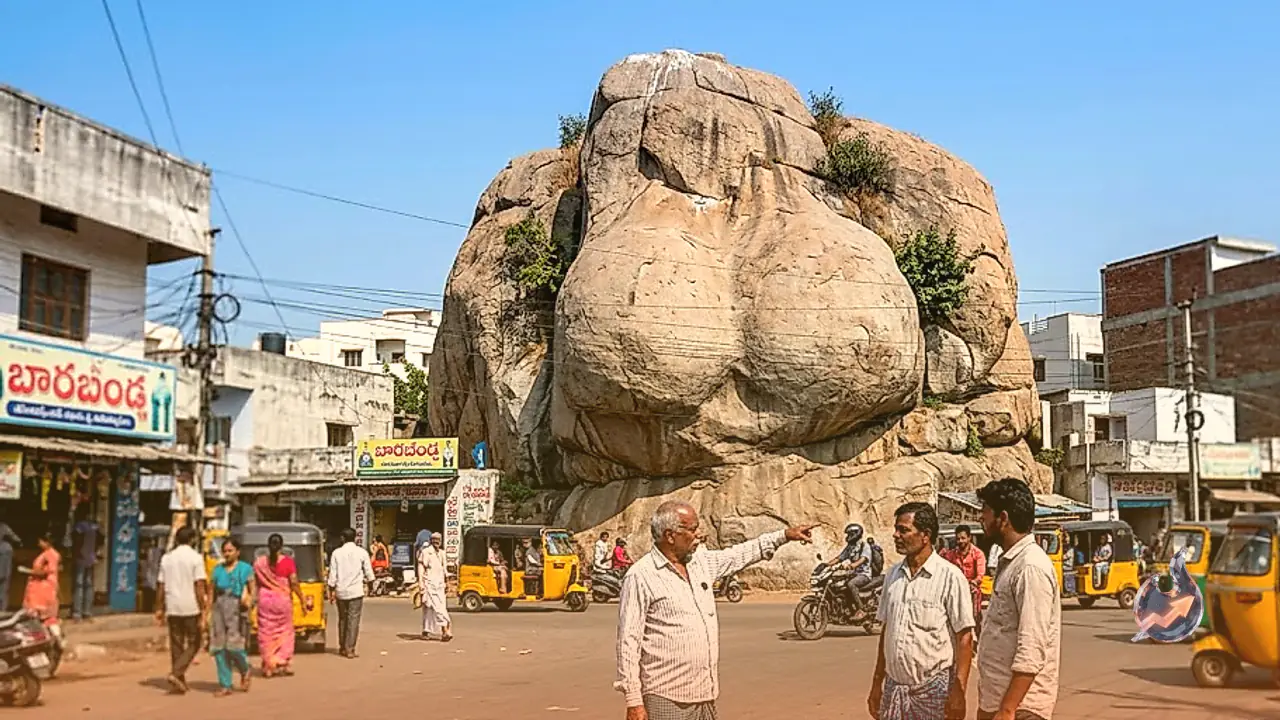

Today, the city of Hyderabad in Telangana is recognized globally for its cutting-edge technology infrastructure, sprawling high-rises, and fast-paced urban lifestyle. Among its densely populated and heavily frequented localities is Borabanda, a neighborhood that experiences round-the-clock traffic and vibrant community activity. However, the landscape of this bustling urban hub was dramatically different just a few decades ago. During the era of Nizam rule, the entire Borabanda territory was situated on the remote outskirts of the central city. In those times, it remained largely deserted, dominated by barren expanses, rugged hills, and empty terrain. Being an integral part of the Deccan plateau, the entire geography was naturally covered with massive boulders of ancient granite.
The Telugu Etymology Behind the Neighborhood Name
The origin of the name Borabanda is rooted in a fascinating historical and linguistic blend. According to experts in local history and regional linguistics, the term was created by combining two distinct Telugu words. The first element, Bora, translates directly to chest or breast in the Telugu language. The second component, Banda, is conventionally used in Telugu to refer to a massive boulder or large stone. Together, these two words formed a compound term that captured the distinctive topography of the region.
A Granite Boulder Resembling a Bulging Chest
Decades ago, this rocky expanse featured an exceptionally large granite hill with a truly unique physical shape. The natural contour of this hill was such that when viewed from a distance, it distinctly bulged forward, mirroring the shape of a puffed human chest. Impressed by this unusual visual feature, local residents began referring to the massive rock formation as Borabanda. Over time, as more people began navigating the area, the descriptive title became the primary landmark identifier for the surrounding wilderness.
Urbanization Erased the Hill But Preserved the Name
As Hyderabad expanded, human settlements gradually developed around the perimeter of the prominent hill. Over the decades, the surrounding spaces evolved into a major residential zone, permanently anchoring the area's identity to the name. Local history expert Rajesh Garu notes that rapid modern urbanization, intensive construction projects, and infrastructure growth eventually led to the complete destruction of the historic granite hill. Although the physical rock formation no longer exists today, its unique heritage survives permanently etched on the official map of Hyderabad.