





















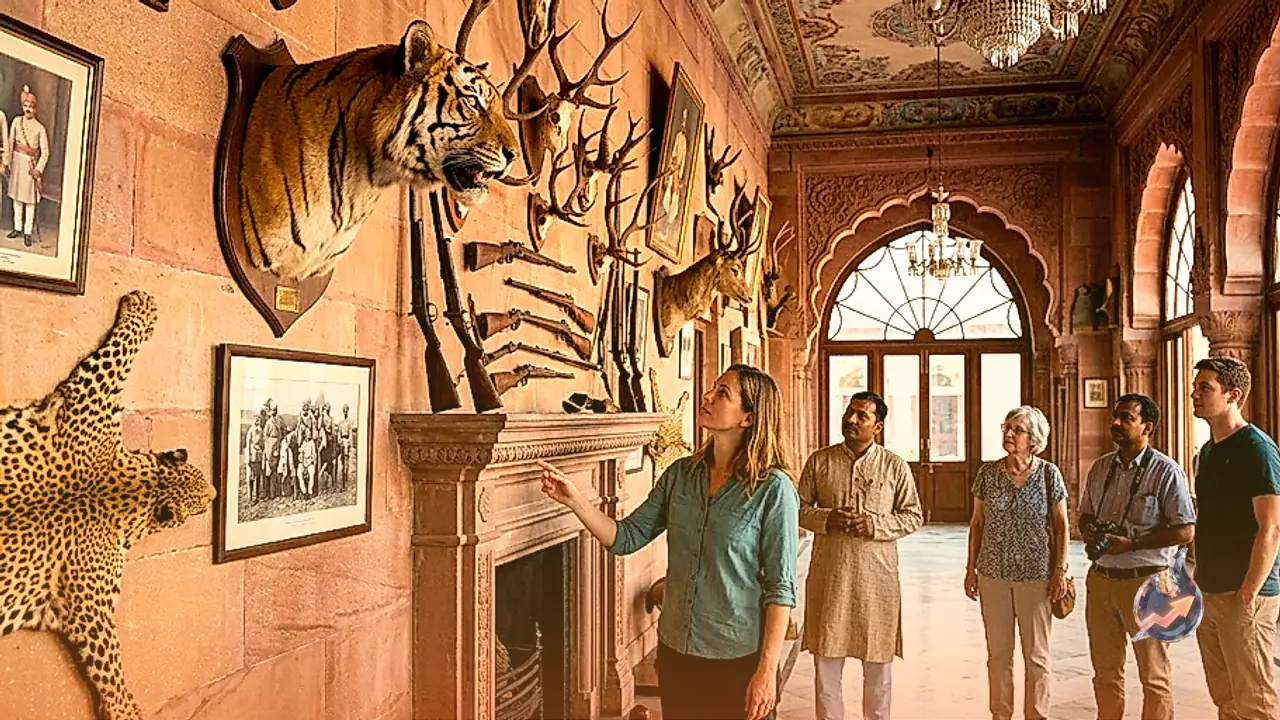

Renowned for its magnificent architecture, royal splendor, and deep historical legacy, the Laxmi Niwas Palace in Bikaner remains a major magnet for travelers seeking a glimpse into the past. Upon stepping inside the grand estate, visitors encounter a preserved history that continually startles onlookers. The interiors house collections that draw countless domestic and international tourists to Bikaner every single year to witness the bygone royal atmosphere firsthand.
Within the various chambers of the estate, numerous trophies remain preserved in their original condition, leaving many foreign and local visitors utterly astonished. The walls feature massive crocodile skins, bear pelts, and the preserved heads of various wild animals such as deer, sambar, blackbuck, and wild buffaloes. These items form a core part of the historical collection, depicting the hunting traditions practiced by former royal families. Visitors frequently capture photographs and videos of these rare relics during their tours.
Hunting as a Symbol of Royal Prestige
Historians explain that during the princely era, hunting served as much more than mere entertainment, acting instead as a definitive symbol of a ruler's valor, power, and prestige. Following special hunting expeditions, the skins and heads of wildlife were carefully preserved and mounted inside palaces to showcase royal opulence, a practice common across many royal residences of that era throughout the country. However, perspectives and legal frameworks have shifted dramatically with the passage of time.
Today, the Wildlife Protection Act of 1972 is enforced across India, making the hunting of most wild animals strictly illegal. While the trophies inside the Laxmi Niwas Palace serve as a reminder of an era when hunting formed part of royal culture, viewing them today also reinforces the vital importance of wildlife conservation. Standing as a bridge between history and the present, the palace not only preserves the royal heritage of Bikaner but also reflects the profound evolution in societal mindset over the generations.