





















Drinking refreshing and naturally chilled water from an earthen clay pot during the scorching summer months is a unique pleasure. However, after continuous daily use, the inner surface of the pot tends to accumulate green algae, stubborn dirt, and sometimes even foul odors. In such situations, simply dumping out the old water is never enough, and regular deep cleaning of the pot becomes absolutely essential. This is especially true for the vessel used continuously for storing drinking water. The good news is that keeping this traditional container clean does not require purchasing any expensive commercial cleaning agents or special equipment from the market.
Initial Steps Before Scrubbing
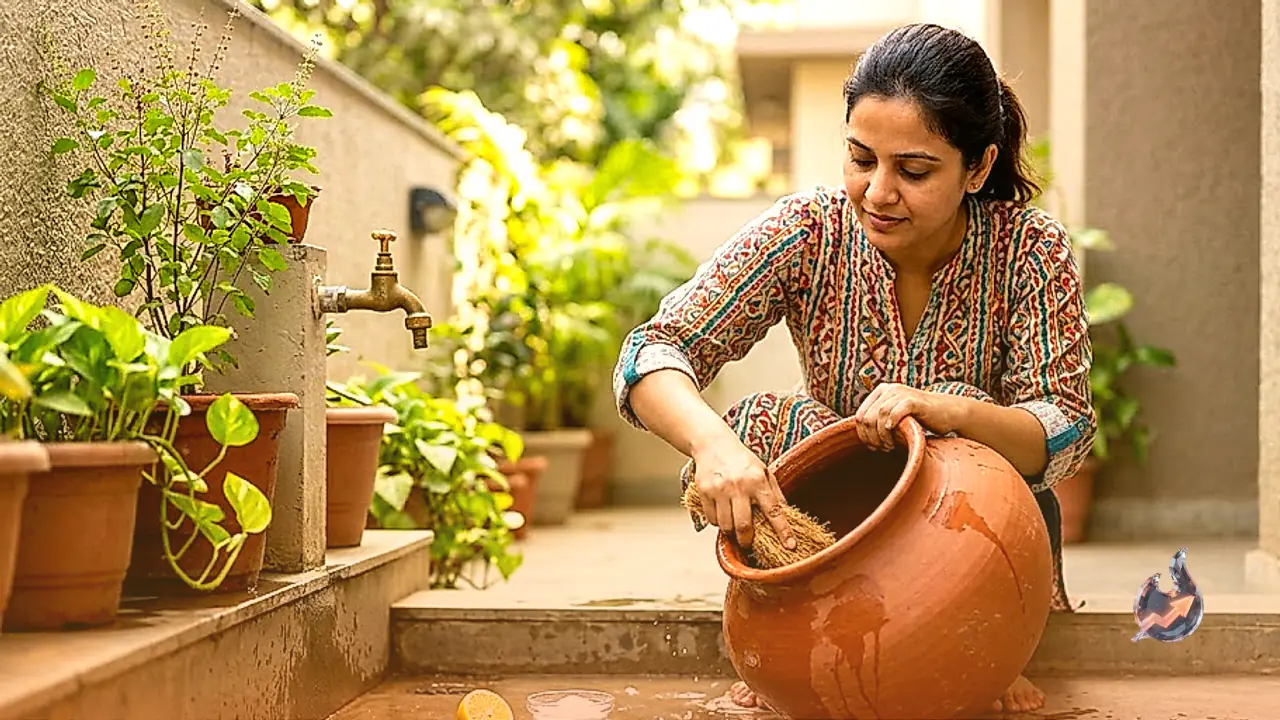
Before beginning the cleaning process, make sure to completely empty out any remaining water left inside the pot. Rinse the vessel thoroughly with normal clean water to wash away loose debris. If a visible layer of green algae has formed along the inner walls, gently scrub it away using a soft-bristled brush or a gentle non-abrasive scrubber. Never use hard or metallic wire brushes, because doing so can make the porous clay surface rough and structurally weaken the pot over time. Maintaining a gentle touch ensures that the delicate earthen material remains undamaged while clearing out accumulated grime.
Using Lemon and Baking Soda Effectively
Lemon serves as an exceptionally effective natural agent for clearing away dirt and neutralizing bad smells inside a clay pot. Extract some lemon juice, mix it with a small amount of water, and apply the solution evenly across the interior surface of the pot. Leave the mixture sitting inside for a brief period so it can break down the grime. Afterwards, use a soft brush to gently clean the inner walls. The outer surface of the pot can also be rubbed gently using used lemon peels to eliminate exterior stains. Once the scrubbing is complete, it is vital to rinse the pot multiple times with clean water to ensure no residual lemon traces remain behind inside.
If the dirt accumulation inside the vessel is particularly heavy, baking soda can be brought into use as a reliable alternative. Mix a measured amount of baking soda with water to create a mild cleansing solution, and gently clean the inner lining of the pot with it. Rinse the vessel thoroughly with clean water immediately afterward. It is important to remember that neither baking soda nor any other cleaning substance should be used in excessive quantities. The most critical part of cleaning any container meant for drinking water is performing a thorough final rinse to wash away all cleaning residues completely.
Drying and Routine Maintenance
After washing and rinsing the clay pot completely, it should be left empty in a well-ventilated space for some time so that the interior surface dries out thoroughly. Fresh drinking water should only be poured back in after the pot is completely dry. During the peak summer season, it is also a good practice to change the stored water every single day. If the stored water ever begins to change its natural taste or develops an unusual smell, avoid consuming it and clean the pot all over again right away. Leaving water stagnant inside an unwashed clay pot for prolonged periods allows bacteria and grime to multiply rapidly. Therefore, making regular cleaning a standard part of your daily routine throughout the summer months is the best way to maintain pure and refreshing water.