



















Across the cultural belt of Mithila in Bihar, community festivals transcend routine religious observances, carrying the deep imprint of domestic intimacy, community life, and centuries-old folklore. A prominent reflection of this living heritage is the festival of Chaurchan, locally referred to as Chauth Chandra, Chauthchandra, or Chakchanna Parv. While popular religious customs in many regions caution against viewing the crescent moon on the fourth day of the bright fortnight of Bhadrapada, commonly celebrated as Ganesh Chaturthi, Mithila observes a striking counter-tradition on this exact evening. Families throughout the region gather to formally worship the moon, presenting an elaborate ceremonial offering of home-cooked delicacies, seasonal fruits, thick curd, and traditional sweets. For the year 2026, Chaurchan is observed on 14 September, corresponding to the arrival of the auspicious Shukla Chaturthi tithi that commences in the morning hours.
The Cultural Identity and Regional Significance of Chaurchan
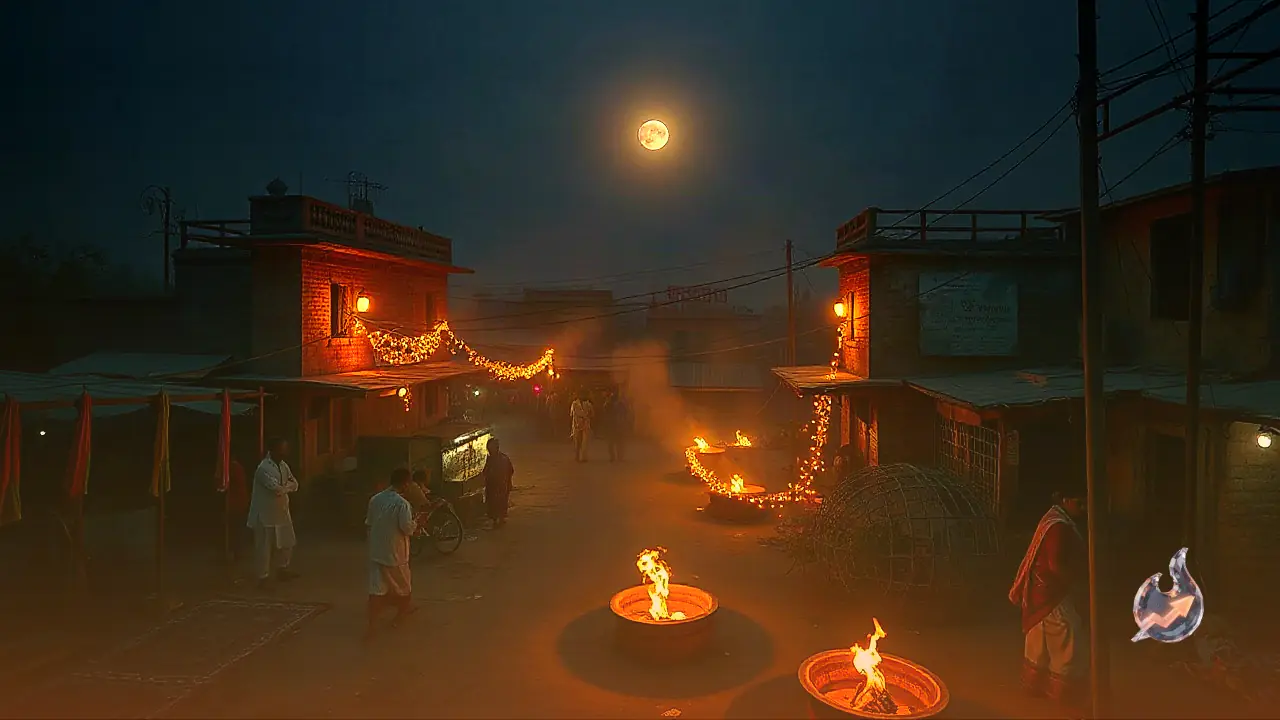
Chaurchan ranks among the foremost community celebrations native to the Mithila landscape. Held on Bhadrapada Shukla Chaturthi alongside Ganesh Chaturthi, the distinct ceremonial practices, regional folklore, and aesthetic expressions set it apart from conventional observances elsewhere in the country. The entire day is defined by festive discipline, with women in numerous households observing a complete day-long fast. As twilight sets in, active preparations commence in the central domestic courtyards or upon open rooftops. The ritual ground is adorned using Mithila's traditional Aripan art, where intricate geometric and floral designs are painted using ground rice paste and natural dyes. Within this sanctified enclosure, idols of Lord Ganesha and other accompanying deities are revered before the primary oblation is formally directed toward the rising moon.
Culinary Offerings and Evening Ritual Ceremonies
A hallmark of the Chaurchan celebration lies in the specialized domestic dishes prepared by women in the family. Kitchens buzz with activity throughout the afternoon as distinctive offerings take shape. Prominent among the items presented to the deity are traditional kheer, crisp pooris, assorted sweets, fresh fruits, and artisanal curd set in earthen pots. In numerous rural and semi-urban pockets, extended assortments of baked and fried items prepared from wheat and rice flour are also prepared. A distinctive community practice in many settlements requires assembling separate platters of offerings corresponding precisely to the number of members living in the household. When the moon becomes visible across the autumn sky, observers stand facing the celestial body, reciting traditional verses while holding the consecrated offerings aloft in their hands. Once the rituals conclude, the blessed prasad is shared among extended relatives, neighbors, and friends.
The Legend of the Syamantaka Gem and Prasen's Untimely Demise
The philosophical foundation of Chaurchan and its unique moon-viewing custom finds its roots in a famous narrative from the Puranas centered around Lord Krishna and the famed Syamantaka gem. According to the ancient chronicles, an ardent noble named Satrajit undertook severe penance dedicated to Surya, the sun god. Pleased by Satrajit's unwavering devotion, Surya gifted him the miraculous Syamantaka jewel. The lore held that this extraordinary gem generated a substantial quantity of pure gold every single day, enriching the kingdom. In time, Satrajit chose to entrust the custody of this invaluable heirloom to his brother, Prasen.
One fateful afternoon, Prasen donned the luminous Syamantaka gem around his neck and rode deep into the wilderness on a hunting expedition. During the hunt, a ferocious lion launched an unexpected attack upon him, leading to Prasen's immediate demise on the forest floor. The predator seized the glittering gem in its jaws and retreated deeper into the woods. Elsewhere in the same jungle, Jambavan, the legendary warrior bear of ancient lore, spotted the lion carrying the brilliant treasure. Jambavan subdued and killed the beast, taking possession of the jewel. He carried the treasure back to his subterranean cavern and gave the jewel to his young son, Sukumar, to serve as an amusing plaything.
Growing Suspicion and the Defamation of Krishna in Dvaraka
When days elapsed and Prasen failed to return to the capital city of Dvaraka, an atmosphere of alarm and suspicion spread rapidly. Overcome by grief and haste, Satrajit openly accused Krishna of committing foul play. He publicly alleged that Krishna had orchestrated Prasen's murder in the forest out of an insatiable covetousness for the gold-producing Syamantaka gem. Because such an allegation cast a severe moral stain upon his character and standing among the populace, Krishna resolved to unearth the absolute truth through an open, self-conducted investigation. Accompanied by a party of trusted companions, Krishna ventured into the thick forest along the trail Prasen had taken.
After an exhaustive search among the rugged terrain, Krishna and his contingent discovered the abandoned body of Prasen. Close to the remains, distinct tracks left by a predatory lion were identified in the soil. Tracking these predator prints further into the brush, the search party came upon the lifeless carcass of the lion itself. Radiating outward from that spot were the broad, distinct footprints of Jambavan leading into higher rocky terrain. Following these prints relentlessly, Krishna eventually reached the mouth of a massive, shadowed cavern.
An Epic Twenty-One-Day Battle Inside the Mountain Cave
Venturing alone into the cavern's depths, Krishna caught sight of the radiant Syamantaka gem in the hands of Jambavan's child, Sukumar. A nursemaid attended the youth, recounting the saga of the jewel to keep the child comforted. The sudden arrival of an outsider drew the immediate attention of Jambavan, who emerged from the shadows in fierce defiance. An intense, unyielding hand-to-hand combat erupted between Krishna and the ancient warrior.
Ancient accounts record that this titanic wrestling duel raged without interruption for an astonishing twenty-one days. As the third week drew toward its close, Jambavan noticed his formidable physical strength steadily waning under the tireless resilience of his opponent. Deep reflection overtook the veteran warrior, leading to the profound spiritual realization that the person facing him was no mere mortal champion, but the Supreme Divinity whom he had revered during his earlier life in the Treta Yuga as Lord Rama. Overwhelmed with devotion and remorse, Jambavan cast aside his defensive posture and sought immediate pardon. He respectfully surrendered the Syamantaka jewel into Krishna's hands and arranged the ceremonial marriage of his daughter, Jambavati, to the Lord.
Satrajit's Remorse and the Hidden Mystery Behind the Moon
Upon his triumphant return to Dvaraka carrying the retrieved jewel alongside his new bride, Krishna convened the royal assembly to disclose every detail of the sequence of events. He restored the Syamantaka gem directly to Satrajit in full view of the public court. Confronted with undeniable proof of Krishna's complete innocence, Satrajit experienced intense shame and regret over the reckless allegations he had voiced. With this public revelation, Krishna was formally absolved of the initial charge of theft and murder.
Yet the intricate tale did not end with this restoration. Sometime later, Satrajit was assassinated under mysterious circumstances, and the legendary Syamantaka gem vanished once again from the realm. The sudden disappearance ignited a fresh wave of public speculation, and whispers of suspicion were once again directed toward Krishna. Despite careful scrutiny of the ensuing events, the gem remained untraceable at the time, leaving Krishna under the shadow of persistent public misunderstanding and recurring slander.
It was at this juncture of distress that the celestial sage Narada appeared to illuminate the underlying cosmic connection. According to traditional belief, Narada revealed to Krishna that this unjust blemish on his reputation was the direct astrological consequence of having inadvertently caught sight of the moon on the fourth lunar day of Bhadrapada Shukla Paksha. Surprised by this disclosure, Krishna questioned the sage as to why gazing upon the moon on this precise tithi invited such unmerited ignominy and misfortune. This legendary conversation forms the very bedrock of the folk traditions of Mithila, where observing Chaurchan with devout moon worship has endured across generations as an essential ritual to safeguard against false accusations and attain social honor.