






















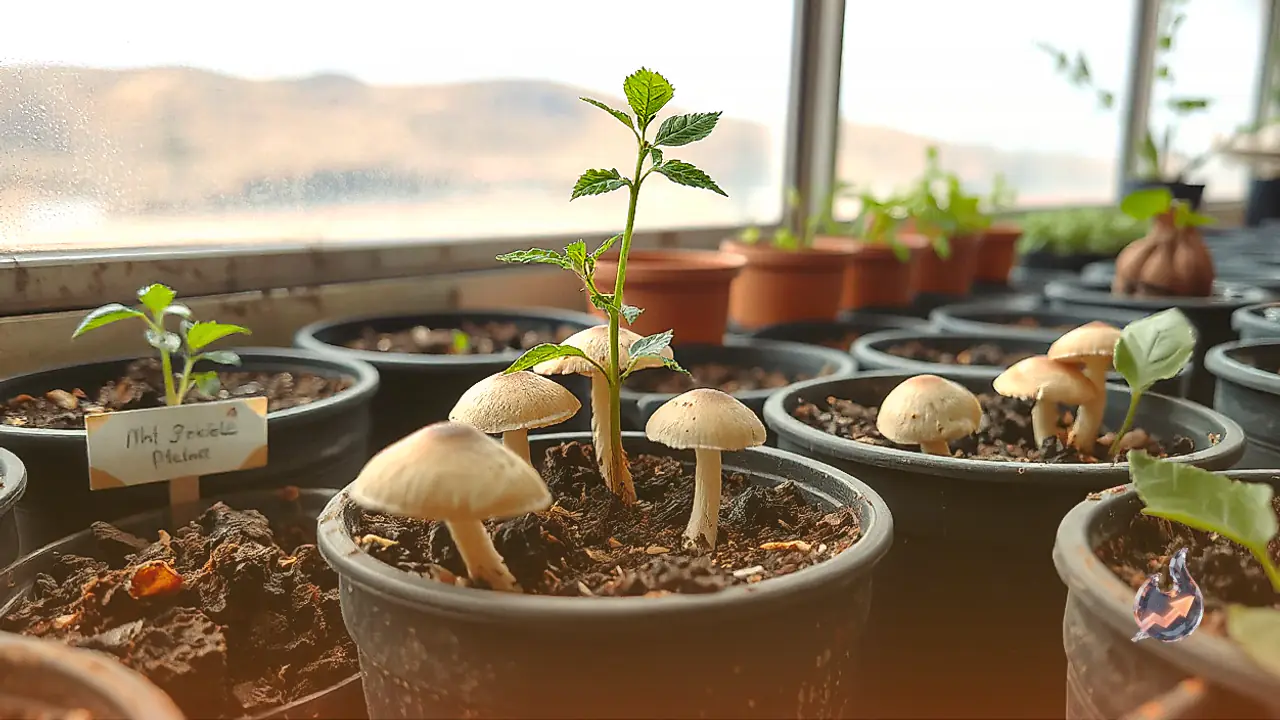

Discovering clusters of tiny white, yellow, or brown umbrella-shaped growths emerging from houseplant soil can catch any indoor gardening enthusiast off guard. While some plant parents instantly celebrate this phenomenon as proof of exceptional soil fertility, others immediately panic, worrying that a catastrophic root disease has gripped their favorite foliage. In reality, the sudden arrival of mushrooms inside containers is neither a miraculous sign of superior compost nor an automatic death sentence for the plant, but rather a direct biological reflection of soil moisture, aeration levels, and decomposing matter. As long as the plant itself displays vibrant green foliage, steady turgidity, and robust stems, the presence of these fungal fruiting bodies requires calm assessment rather than drastic measures.
The Biological Mechanism Behind Container Fungi
The mushrooms visible on the surface of potting soil represent only the reproductive fruiting bodies of an extensive subterranean fungal network known as mycelium. Standard potting mixes prepared for houseplants frequently blend ingredients such as coco coir, shredded bark, peat moss, dry fallen leaves, and seasoned compost. Soil microbes and fungal spores depend entirely on these rich organic compounds for sustenance, systematically breaking down complex fibrous materials into accessible microscopic nutrients. When soil stays damp for extended periods, ambient humidity remains elevated, and cross-ventilation is restricted, this hidden mycelial web receives the ideal ecological prompt to send fruiting mushrooms up into the open air.
Guidance from the University of Florida IFAS Extension highlights that the vast majority of mushroom species found in potted substrates operate as saprophytic decomposers. These specialized fungi survive exclusively by feeding on dead plant residues and decaying organic detritus trapped within the soil blend. Because their biological role is strictly restorative, they do not feed on living plant tissue and do not directly attack, infect, or damage healthy root structures.
Does Mushroom Growth Guarantee High Soil Fertility
Agricultural experts clarify that container mushrooms do not automatically denote premium soil quality. While their emergence confirms the active presence of organic matter and sufficient dampness to support microbial colonies, fungal decomposition is merely one component of a broader environmental balance. As these fungi break down cellulose and lignin, they do assist in recycling vital minerals back into the potting substrate over time.
However, this natural decay cycle does not necessarily translate into superior vitality or accelerated vegetative development for the potted specimen. Comprehensive soil health relies on structural porosity, rapid water evacuation, steady oxygen movement through the root zone, and balanced chemical nutrients. If a soil blend remains so soggy that mushrooms flourish continuously, that same waterlogged environment can quickly suffocate root hairs and induce root rot. Consequently, gardeners must treat potted mushrooms as an indicator of prevailing moisture and fungal activity rather than an unqualified badge of soil excellence.
Three Environmental Triggers That Promote Spores
Container fungi generally capitalize on three specific environmental conditions to establish fruiting colonies. The primary catalyst is chronic overwatering combined with sluggish drainage. When water is applied so frequently that the top layers of the potting mix never experience a dry period, fungal spores find continuous hydration. Containers lacking sufficient drainage apertures or resting in standing runoff trays are particularly vulnerable to this buildup.
The second underlying factor is an abundance of raw or partially broken-down organic material inside the potting substrate. Coarse wood chips, uncomposted bark chunks, and fibrous plant materials provide a steady feeding ground for mycelium. As decomposition advances, seasonal flushes of mushrooms inevitably puncture the surface. The third factor involves stagnant indoor air and low lighting. Containers tucked into dim interior spaces with negligible air movement preserve surface humidity for days, creating a humid microclimate that allows fungal stems to expand rapidly.
Practical Steps to Manage Sprouting Fungi
When the potted plant appears vigorous with firm, unblemished leaves, a methodical series of horticultural adjustments will resolve the fungal invasion effectively. The immediate physical remedy is simple: put on protective gardening gloves, grasp the mushrooms at their base, pluck them clean from the soil surface, and discard them in an outdoor waste bin before their caps release airborne spores. Next, thoroughly re-evaluate your irrigation schedule. Before introducing any fresh moisture, insert a finger deep into the soil to verify that the top one to two inches have dried out completely.
Inspect the bottom drainage holes of the container to ensure that excess water drains freely and does not pool around the root ball. Unclog blocked apertures with a small tool if necessary. Relocate the pot to a well-ventilated spot where it can receive adequate indirect sunlight and fresh ambient airflow tailored to its species requirements. If the potting mix smells foul or sour, or if the plant shows drooping leaves and blackened root tissue, simply plucking mushrooms will not suffice; the root system must be cleared of decayed material and repotted into fresh, coarse, well-draining substrate. As noted in the University of Florida guidance, gently loosening and aerating the upper crust of the soil allows trapped dampness to evaporate faster, significantly reducing the chances of subsequent fungal flushes.
Toxicity Risks for Households and Pets
Homeowners must never ignore the potential toxic hazards posed by unknown indoor fungi. Several mushroom varieties that commonly sprout in household containers, especially bright yellow species like Leucocoprinus birnbaumii, are poisonous and can cause severe gastrointestinal distress if consumed. It is impossible to gauge the chemical safety or toxicity of a wild mushroom solely by examining its color, cap texture, or stature. For this reason, potted mushrooms should never be handled carelessly or ingested under any circumstances. If curious pets or young children share the living space, eliminate the mushrooms the moment they appear and elevate the planter beyond reach. Always wash hands thoroughly with warm water and soap after touching any garden fungal growth.