





















With the festive season of Diwali fast approaching, households everywhere begin the time-honored tradition of deep cleaning and decorating their living spaces. The aspiration to present a radiant, welcoming, and celebratory home often leads families directly to crowded retail markets. Shoppers routinely spend significant amounts of money on brand-new curtains, embroidered cushion covers, elaborate ornamental accents, and numerous strings of decorative lights. However, this sudden seasonal spending can place substantial stress on the monthly household budget. The true charm of festive elegance does not depend on the price tags of newly purchased items. With a touch of imagination, thoughtful curation, and practical resourcefulness, everyday items tucked away inside closets, kitchen cupboards, and storage rooms can be repurposed to craft an equally breathtaking festive ambience.
Most homes accumulate a wide range of items that are gradually forgotten or set aside as surplus. Empty glass bottles, pickle and preserve jars, clay oil lamps from the preceding year, vintage silk or brocade dupattas, and unused serving trays all possess hidden aesthetic value. By thoroughly cleaning these objects, understanding basic color coordination, and placing them strategically across key living zones, anyone can transform the visual energy of their home without incurring heavy financial expenses.
Transforming Glass Jars and Bottles into Ambient Lanterns
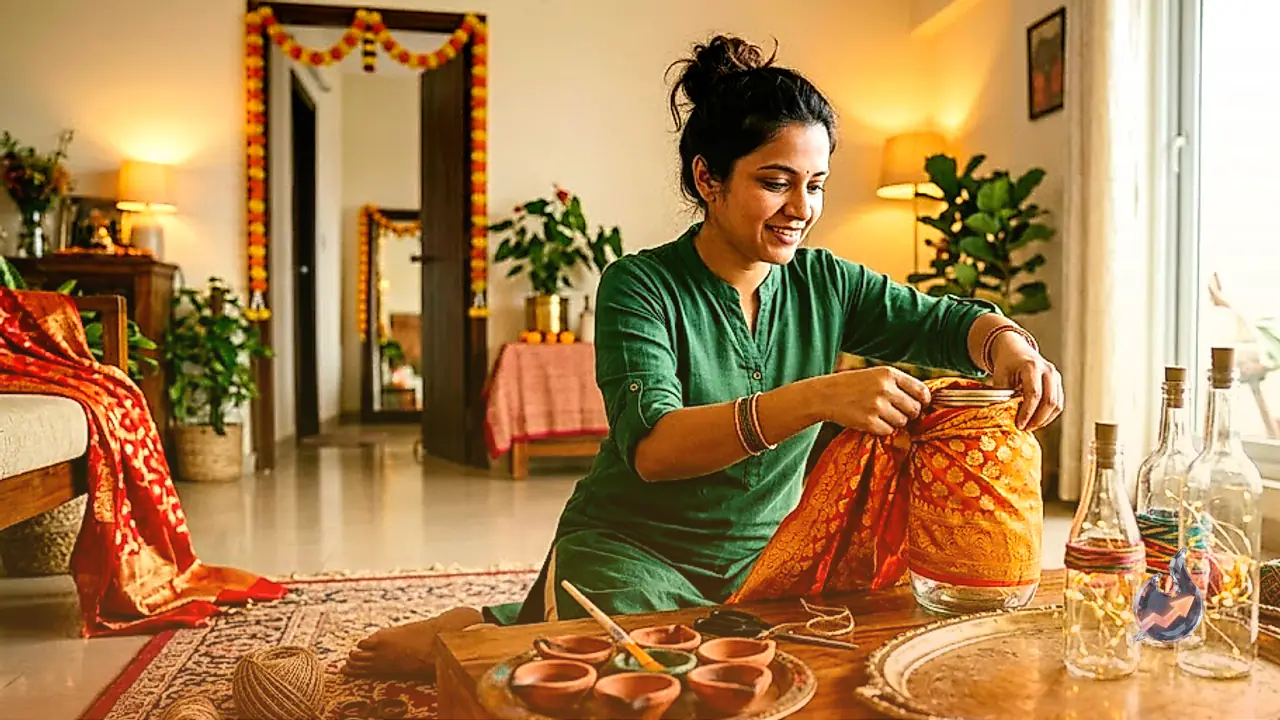
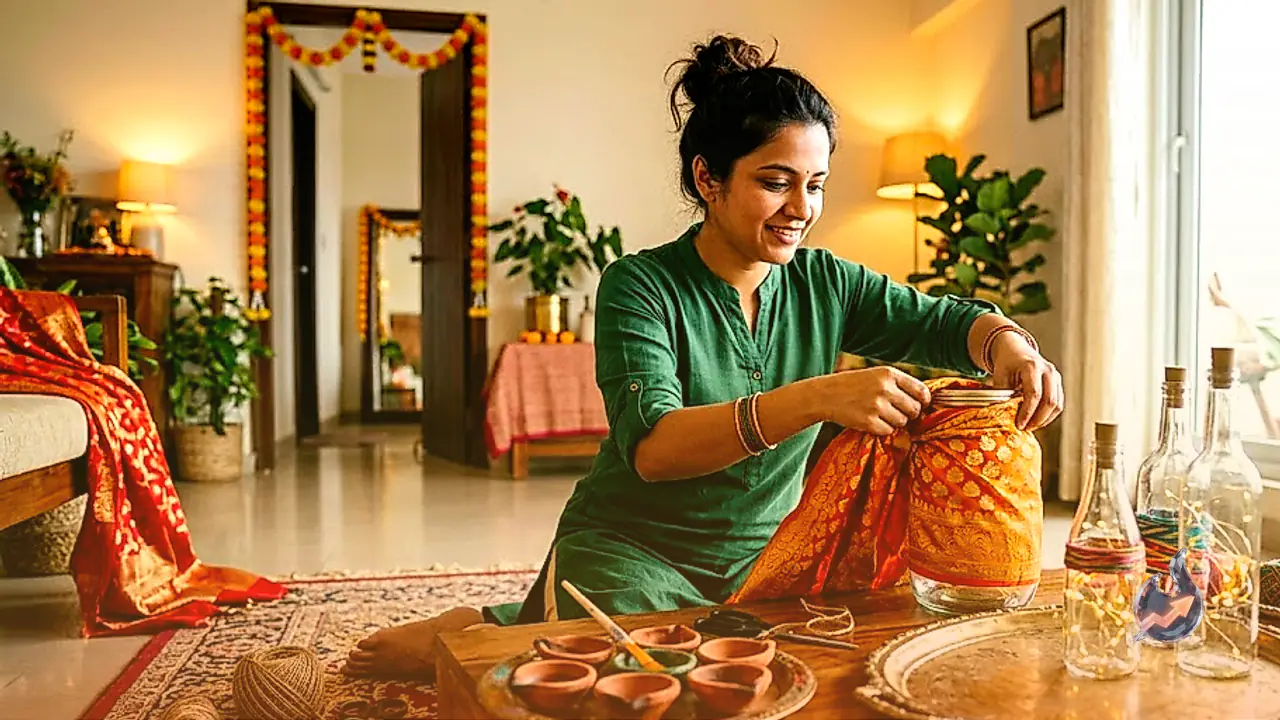
Empty glass jars from pantry staples and discarded beverage bottles are frequently treated as household waste. With minimal preparation, these clear glass vessels can be converted into stunning decorative lanterns that emit a warm, welcoming glow. The first step involves soaking the jars in warm soapy water to strip away paper labels, glue residues, and oily traces, leaving the glass clean and transparent. Once dried, delicate, battery-operated copper wire LED fairy lights can be coiled neatly inside the containers.
To introduce a celebratory texture to the exterior, wrap the neck of each container with a golden satin ribbon, a bright crimson thread, or a border of traditional lace. When illuminated during twilight, the refracted light creates an enchanting visual pattern across surfaces. These homemade lanterns function exceptionally well when grouped on window ledges, coffee tables, or arranged along entrance hallways. From a domestic safety standpoint, battery-powered LED lights are vastly superior to open wax candles inside closed glass jars, as burning wicks generate intense heat that risks cracking ordinary glass.
Repurposing Traditional Sarees and Dupattas as Textile Accents
Fabric choices play a transformative role in defining the warmth and character of an indoor setting. If your wardrobe contains older Banarasi, Chanderi, Bandhani, or embroidered silk dupattas and sarees that are no longer worn, they can serve as exquisite festive furnishings. Laying a richly detailed dupatta lengthwise across a plain wooden dining or coffee table instantly converts it into a luxurious table runner, providing a rich pop of color and artisanal texture.
Alternatively, a clean and well-preserved traditional textile can be suspended against a plain living room wall to serve as a dramatic festive tapestry. Framing the hanging fabric with subtle strings of fairy lights highlights its weave and patterns, creating an eye-catching focal wall that doubles as a photogenic backdrop for family gatherings. Selecting auspicious festive shades such as marigold yellow, deep scarlet, bright tangerine, and metallic gold brings the classic spirit of Diwali indoors without buying new drapery.
Restoring and Embellishing Clay Diyas from Previous Years
Clay lamps, or diyas, form the core spiritual element of Diwali lighting, yet many households discard or abandon last year's lamps in favor of fresh cartons from local potters. Before heading out to purchase new supplies, it is worthwhile to inspect previously used clay diyas stored away in storage boxes. Any lamps that have remained structurally sound, free of deep fissures or chipped rims, can be soaked in a bucket of water, scrubbed clean of residual oil, and dried under direct sunlight.
Once completely dry, these terracotta surfaces offer an ideal canvas for acrylic paints. Applying rich background tones like royal crimson, deep ochre, or metallic gold instantly rejuvenates their appearance. Intricate patterns, dotted borders, or traditional motifs can be applied with a fine brush. These hand-painted pieces can then be lined across balconies, staircases, and prayer altars. When painting clay lamps, it is important to leave the inner reservoir where the oil sits and the wick rests unpainted, as paint exposed to burning oil can emit unpleasant fumes. Furthermore, all active flame lamps must be kept a safe distance away from light curtains and other inflammable materials.
Styling Vintage Wooden, Metal, or Glass Serving Trays
Serving trays crafted from brass, copper, carved wood, or tempered glass often lie neglected inside dining sideboards once newer tableware takes their place. These forgotten utility items make magnificent decorative foundations for festive centerpieces. Begin by thoroughly cleaning and conditioning the tray, polishing metallic surfaces to restore their natural luster or wiping down polished wood to highlight its grain.
The interior of the tray can be filled with an artistic arrangement of fresh flower blossoms, such as bright orange marigolds and scented rose petals, interwoven with faux pearls and miniature LED tea-light candles. Positioning this curated tray on a central coffee table or within the home prayer altar immediately introduces an atmosphere of serene celebration. To preserve the finish of vintage wooden or metal trays against moisture from fresh botanicals, place a thin protective clear film or a folded decorative napkin at the base before arranging the decorative items.
Mixing and Matching Everyday Cushion Covers and Throws
Refreshing the visual appeal of a living room sofa does not necessitate buying an entirely new upholstery set. Striking results can be achieved simply by pairing diverse cushion covers and coordinating textiles already present in the linen closet. Combining varied solid shades with richly embroidered or brocade covers creates an inviting, multi-dimensional aesthetic that feels intentional and vibrant.
Draping a bright ethnic bedsheet, a patterned cotton stole, or a lightweight traditional shawl diagonally across the backrest of a sofa provides an instant infusion of festive warmth. This layering technique breaks the monotony of neutral furniture pieces. Harmonizing contrasting textures, such as pairing smooth velvet cushions with rustic raw silk, delivers a designer touch while completely bypassing expensive home textile boutiques.
Essential Guidelines for Safe and Balanced Festive Decor
While upcycling existing household assets is both economical and satisfying, proper care and moderation are essential to ensure the results remain visually pleasing and hazard-free. Every glass container should be inspected for minute hairline fractures or sharp edges before handling, avoiding items that could present an injury risk. Similarly, all electrical wiring on stored light strings must be carefully checked for brittle insulation, exposed copper, or damaged plugs prior to connecting them to household wall sockets.
Aesthetic balance is equally vital. Resist the urge to display every available piece of decor simultaneously, as excessive clutter diminishes visual impact. Instead, select a cohesive palette built around two or three complementary shades, allowing negative space in rooms so that handcrafted focal points stand out cleanly. Through careful curation and mindful safety practices, your home can radiate unmatched festive elegance while preserving your household budget.