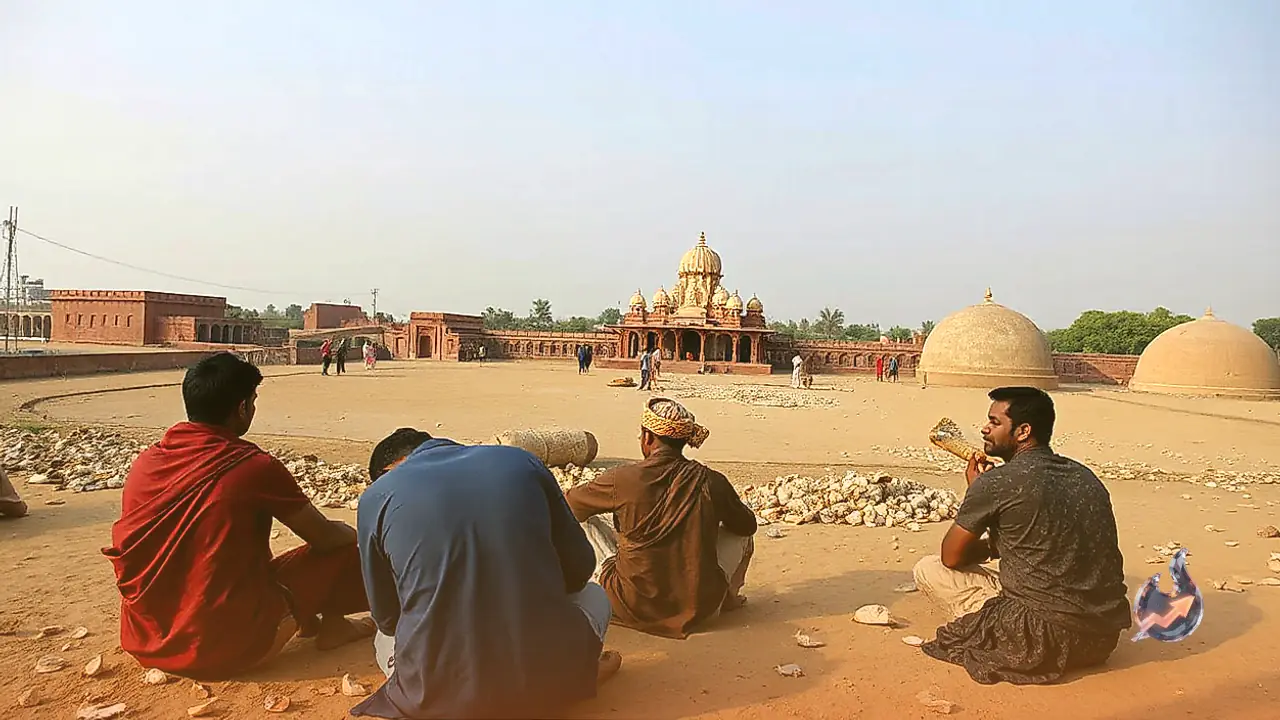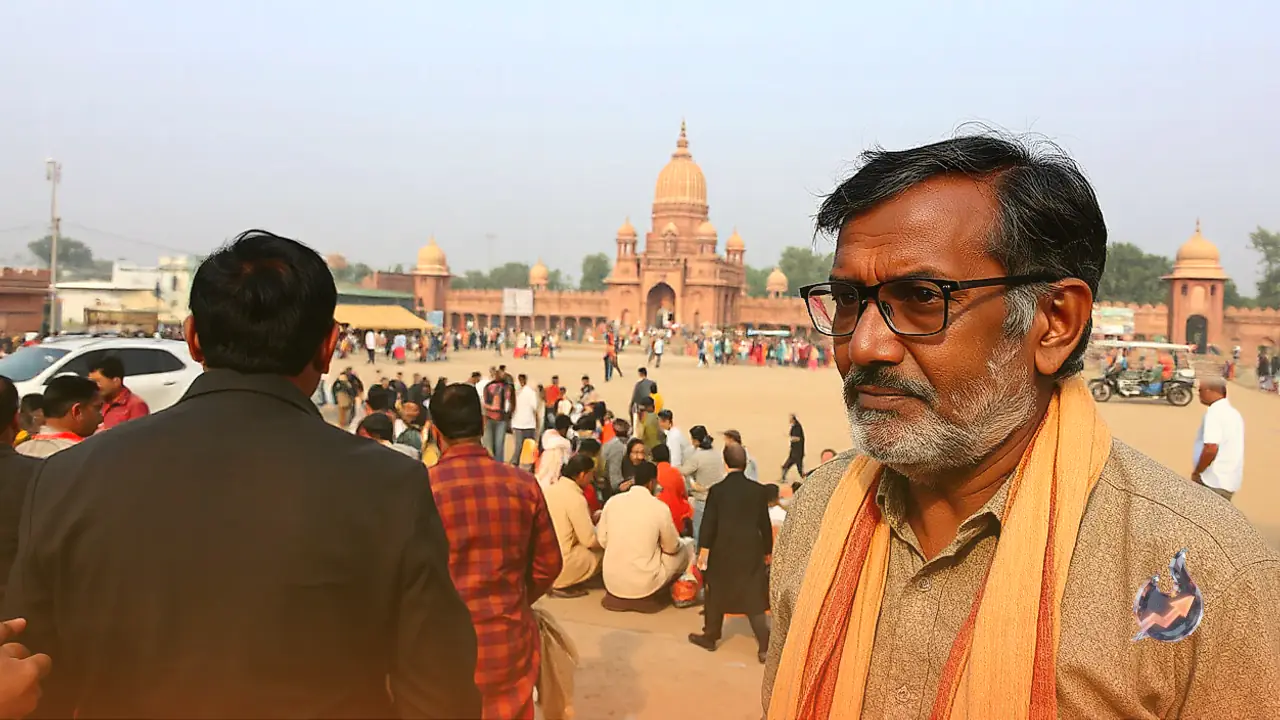















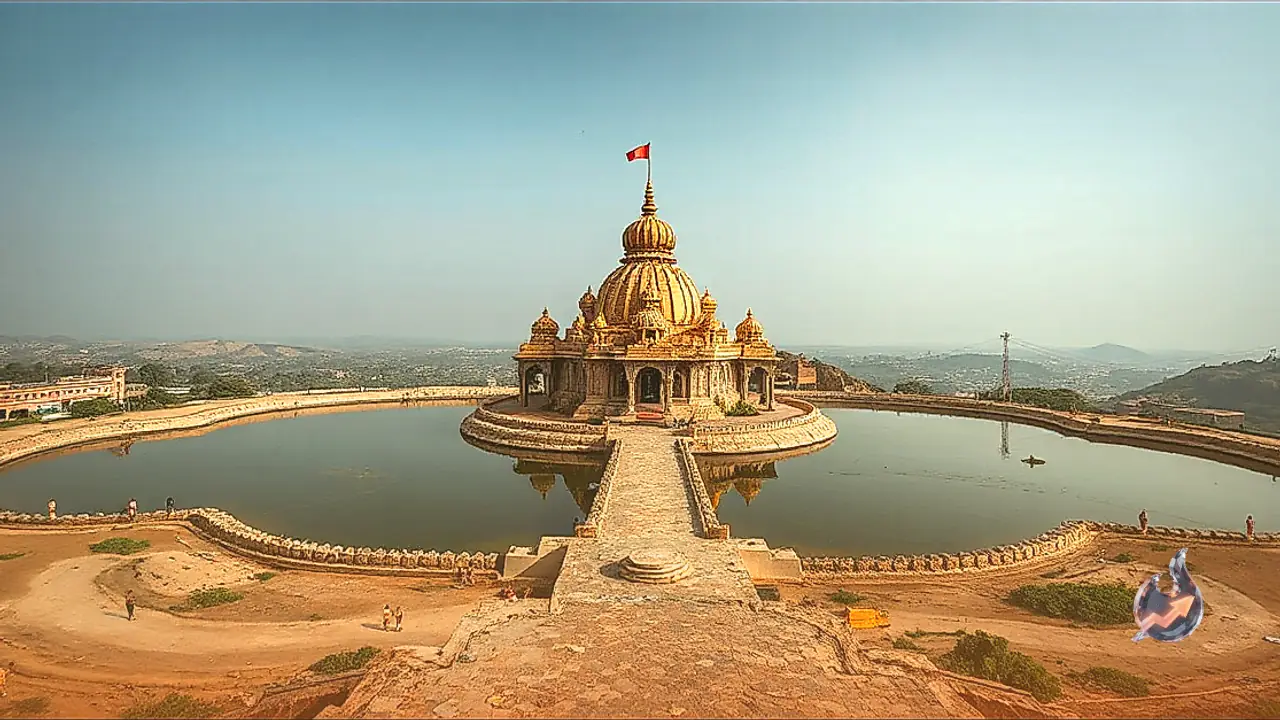

Nestled in the sacred Braj region near Mathura, Mount Govardhan occupies an extraordinary position in Hindu spiritual traditions. The very mention of this hill invokes the iconic divine play of Lord Krishna, who lifted the massive ridge upon his little finger to shield the residents and livestock of Gokul from the wrath of torrential rains unleashed by Indra. Each year, hundreds of thousands of pilgrims visit the sacred site to perform the traditional circumambulation or parikrama. Beyond this central miracle, the sacred hill holds a series of lesser-known theological beliefs, ancient legends, and oral lore that explain its unique contours, sacred ponds, and divine presence.
The Hill Resembles a Seated Peacock
Among the most striking traditional perspectives regarding Mount Govardhan is its overall morphological resemblance to a resting peacock. In local spiritual cartography, the diverse landmarks and holy shrines surrounding the hill are mapped directly onto the anatomy of this revered bird. Devotees believe that Radha Kund and Shyam Kund represent the two vigilant eyes of the peacock. Moving along the parikrama path, the sacred shrine of Dan Ghati is envisioned as the slender neck of the bird, while the prominent site known as Punchari Ka Lautha forms its elaborate tail feathers. Through this symbolic lens, circumambulating the hill is seen as circling the sacred form of a peacock resting on sacred soil.
The Divine Manifestation of Mansi Ganga
Situated in the bustling heart of Govardhan, the Mansi Ganga water tank possesses a origin legend grounded in filial piety. According to local religious lore, Krishna's foster parents, Nanda Baba and Yashoda Maiya, expressed a deep desire to undertake a pilgrimage to bathe in the holy Ganges River. Considering their advanced years and the arduous travel required to reach the river in ancient times, Lord Krishna sought to spare them distress. Drawing upon his inner spiritual will and transcendental strength, Krishna invoked Mother Ganga right at the foot of Mount Govardhan. Because the sacred reservoir was brought into existence through his pure thought and mental determination, it came to be known as Mansi Ganga.
How Radha Kund and Shyam Kund Were Created
The creation of the twin sacred ponds, Radha Kund and Shyam Kund, is tied directly to Krishna's slaying of the demon Arishta, who attacked the village disguised as a ferocious bull. Following the battle, Radha and her companions reminded Krishna that taking the life of a bovine creature brought spiritual impurity that required purification in holy waters across all realms. Rather than journeying afar, Krishna struck the earth firmly with his heel, immediately summoning waters from sacred pilgrimage sites into a depression that became Shyam Kund. In gentle rivalry and devotion, Radha and her fellow gopis excavated an adjacent basin using their own ornate golden bangles to fashion Radha Kund. Over time, traditions recount that the waters of both sanctified pools merged together, symbolizing eternal divine harmony.
The Treta Yuga Connection and Hanuman
Local lore also weaves Mount Govardhan into the epic events of the Ramayana during the Treta Yuga. As Lord Rama prepared his expedition to Lanka, the monkey army gathered massive boulders and mountain peaks to construct the Ram Setu across the southern ocean. According to the legend, Hanuman was carrying Mount Govardhan southward through the skies to aid in the bridge construction. Mid-transit, word arrived that the causeway was completed and no further materials were required. Hanuman gently set the hill down in the plains of Braj. Sensing the mountain's sorrow at being unable to directly serve Lord Rama's mission, Rama reportedly consoled Govardhan by promising that in his future descent as Krishna, he would personally hold, worship, and sanctify the hill above all others.
The Ancient Curse of Diminishing Height
Another widely known belief associated with Mount Govardhan concerns its gradual physical decline. Folklore narrates that in ancient times, the sage Pulastya was captivated by the divine beauty of Govardhan and wished to relocate the mountain to the holy city of Kashi. The mountain agreed to accompany the sage under one strict condition: wherever the sage placed it down on the earth during the journey, it would settle permanently and never move again. While traveling through the Braj region, the sage rested the mountain on the ground. When he attempted to lift it again, Govardhan remained steadfastly rooted to the earth. Enraged by the thwarted journey, Sage Pulastya uttered a curse declaring that the hill would decrease in stature by the size of a single sesame seed every day.