





















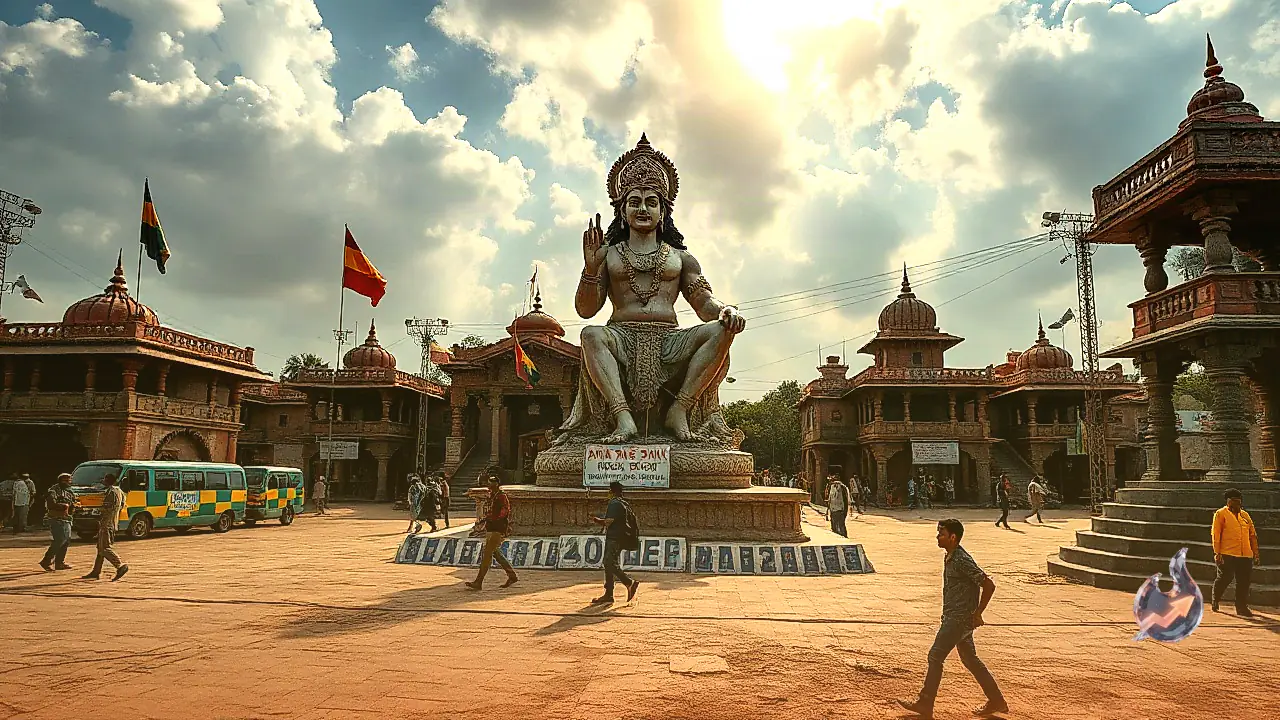

Authorities in Ujjain, Madhya Pradesh, have encountered unexpected obstacles while attempting to remove an ancient Khade Hanuman temple statue as part of ongoing road widening initiatives. Despite deploying heavy cranes and working for three consecutive days, the administration has been completely unable to budge the heavy stone idol, turning the operation into a major talking point across the city. The relocation effort is part of preparations for the upcoming Simhastha Mahakumbh 2028, aiming to widen the road from Kanthal Chauraha to Chhatri Chowk and facilitate smooth processions for Mahakal. While administrative work to clear the path began five days ago, direct attempts to shift the statue itself started on Thursday.
Failed Machinery and Demolition of Surrounding Structure
Municipal teams utilized cranes to lift the deity, but the heavy basalt statue remained entirely unmoved, leaving officials startled. Before tackling the idol, the municipal corporation successfully demolished the surrounding temple building and covered the statue with a canopy tent for protection. The affected zone covering Chhota Sarafa, Bada Sarafa, Namak Mandi, Gopal Mandir, Dani Gate, and the Shipra River region forms a core part of ancient Ujjain. This historic pocket connects the 300-year-old heritage of the Scindia dynasty, the King Bhoj-era Chauvisa Khamba region, and the later-period Sati Gate.
Public Outcry and Local Beliefs
The removal attempt sparked intense pushback from local residents, youth congress workers, and Hindu organizations who staged protests and recited the Hanuman Chalisa at the site. Many residents voiced a firm belief that the deity does not wish to leave the location. Adding fuel to local discussions, an incident occurred at night when workers were covering the spot with plastic. A sudden electrical short circuit and minor blast on a nearby utility pole plunged the area into darkness, prompting some citizens to whisper about supernatural omens. Meanwhile, local saints argued that consecrated idols hold immense religious value within Sanatan tradition and that authorities must respect the sentiments of devotees.
Archaeological Significance and Expert Insights
Weighing in on the phenomenon, Vikram University archaeology professor Dr. Raman Solanki stated that the statue is sculpted from Malwa basalt stone and likely belongs to the idol-making traditions of the King Bhoj era from around a thousand years ago. He described the structure as an invaluable historical artifact, noting that the Parmar period was well-known for carving resilient basalt stone. Dr. Solanki added that the temple location holds immense archaeological importance and requires scientific testing to determine the exact age and establishment period of the idol.
Scientific Relocation Methods
Regarding the stalled shifting process, Dr. Solanki pointed out that the Archaeological Survey of India and the Madhya Pradesh archaeology department possess the necessary expertise to move fragile historical structures safely. He suggested that implementing proper scientific techniques could relocate the statue securely without causing any damage. Following the three-day impasse, officials indicated that a fresh attempt to relocate the temple structure will be undertaken on Tuesday.