



















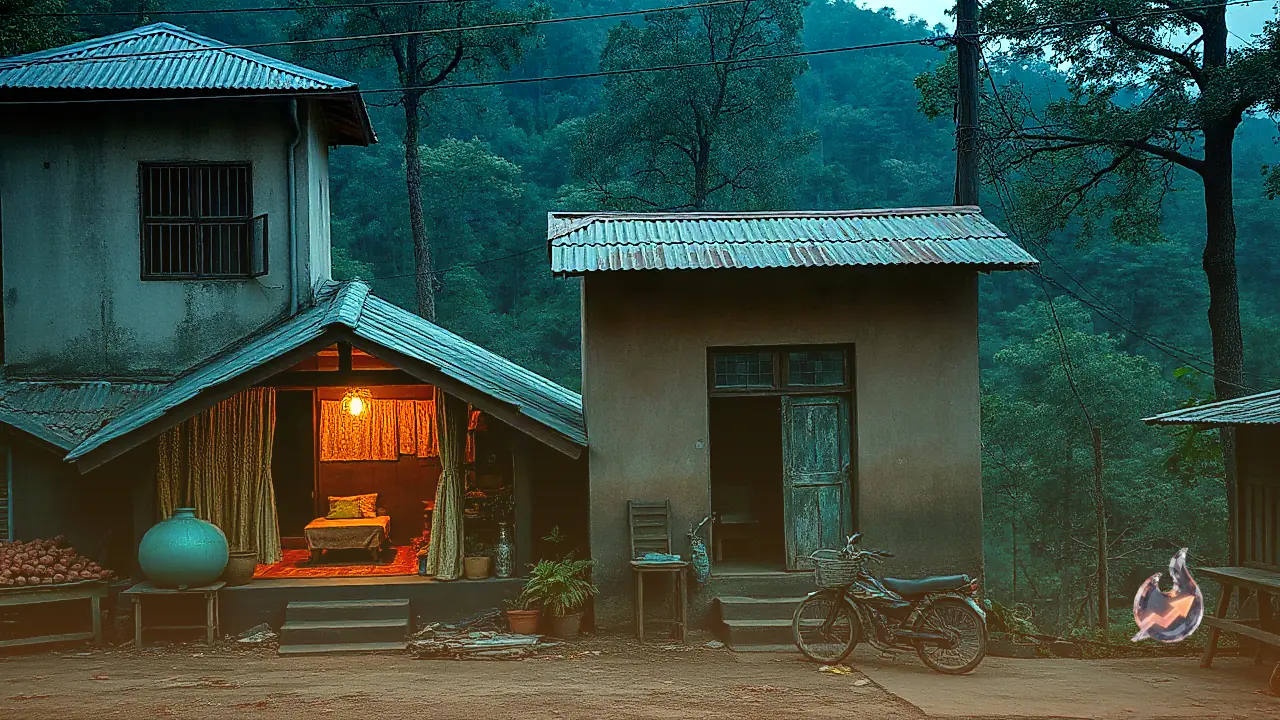

In most parts of India, a bride leaves her parental home after marriage to live with her husband's family. However, the familial and social arrangement within the Khasi community of Meghalaya is strikingly different. In this tradition, it is not considered necessary for a daughter to leave her parents' house upon getting married. Instead, the husband goes to live at his wife's family home. This unique custom sets Khasi society apart from mainstream Indian traditions.
Lineage traced through the mother's family
Khasi society is recognized as a matrilineal society. Here, the family lineage moves forward through the maternal line. The familial identity of children is also linked to the mother's family. Therefore, the daughter continuing to stay at her parental home after marriage is an integral part of this systemic arrangement.
Women hold a very significant position at the family level in this community. They play a special role in various matters related to the household, family affairs, and property management. However, this does not imply that every responsibility rests solely with women. Men also shoulder important responsibilities within the family and broader social life.
Special rights bestowed upon the youngest daughter
Within the traditional framework of Khasi society, the youngest daughter of the family is given special importance. She is referred to as 'Khatduh'. Traditionally, the family property and the responsibility of the household fall to her share. An essential duty of the Khatduh is to look after her aging parents and care for them.
She also plays a pivotal role in carrying forward family traditions and core responsibilities. Because of these distinct duties, the youngest daughter permanently residing in her parents' home becomes a crucial pillar of the family's structural continuity.
Why the groom resides at the wife's home after marriage
Since the daughter stays at her parental home and the lineage progresses through the mother, the husband moving into his wife's house after marriage is directly tied to this social framework. Dismissing this arrangement simply as a reversal of typical customs overlooks the deeper context of Khasi matrilineal family organization.
Nevertheless, modern times have brought gradual changes to Khasi society as well. It is not mandatory for every family to strictly follow these traditional norms today. Some families make decisions regarding residence and lifestyle based on modern circumstances and personal choices.
An example of India's diverse cultural fabric
This distinct tradition of the Khasi community demonstrates that marriage customs and family rituals are far from uniform across India. While most parts of the country practice patrilocal residence, the Khasi society showcases a completely different dimension of marriage and family roles due to its matrilineal system. This incredible diversity is what makes Indian culture truly unique.