























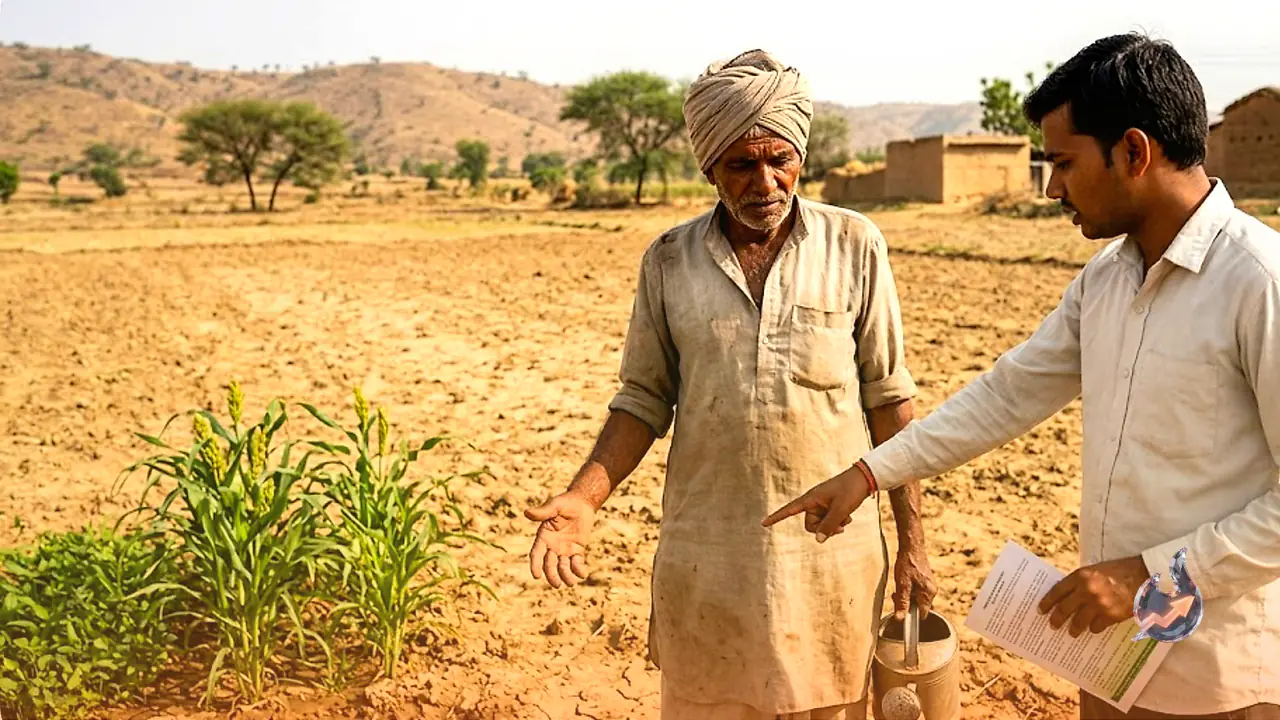

Water scarcity is nothing new for farmers in Chitrakoot district in Bundelkhand, but this year the outlook looks especially tough. The weather department has forecast below normal rainfall for the district, prompting the agriculture department to advise farmers against water intensive crops like paddy.
Why Paddy Could Turn Into A Losing Bet This Time
Every year, farmers in Chitrakoot struggle to arrange enough water for irrigation. This time too, weather forecasts point to rainfall staying below the average for the district. In such conditions, a crop like paddy, which needs a steady water supply to grow, could end up causing heavy losses for farmers. That is why the agriculture department is now visiting villages door to door, urging farmers to switch to crops that need less irrigation so that a rainfall shortfall does not hurt their yield.
From Moong To Ragi, The Alternative Crops On Offer
The agriculture department has recommended that farmers grow moong, arhar, jowar, bajra, kodo, sawa, ragi and kakun instead. All of these crops can be grown with limited water and are considered especially suited to low rainfall regions. Officials believe that adopting these crops will ease farmers' irrigation worries while also improving the outcome of their harvest.
El Nino Behind The Forecast, Says Official
J.L. Gupta, the Deputy Director of Agriculture in Chitrakoot, said that El Nino is expected to bring below normal rainfall to the district this year. He said Chitrakoot is already counted among the districts facing chronic water shortage, which makes it necessary to pick crops that can deliver good yields even with less water. According to him, crops such as jowar, bajra, kodo, ragi and kakun are ready with minimal irrigation, so farmers who switch to them will not suffer losses even if rainfall falls short, and their income will also hold up well.
Seeds Already Stocked, Farmers Can Buy Directly
Gupta added that the department's seed store already has all the necessary seeds, including moong, arhar, jowar, bajra, kodo, sawa, ragi and kakun. Farmers can walk in and purchase these seeds directly from the store. Agriculture department teams continue to tour villages to explain the benefits of this shift, so that farmers' crops and income remain protected even if the region sees a weak monsoon.