


















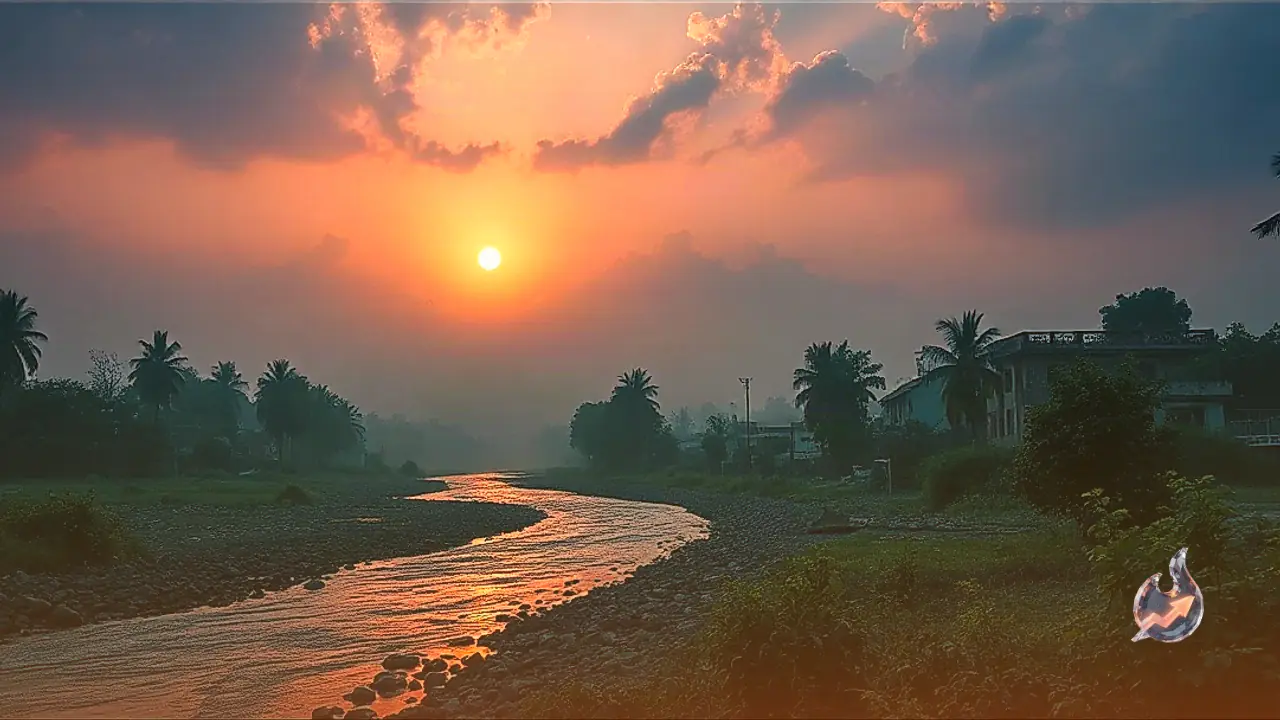

A comprehensive four-phase restoration initiative has been launched to revive the historic Nakatia River in the Bareilly district of Uttar Pradesh. Once a crucial witness to the 1857 Indian War of Independence, the river today suffers from severe environmental degradation caused by industrial and domestic pollution, plastic waste, and rampant encroachment. Recognizing the urgent need to save this vanishing ecosystem, the Bareilly Cantonment Board has drawn up a structured ecological reclamation project. The multi-tiered strategy integrates systematic cleanup operations, scientific mapping, multi-point water quality testing, and bio-remediation measures to restore the river to its original state.
The Historical Legacy of the 50-Kilometer Nakatia River
Spanning a total length of approximately 50 kilometers, the Nakatia River carries profound historical significance alongside its ecological role. The river meanders through both the rural expanses and urban settlements of Bareilly before ultimately discharging its flow into the Ramganga River in the neighboring Shahjahanpur district. During the uprising of 1857, Bareilly served as a major stronghold for Indian freedom fighters resisting British colonial rule. Historical records document a fierce military confrontation that took place on May 5, 1858, along the banks and strategic bridge of the Nakatia River. Freedom fighters operating under the leadership of Khan Bahadur Khan mounted a heroic defense against advancing British troops. This rich heritage makes the Nakatia River not merely a natural body of water, but a living monument to Bareilly's role in India's independence movement.
Environmental Degradation and Urban Encroachment Challenges
Rapid urban expansion in Bareilly over recent decades has taken a devastating toll on the Nakatia River. Unchecked municipal development, direct discharge of untreated municipal sewage, and heavy dumping of plastic and solid waste have progressively choked the natural ecosystem. Furthermore, illegal encroachments along the riverbanks have severely constricted the natural width of the riverbed. According to Bareilly Cantonment Board CEO Dr. Tanu Jain, these combined pressures have severely altered the river, causing several stretches to resemble narrow, polluted urban drains rather than a thriving natural waterway. The accumulation of toxic pollutants and reduced flow velocity have compromised the ecological balance of the water body, threatening local biodiversity.
Breakdown of the Four-Phase Ecological Revival Plan
To reverse this damage, the Bareilly Cantonment Board has engineered a four-stage cleanup and restoration strategy designed around scientific methodology.
The primary phase focuses on an intensive surface cleanup campaign across designated high-priority sections of the river and its adjacent banks. Maintenance crews will clear accumulated plastic refuse, solid municipal waste, and debris. Crucially, teams will maintain systematic records detailing the volume, composition, and specific location of all extracted waste to help structure future waste management policies.
The secondary phase involves detailed scientific spatial mapping across the entire identified river zone. This mapping exercise will pinpoint the primary natural flow trajectory, active sewer and drain entry channels, major waste collection hotspots, potential sources of industrial runoff, and areas prone to severe waterlogging.
The tertiary phase centers on comprehensive water sampling across multiple designated monitoring stations along the river. Laboratory analyses of these water samples will establish precise chemical and biological baselines, enabling scientists to isolate the specific sources and types of contamination affecting the riverbed.
The final phase will implement targeted bio-remediation techniques and eco-friendly restoration practices based on the empirical data gathered. This includes introducing natural filtration mechanisms and planting native vegetation suitable for the river ecosystem to gradually restore self-purification capabilities and ecological health.
Community Engagement and Detailed Project Report Strategy
The Bareilly Cantonment Board emphasizes that saving the Nakatia River extends beyond a routine sanitation drive; it represents a unified effort to preserve water resources, environmental health, and regional history. Following the completion of the initial scientific evaluations and mapping, officials will compile a Detailed Project Report (DPR). This document will be submitted to higher government authorities and external agencies to secure necessary technical expertise and capital funding. Authorities highlight that long-term sustainability will ultimately depend on active public participation alongside administrative measures. With sustained community involvement, the Nakatia River can regain its historic vitality and continue serving as a landmark of Bareilly's natural and historical identity.