

















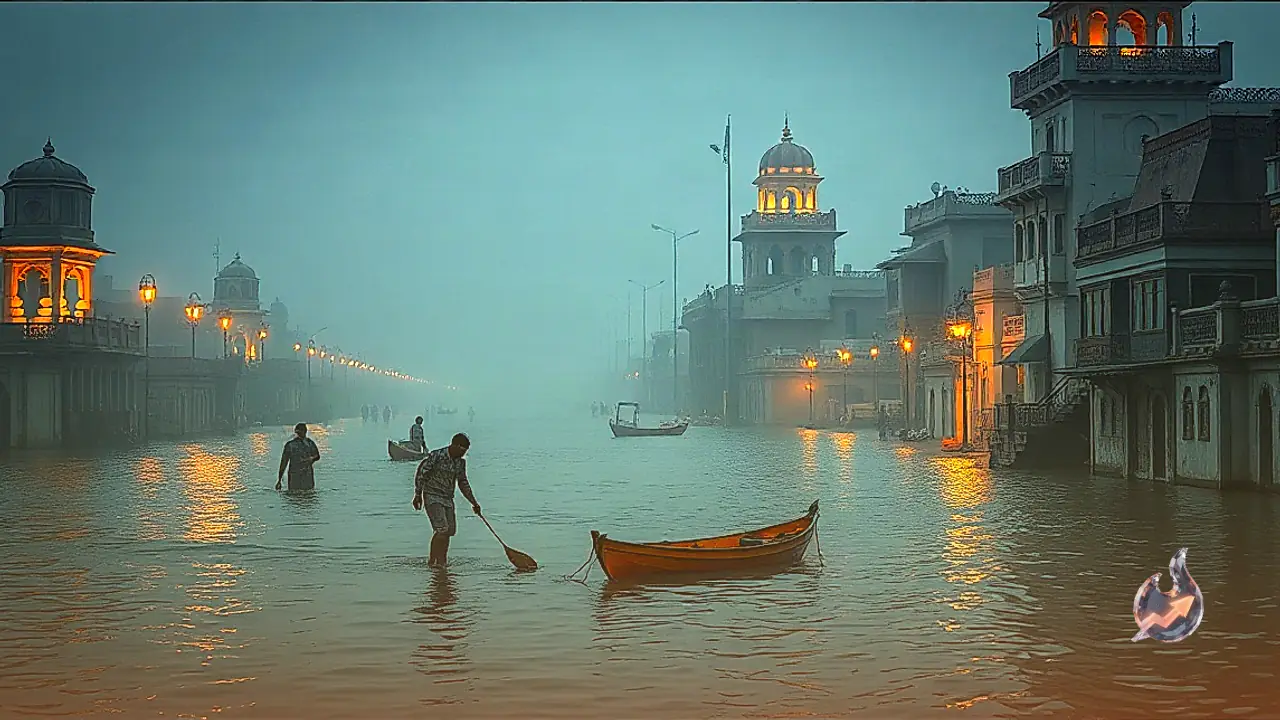

The holy city of Varanasi is facing severe disruption as the Ganga river swells dangerously, submerging low-lying areas and riverbanks. The water has expanded across the shoreline, drowning all 84 iconic ghats that line the river. The floodwaters have severely disrupted traditional post-death rituals, forcing families carrying their deceased for final rites to face extreme hardship at the city's primary cremation sites.
Cremation Grounds Submerged, Long Waiting Times Recorded
The swelling river has disrupted logistics at both major cremation grounds in Varanasi. At Manikarnika Ghat, with the primary cremation platforms completely under water, last rites are currently being performed on the upper rooftops of nearby structures. Meanwhile, at Harishchandra Ghat, the submerged lower steps have forced pyres to be set up inside the narrow adjoining residential alleys.
Due to severe spatial constraints in these tight lanes, a massive backlog of funeral processions has developed. Only 3 pyres can be accommodated at a single time inside the alleys of Harishchandra Ghat. Since each pyre takes between 2 to 3 hours to burn completely, families are experiencing an additional waiting period of 2 to 3 hours just to begin the last rites.
Wet Firewood and Space Constraints Extend Funeral Duration
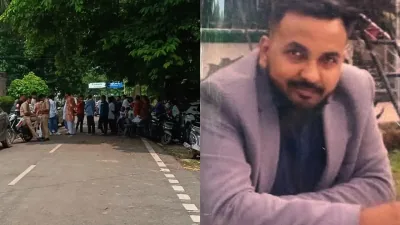
Rajan, a visitor who arrived at the site for a family funeral, explained the operational challenges being faced on the ground. He noted that during normal weather conditions, the entire ritual process used to conclude within 2 to 3 hours. However, under current conditions, the process is stretching to nearly 5 to 6 hours due to damp firewood and restricted space. Furthermore, the lack of open ground in the narrow alleys leaves mourning relatives without any space to sit or rest while waiting. Similar scenes of crowding and delays are being reported from Manikarnika Ghat as well.
Living Challenges for the Domraja Family
Elaborating on the localized impact, Vikram Choudhary from the traditional Domraja family shared how the shifting of funeral sites has altered daily life inside the neighbourhood. He pointed out that because the ghats are inundated, pyres are burning right outside residential doorsteps in the lanes where his family members reside. This has created acute living difficulties and health discomfort for residents. He added that the family will have to bear these difficult living conditions until the flood situation normalizes and water recedes back to the main riverbed.
Central Water Commission Data: Water Creeping Toward Warning Threshold
Hydrological monitoring agencies are closely tracking the river's upward trend. According to official measurements released by the Central Water Commission, the water level of the Ganga in Varanasi reached 68.78 meters at 10 AM on Friday morning. The river started swelling again on Thursday evening after a brief lull.
The water level is currently increasing at a steady pace of 2 centimeters per hour. If this rate of rise persists, the river will soon approach the official warning limit. In Varanasi, the warning mark for the Ganga is fixed at 70.26 meters, while the critical danger mark stands at 71.26 meters. Authorities are maintaining vigilance across all riverside neighborhoods.