





















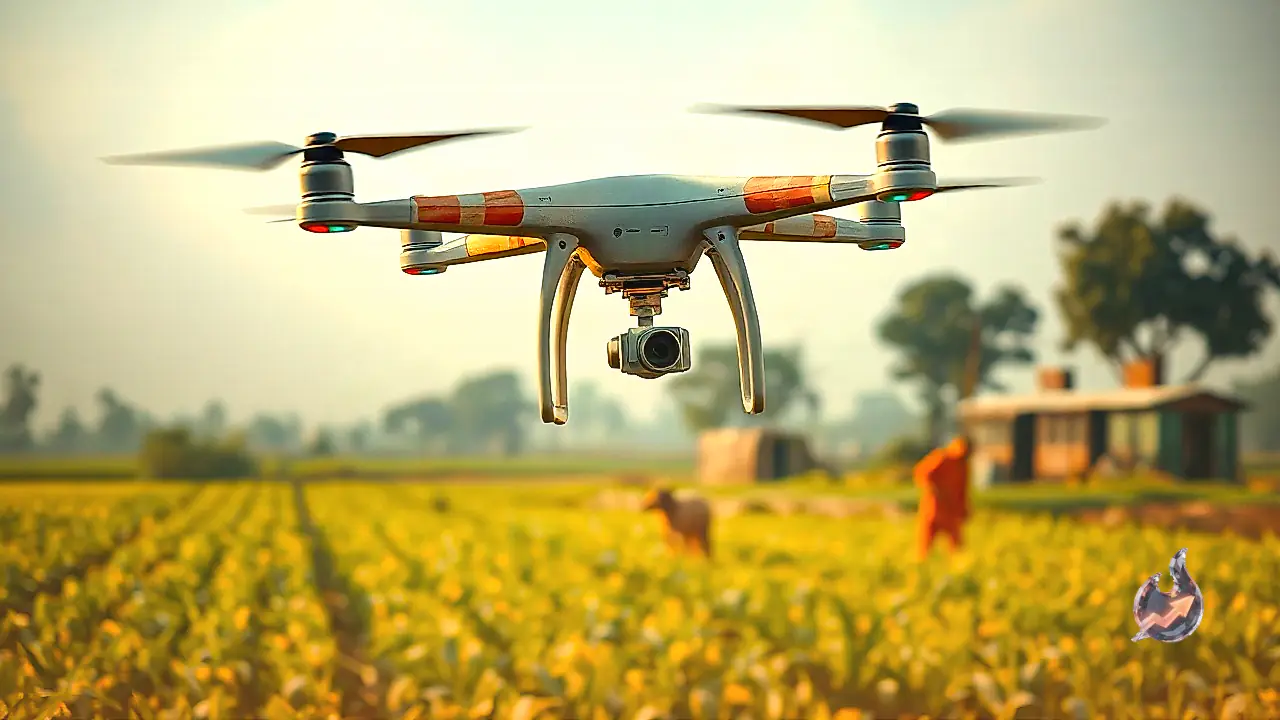

A significant technological transformation is currently underway across the rural landscapes of Uttar Pradesh. In Bahraich district, progressive farmers are rapidly moving away from traditional, physically demanding spraying techniques in favor of advanced digital drone technology. By utilizing these specialized unmanned aerial vehicles to distribute agricultural inputs and protective nutrients, farmers are witnessing a substantial reduction in the physical damage caused to their standing crops, while simultaneously saving invaluable hours of labor and lowering their overall seasonal operational costs. This shift highlights a broader movement toward precision agriculture in the region.
Unlocking Extreme Efficiency and Cost Reduction
Agricultural cooperative societies, particularly IFFCO, are playing a key role in making these state-of-the-art services accessible directly to the farmers' fields. Bhishma Pitamah, a trained drone operator managing these flights in Bahraich, highlights that the commercial rate for hiring this aerial spraying service is set at a highly economical rate of just 400 Rupees per acre. When compared directly to the conventional manual methods, where laborers carry heavy tanks on their backs for hours in difficult terrains, the efficiency of the drone is unmatched. The aerial vehicle can spray an entire acre of farmland in a mere 4 to 5 minutes. When considering the entire preparation time, including measuring and mixing the liquid nutrients and calibrating the flight system, the total duration from start to finish is completed in just 10 to 15 minutes.
Preserving Crop Integrity and Enhancing Soil Health
Implementing drone-based spraying presents a double advantage by protecting both the delicate crops and the soil underneath. When individuals walk through dense agricultural plots to spray pesticides manually, their footsteps naturally crush several young stalks, leading to direct crop loss. Since the drone operates smoothly from high above the canopy, it completely avoids any physical contact with the vegetation, ensuring that the plants remain entirely undamaged. Additionally, the drone uses highly advanced misting nozzles that release extremely fine droplets. This micro-spraying technology ensures that the nutrients coat the leaves uniformly, which reduces chemical wastage by nearly half.
Presently, during the critical gestation or pregnancy phase of the paddy crop, agriculturalists are applying a combined mixture of nano urea, potash 0-50-30, and boron to keep the plants free from devastating diseases. Under traditional farming practices, the excessive use of granular urea tends to turn the leaves excessively green, which heavily attracts insect pests; nano urea, however, avoids this hazard by offering precise and targeted feeding. Furthermore, eliminating foot traffic from the wet fields prevents soil compaction. When the soil remains uncompressed, it retains its natural aeration and structure, which allows roots to breathe and grow deeper into the ground.
Technical Specifications and Wet Weather Safeguards
The aerial spraying equipment is designed with a 10-liter liquid tank, which is perfectly sized to hold the exact volume needed to cover one acre of agricultural land. The drone is powered by high-capacity rechargeable batteries, where a single charge provides enough power to discharge three full tanks of solution, effectively treating three acres of land. Addressing weather-related limitations, the operator explained that because the drone features specialized waterproof motors, it is fully capable of operating during light drizzles. However, spraying is strictly halted during heavy downpours. Concentrated liquid fertilizers such as nano urea and nano DAP are highly susceptible to being washed away by rain before they can be absorbed by the leaves. To guarantee the highest possible nutrient absorption and economic efficiency, the treated field requires a dry and rain-free period of at least 3 to 4 hours immediately following the drone flight.
Accessing the Aerial Spraying Service in Bahraich
This high-tech farming solution is easily accessible to rural communities spread across the district. Farmers residing in the developmental blocks of Nanpara, Mahasi, Kaiserganj, and the border zones adjacent to Gonda can quickly avail themselves of this facility. To schedule a drone flight for their lands, farmers simply need to visit their nearest IFFCO cooperative center. By coordinating with the local representatives, they can register their plots and secure this advanced aerial application service to improve their crop yields.