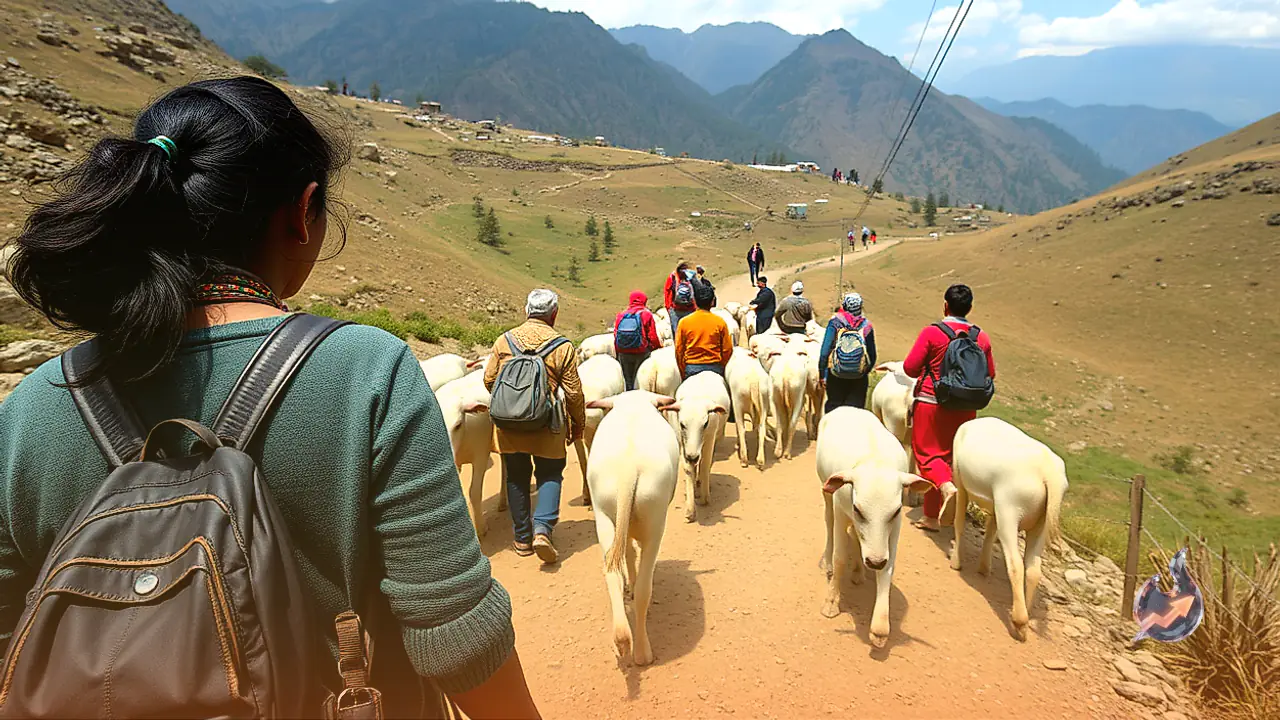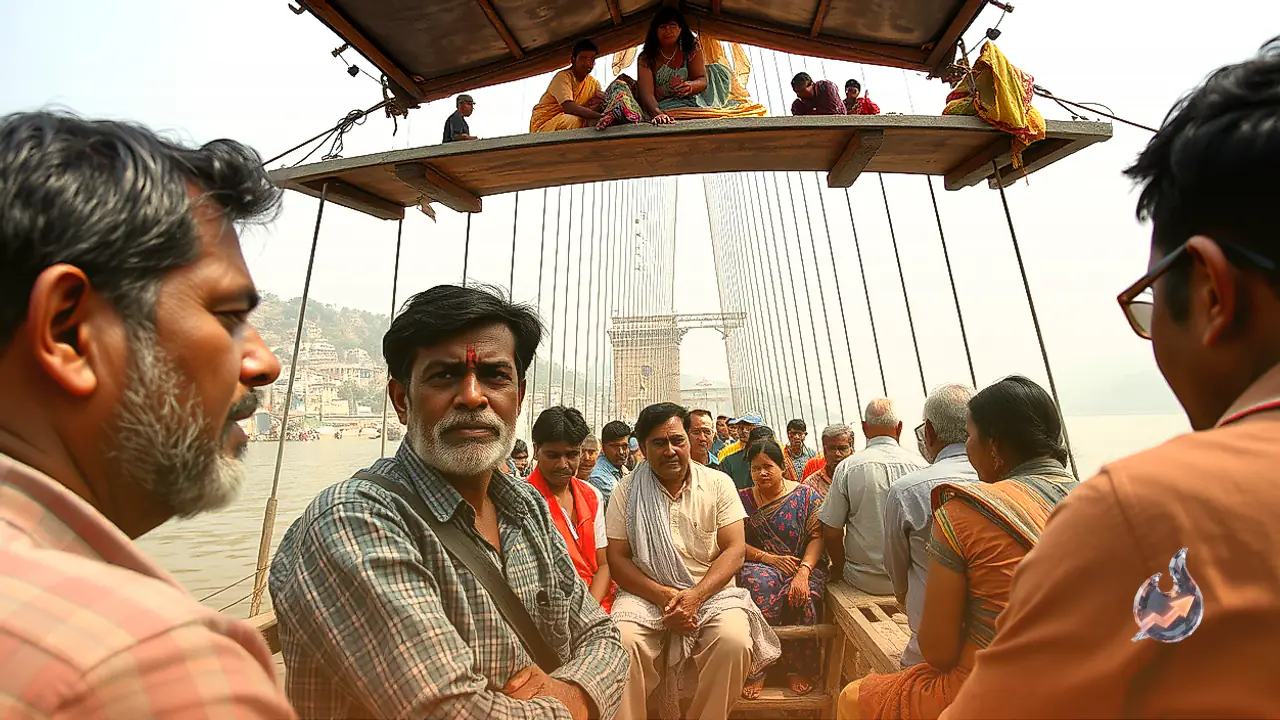

The globally renowned Laxman Jhula suspension bridge spanning the Ganga in Rishikesh carries a unique past rooted in personal dignity and visionary philanthropy. This landmark heritage bridge shares a direct historical lineage with the roughly 250-year-old Seth Surajmal Dharamshala located on Upper Road in Haridwar. During the early years of the twentieth century, pilgrims embarking on the arduous Badrinath and Kedarnath pilgrimage faced grave peril while attempting to traverse the roaring currents of the Ganga. Witnessing the severe hardships of these devotees, the generous Seth Surajmal family stepped forward to construct the iconic iron-cable suspension bridge. The overarching vision was to ensure that pilgrims venturing towards the Char Dham circuit obtained safe shelter as well as a secure, traversable path across the waters.
The Boatman's Mockery and Hurt Dignity
The origins of this historic infrastructure project stem from an incident recounted by Shrinivas Pandey, the manager of Seth Surajmal Dharamshala in Haridwar. Decades ago, Seth Surajmal arranged for his mother to travel on the sacred Badrinath-Kedarnath pilgrimage. In those times, passenger boats were the solitary means to cross the river. Once the boat ferrying the elderly matriarch pushed off and advanced into the river, she realized that several members of her travelling entourage had been left behind on the riverbank. She immediately requested the boatman to steer the craft back to pick them up, but the boatman flatly refused, stating that a vessel does not return once it unties from the dock.
As she persistently pleaded on behalf of her stranded companions, the boatman lost patience and lashed out with a stinging taunt. He remarked that if crossing was causing her so much grievance, she ought to commission a private bridge for herself. The caustic retort struck the mother deeply. Rather than quietly tolerating the insult or continuing forward, she called off her journey on the spot and turned back without completing the pilgrimage.
A Mother's Vow and the 1929 Construction
Returning directly to Kolkata without completing the holy circuit, she was asked by her son why the pilgrimage had been aborted so abruptly. The mother recounted the altercation and declared an unwavering resolution: she would set foot in the sanctums of Badrinath and Kedarnath only after a permanent bridge spanned the Ganga. Honoring his mother's solemn vow, the Seth Surajmal family undertook the formidable engineering project during the British era, successfully completing the iconic Laxman Jhula suspension bridge in the year 1929.
A One Lakh Rupee Fixed Deposit for Perpetual Upkeep
Building the structure was only the first part of the family's foresight; securing its long-term endurance was equally paramount. According to Shrinivas Pandey, the philanthropist deposited a substantial sum of one lakh rupees as a fixed deposit with the government of that era. Under a formal covenant, it was stipulated that the interest accrued on this fund would be perpetually allocated for the ongoing repair, maintenance, and structural upkeep of the suspension bridge. Well before erecting the Laxman Jhula, the family had already built spacious rest houses in Haridwar and the Laksar region to provide comfortable sanctuary for pilgrims, facilities that continue to stand proudly today.