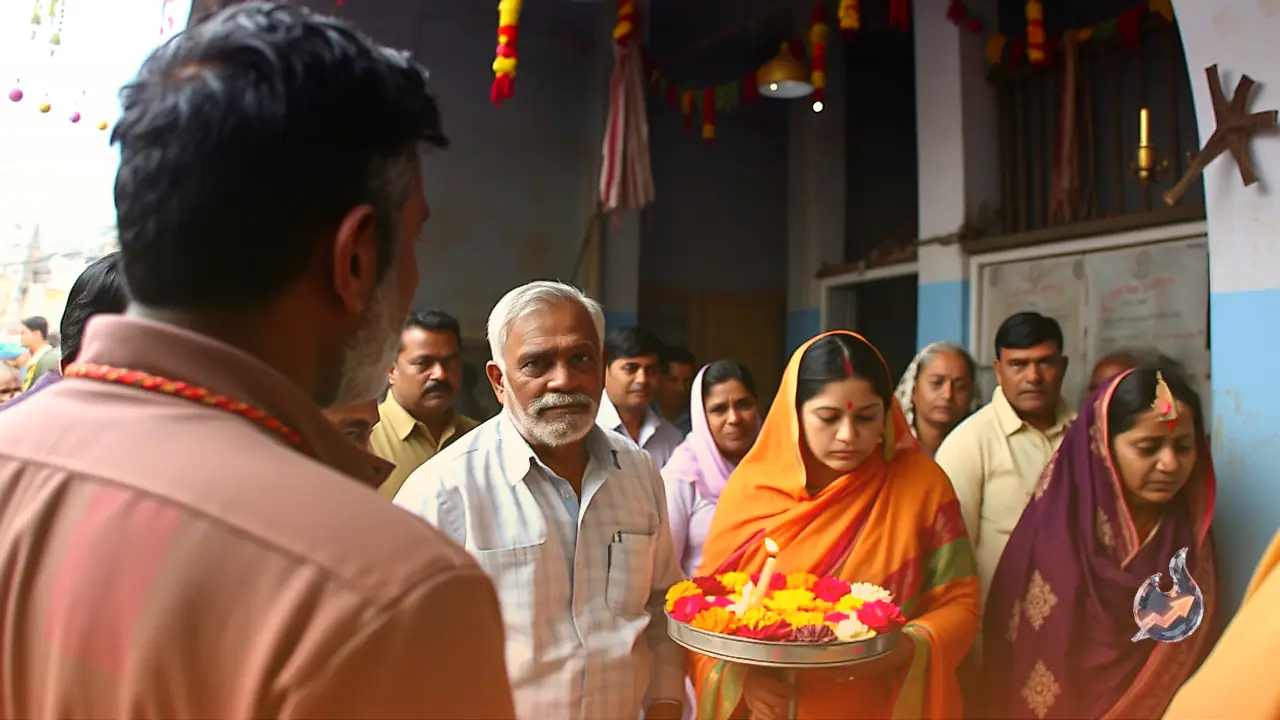



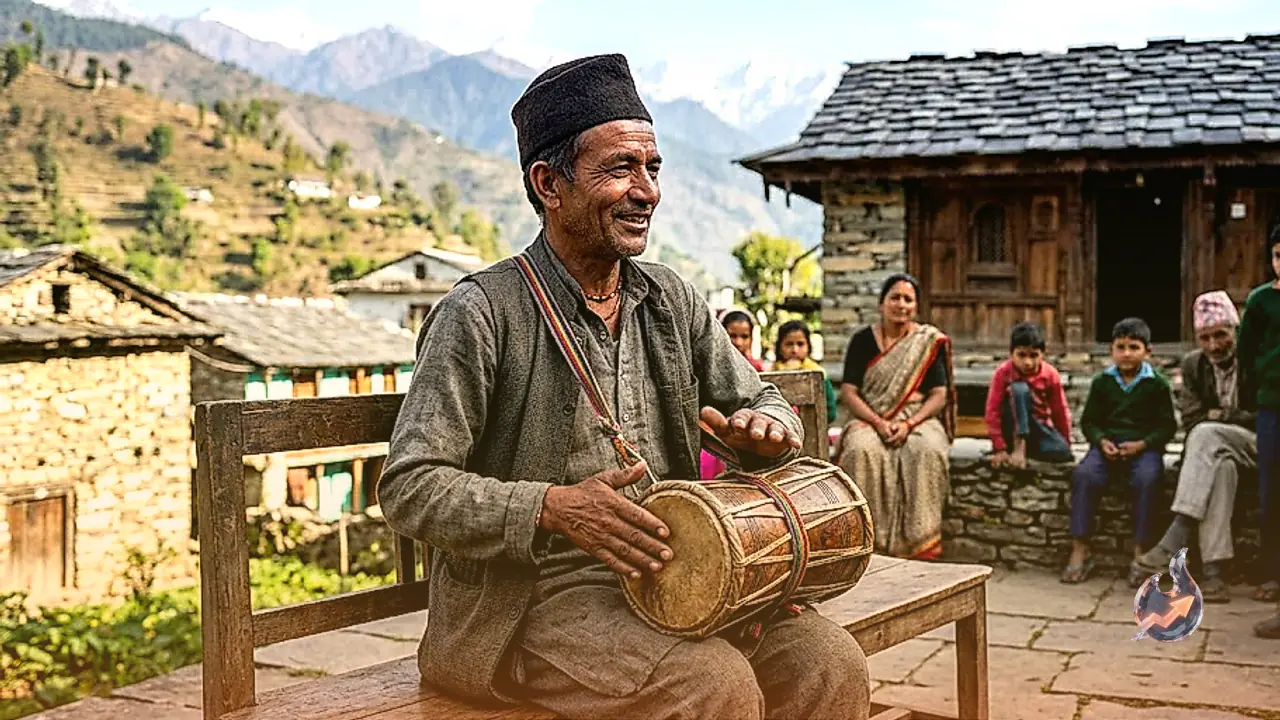














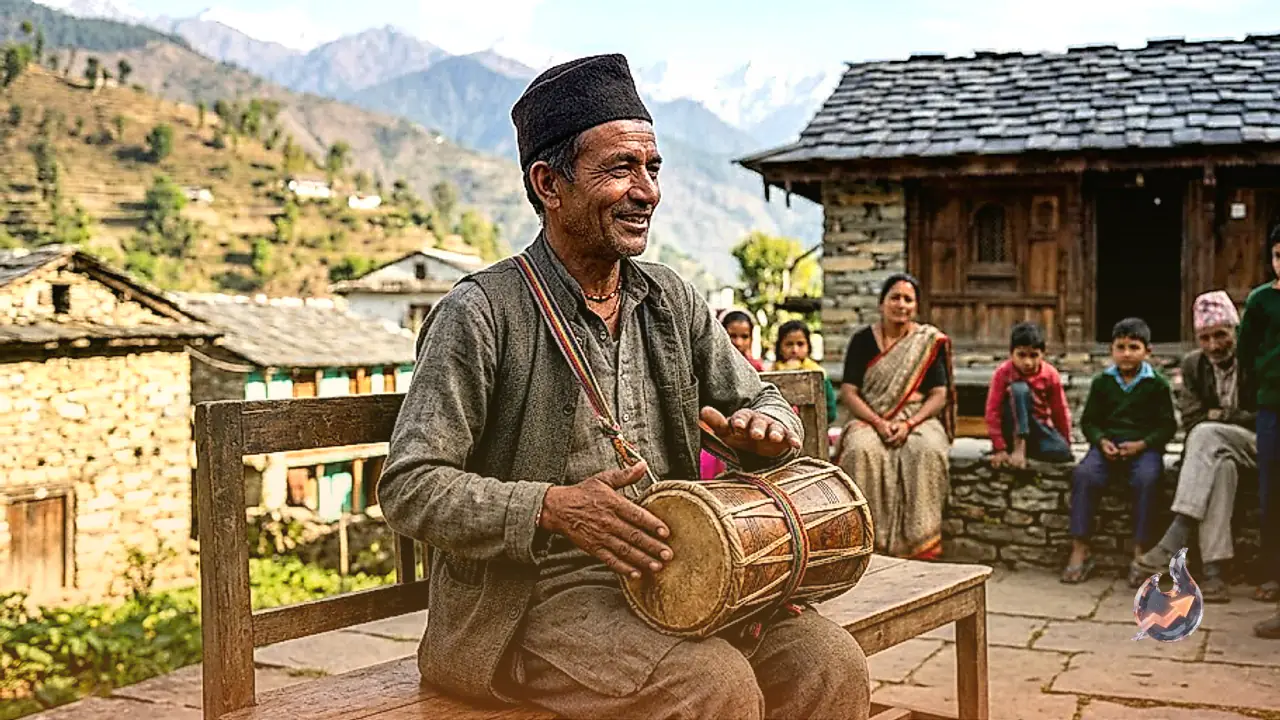

In the mountainous expanse of Uttarakhand, preserving centuries-old artistic traditions amid contemporary lifestyle changes remains a formidable challenge. Despite modern influences, several dedicated folk practitioners across the Kumaon region continue to keep regional heritage thriving while sustaining their households. Abhi Ram, a resident of Almora, exemplifies this quiet cultural perseverance. An instrument he picked up during early childhood out of curiosity and genuine enthusiasm, the traditional Hudka, has now transformed into the primary economic foundation for his family.
The Cultural Essence of Hudka Across Kumaon and Garhwal
Within the hill communities of Uttarakhand, the Hudka represents far more than an ordinary percussion instrument; it serves as the rhythmic heartbeat of regional folklore. Holding immense cultural stature across both Kumaon and Garhwal divisions, this compact rhythmic piece is designed to be gripped firmly in one hand while being struck with measured finger and palm movements. Traditionally, folk performers, Jagar singers, and ritual vocalists have depended on its distinct cadence during spiritual invocations, seasonal fairs, and community gatherings. Whenever the rhythmic strikes of the Hudka blend with indigenous hill tunes, they impart an authentic cultural character to the entire gathering.
Traditional Craftsmanship and Mastery of Sound
Fashioning a conventional Hudka relies entirely on indigenous artisanal methods and natural materials. Craftsmen carve suitable wood, hollowing out the interior to establish the resonance chamber. Thin natural leather membranes are stretched securely over both operational ends. An elaborate network of cords or ropes binds the structure, functioning as a manual pitch-tuning mechanism. The performer regulates tonal frequencies by subtly modulating tension on these strings while striking the leather faces. Eliciting precise rhythms from this instrument requires extensive dedication and disciplined hand control developed over countless years of regular practice.
Transforming Passion Into a Sustained Livelihood
According to Abhi Ram, his musical connection with the Hudka commenced during his formative childhood days. Over time, what started as an absorbing pastime evolved into his defining personal identity and ultimately his family's livelihood. Today, he travels extensively to perform at regional fairs, seasonal festivals, and ceremonial assemblies across Kumaon. His dynamic performances consistently infuse festive spaces with customary Himalayan energy. Even though demand for conventional folk instrumentalists has dwindled compared to earlier decades due to modern entertainment preferences, traditional hill events still depend on the instrument's authentic ceremonial resonance.
Safeguarding Cultural Identity in Modern Times
The proliferation of recorded contemporary melodies and digital entertainment has steadily diminished the presence of indigenous acoustic instruments. In this changing landscape, folk artists like Abhi Ram stand as vital custodians of mountain heritage. Having dedicated the greater part of his lifetime to this rhythmic craft, his playing delivers much more than acoustic performance. Each measured strike of his fingers resonates with historical folklore, spiritual lineage, and nostalgic memories of classical mountain life.