
















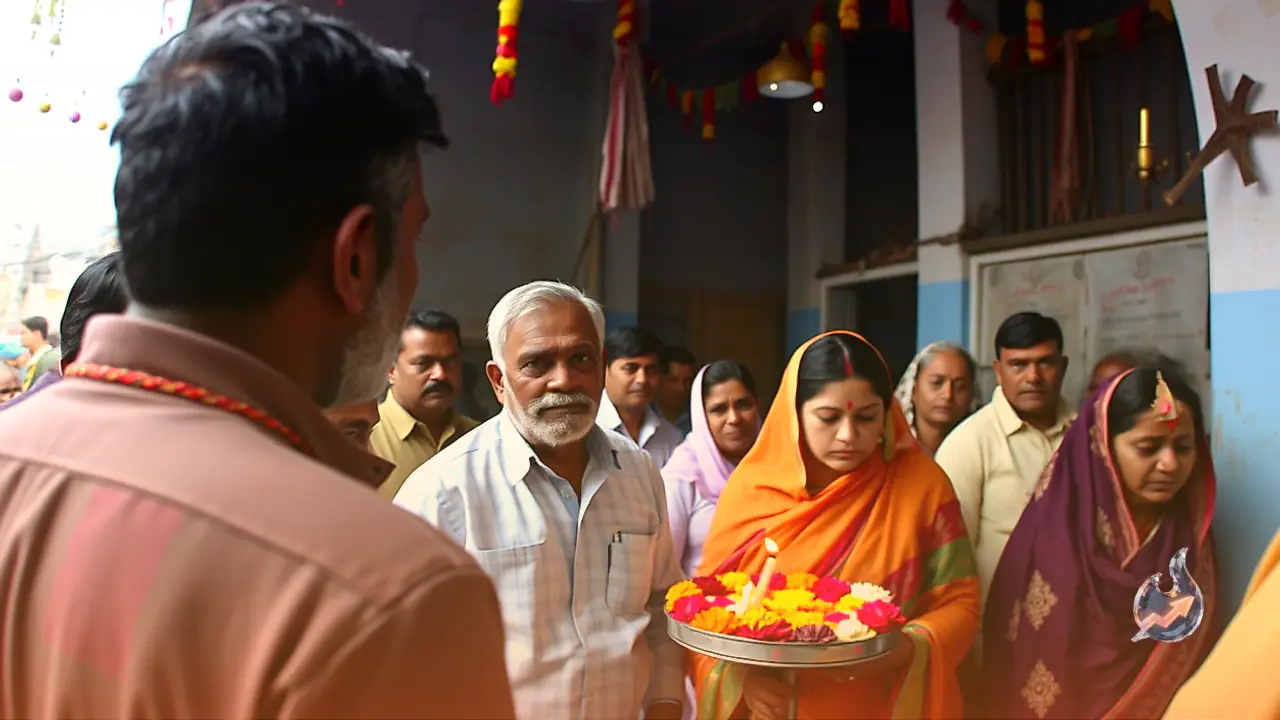

Pitru Paksha represents far more than an annual religious observance; it serves as a sacred opportunity to clear ancestral debts and ensure the spiritual liberation of departed forebears. Across the 16 days spanning Bhadrapada Purnima to Ashwin Amavasya, descendants perform Tarpan, Pind Daan, and sacred fire rituals to bring peace and contentment to their ancestors. Ancient scriptures outline meticulous guidelines for these rites, ensuring every offering reaches the departed souls precisely as intended.
While standard practice involves conducting annual memorial rites on the exact lunar date a relative passed away, this convention does not apply to sudden or unnatural departures. When someone dies abruptly without natural cause and family members unwittingly perform rites on the standard passing date, scriptures caution that such offerings of water and rice balls yield no spiritual benefit. In fact, neglecting prescribed rules risks subjecting the household to the adverse consequences of Pitru Dosha.
The Specific Tithi Designated for Untimely Departures
Although the majority of ancestors receive memorial ceremonies on their corresponding death dates, specific categories of souls require designated lunar days. Just as Matri Navami is exclusively assigned for women who passed away while their husbands were living, the fourteenth day, known as Chaturdashi, is firmly allocated for those who experienced an untimely death. Pandit Manoj Mishra explains that scriptures explicitly direct descendants to honor victims of unexpected deaths on this single date alone.
Classifications of Untimely Death Under Ancient Texts
Citing the Garuda Purana, Pandit Manoj Mishra pointed out that fatal cardiac arrests account for numerous sudden deaths, firmly qualifying them as untimely under scriptural definitions. Beyond heart attacks, fatalities resulting from vehicular collisions, drownings, venomous snakebites, or severe accidental trauma belong to this very same bracket. Rites intended to satisfy and liberate these specific departed souls must be conducted strictly on Chaturdashi, the day preceding the final Pitru Visarjan Amavasya.
Consequences of Misplaced Rites and the Path to Ancestral Peace
When relatives perform memorial ceremonies on ordinary calendar dates rather than Chaturdashi for those lost to heart failure or accidents, the souls fail to attain liberation and remain unsettled. This lapse exposes the surviving family to Pitru Dosha, frequently manifesting in financial instability, persistent domestic discord, serious illnesses among household members, derailed projects, and recurrent hindrances in auspicious life events. Only when rites for unnaturally deceased kin are observed on the Chaturdashi of Ashwin Krishna Paksha do these souls find eternal rest, showering protective blessings upon their lineage.