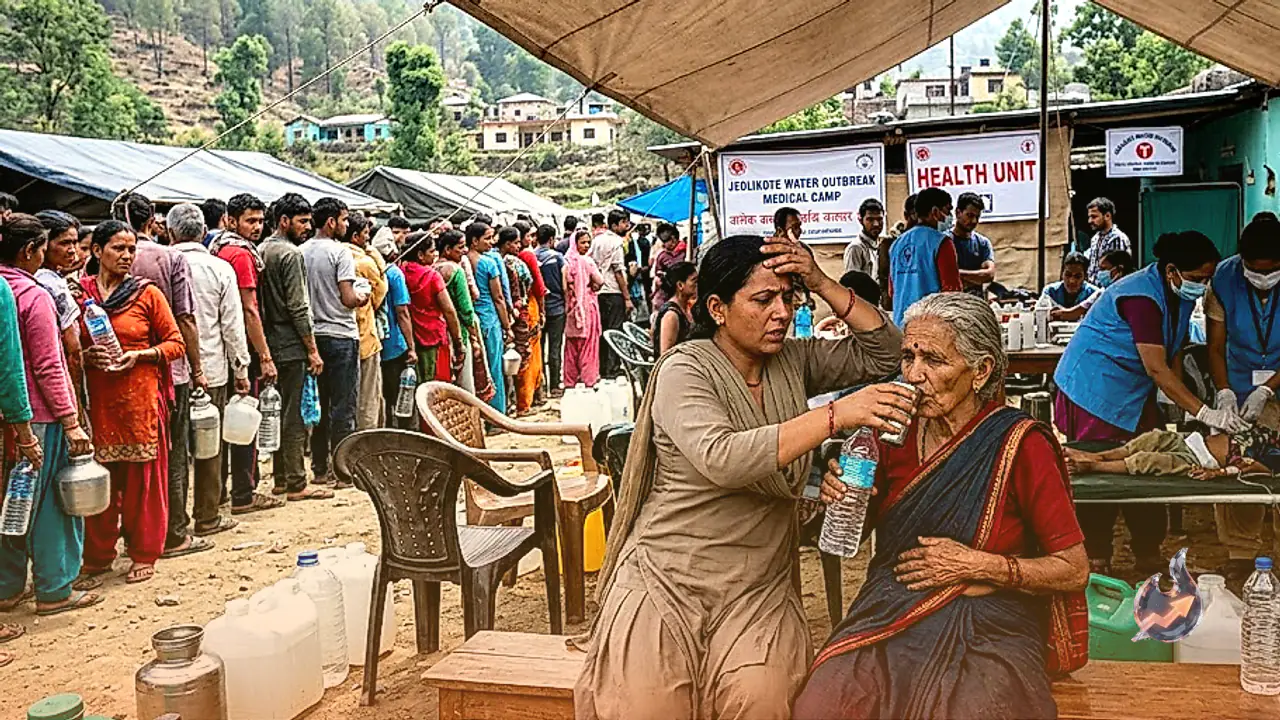























A severe waterborne health crisis has broken out across rural parts of Nainital district in the northern hill state of Uttarakhand, where contaminated drinking water supply has triggered widespread illness. Villages surrounding the Jyolikot area near Nainital city are reporting a sudden surge in cases of jaundice, typhoid, high fever, stomach pain, vomiting, and diarrhea. The situation took a tragic turn after 16-year-old Ritesh Jeena, a resident of Sariyatal village in Jyolikot, succumbed to the illness. Local village representatives report that two fatalities have occurred in the region so far due to contaminated water consumption. The outbreak has spread panic across rural habitations, prompting immediate intervention from district administrative and public health officials.
Affected Rural Zones and Hospital Emergency Rush
The disease outbreak is predominantly concentrated in rural clusters around Jyolikot, Talla Krishnapur, Khurpatal, and Sariyatal. Patients displaying acute symptoms are arriving continuously at regional medical facilities. At the BD Pandey District Hospital in Nainital, admissions from affected villages have escalated rapidly. Prakash Arya, a local resident from the affected zone, stated that the waterborne disease outbreak has been persisting in the rural belt since August 25. According to him, approximately 30 to 40 people in his locality have contracted the infection so far. Prakash Arya himself has been admitted to the BD Pandey Hospital for five days along with young children from his family. While some patients have recovered and been discharged, new patients continue to seek emergency care daily. Currently, around 20 residents from the Jyolikot area remain admitted at this facility alone.
Suspected Sewage Leakage into Drinking Water Sources
Local residents strongly attribute the outbreak to the contamination of drinking water sources by leaking sewage lines. Prakash Arya explained that sewage water has been seeping directly into natural water springs and supply pipelines across the locality, rendering the drinking water hazardous. Dinesh Tiwari, another resident from Jyolikot currently undergoing medical care, shared that he suffered from high fever for four to five days. When his condition failed to improve despite local medications, comprehensive blood tests at the district hospital revealed severe liver infection and jaundice. He blamed the contaminated piped water supply maintained by the local water utility, Jal Sansthan, for causing widespread health complications among villagers.
Hospital Medical Statistics and Physician Observations
Dr. MS Dugtal, Senior Physician at BD Pandey District Hospital, noted that the rainy season has caused a substantial surge in patients reporting symptoms of jaundice, typhoid, diarrhea, abdominal pain, and high fever. The hospital is registering over 15 such outpatient visits daily, with more than 5 patients requiring emergency ward admission every day. Most of these cases originate from Jyolikot and neighboring rural belts of Nainital. Dr. Dropadi Garbyal, Principal Medical Superintendent (PMS) of BD Pandey Hospital, stated that this influx has continued unabated for the past 15 days. A total of 26 patients have been admitted for extended treatment over this period. Out of 65 patients currently admitted in the general medical wards, 11 belong specifically to the Jyolikot area, all exhibiting clinical signs of jaundice, persistent vomiting, abdominal cramps, fever, and typhoid.
Spike in Bottled Water Sales and Commercial Supply Shortage
With widespread fear over contaminated tap and spring water, residents across Jyolikot and neighboring hamlets have turned to packaged bottled water for daily consumption. Local shopkeepers report a massive surge in demand for bottled drinking water over the past ten days. Sumit Joshi, a store owner in Jyolikot, stated that his shop alone is selling around 20 to 30 crates of bottled water daily, with 5-liter water containers seeing the highest demand. He estimates that cumulative sales across all retail shops in the area reach roughly 40 to 50 crates of bottled water per day. Basant Lal Arya, a resident of Sariyatal, observed that while households are forced to purchase brands like Bisleri to protect their health, buying packaged water daily is financially unsustainable for lower and middle-income rural families.
Administrative Orders, Sampling, and Preventive Measures
Taking note of the escalating public health hazard, Nainital District Magistrate Lalit Mohan Rayal confirmed that several villages in the Jyolikot area are suffering from waterborne illnesses, with approximately 50 to 60 patients currently undergoing treatment across various facilities. The administration has collected water samples from public distribution systems and local spring sources for official laboratory testing. Additionally, a detailed report and the past two months' operational roster have been demanded from officials of the Jal Sansthan water department. Cleanliness drives, chemical spraying, and medical camps organized by the health department have commenced in affected villages. A joint inspection team comprising the Chief Development Officer (CDO), Jal Sansthan engineers, and the Chief Medical Officer (CMO) inspected the affected sites. Although Jal Sansthan has deployed water tankers to supply clean drinking water, villagers claim the volume provided is inadequate for their daily needs. The District Magistrate stated that further corrective and legal measures will be initiated once formal laboratory test reports confirm the source of contamination.