



















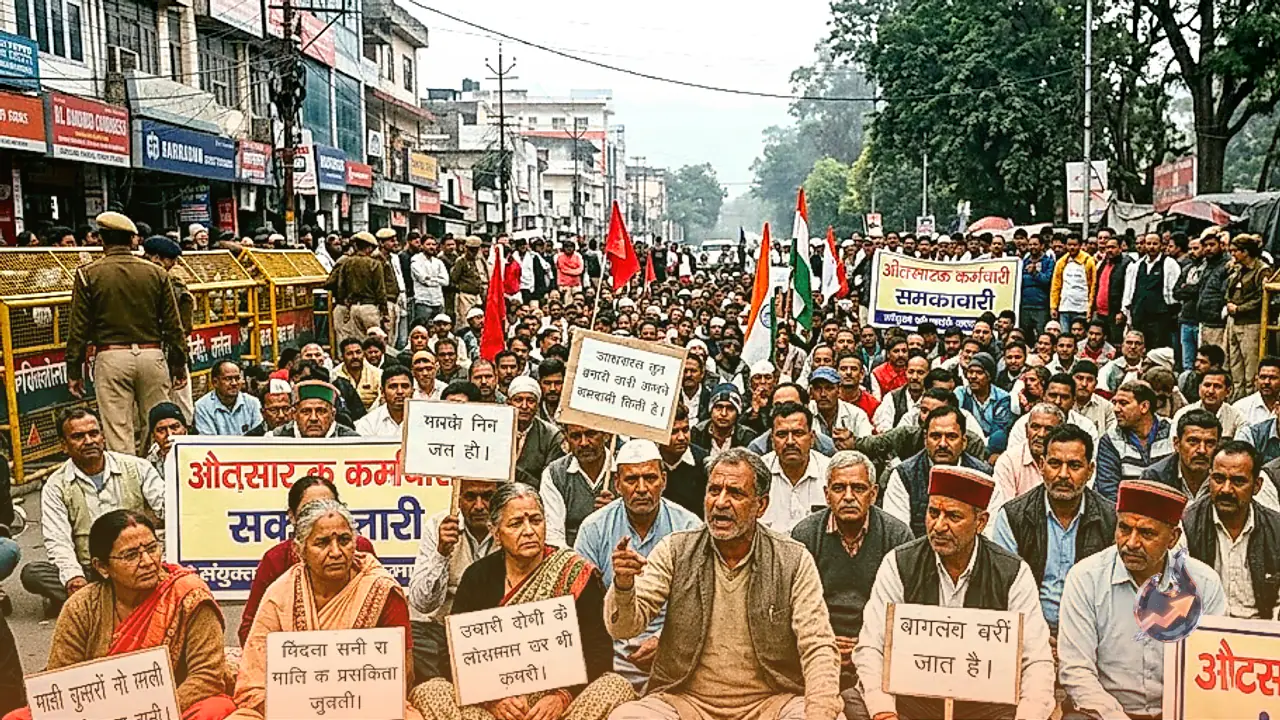

Contractual and outsourced staff across vital public utility departments gathered in Dehradun to stage a protest over long-neglected demands for wage revision and service regularisation. Working in high-risk sectors such as the Forest Department, Jal Sansthan, and the Electricity Department for periods spanning 20 to 40 years, these personnel find themselves compelled to fight for fundamental workplace rights as they approach retirement age. The workers highlighted that despite dedicating their working lives to public service under perilous terrain, their remuneration remains drastically below standard living wages.
Dangerous Fieldwork Across Treacherous Mountain Terrain
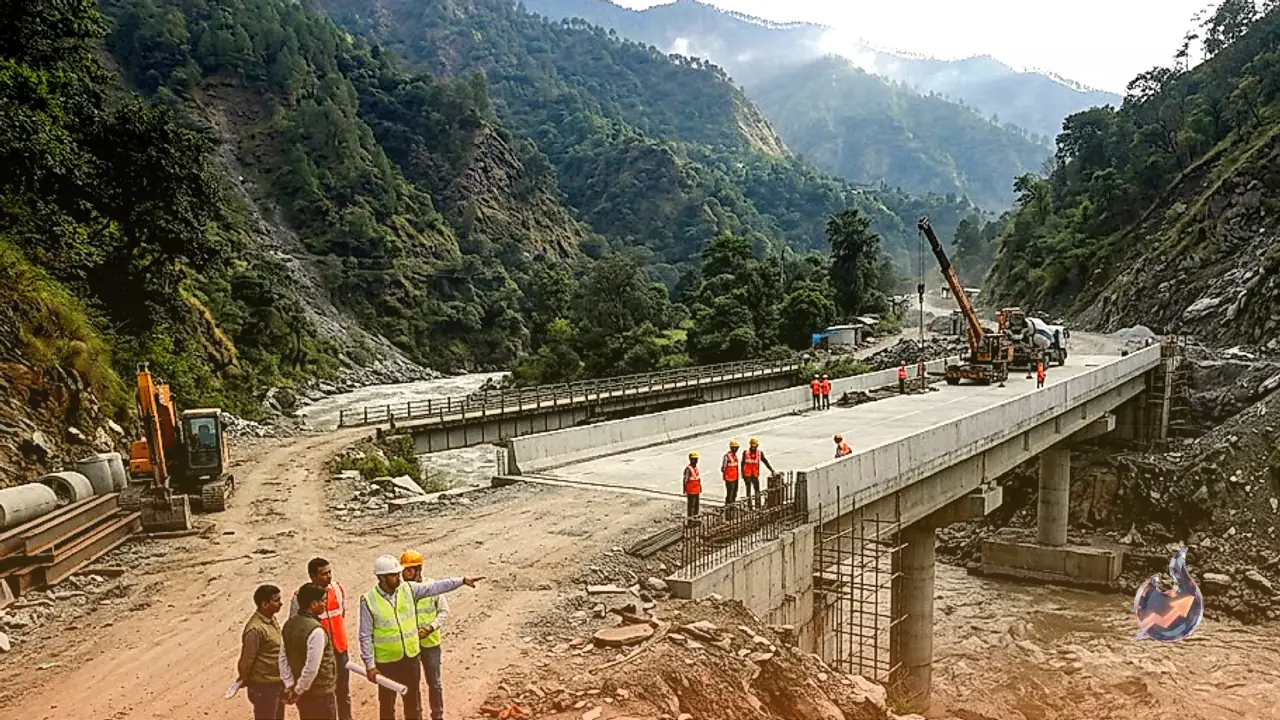
Employees in Uttarakhand routinely perform duties under severe physical risks and geographical challenges. Field personnel brave wild animal encounters while patrolling forest ranges, climb live high-voltage power lines during inclement weather, and cross overflowing rivers and swollen mountain streams to restore fractured drinking water pipelines. Despite risking life and limb to maintain continuous civil amenities, these workers continue to be excluded from basic socio-economic safeguards, pension safety nets, or formal employment status.
Four Decades of Labour on 4500 Rupees Monthly Pay
Testimonies shared during the agitation shed light on the severe financial distress experienced by veteran staff. Mangal Lal, hailing from a remote village in Uttarkashi, explained that he has been employed with the Jal Sansthan since 1986. Starting on a monthly stipend of 100 rupees, his pay has climbed to just 4500 rupees after four full decades of continuous service. He must trek 25 kilometres across harsh terrain in all seasons to inspect and repair ruptured water pipes. When monsoon rains swell water channels to dangerous levels, he works amidst significant hazard. Approaching 60 years of age, he pointed out that taking up alternative physical labour is no longer viable, making basic sustenance nearly impossible on his current compensation.
Wildfire and Wildlife Hazards Without Safety Cover
Pradeep Singh, deployed in the Rajaji National Park area under the Forest Department, shared the constant dangers posed by predatory wildlife. Staff members tackle raging forest blazes and are tasked with chasing away aggressive elephant herds, frequently operating with minimal safety buffers. He emphasised that when fatal accidents or injuries occur on duty, the absence of insurance or institutional assistance leaves workers' families in financial ruin. Surviving on 8,000 to 10,000 rupees a month has become increasingly difficult amid surging costs of staple goods like flour, rice, and cooking oil.
Earnings Lower Than Daily Labour and Months of Delayed Remuneration
Suraj Bhandari, a resident of the Kedar Valley in Rudraprayag, described the stark disparity in the power distribution sector. Tasked with managing a 25,18 kilometre stretch of power transmission lines, he receives an allowance of merely 3500 rupees per month. Broken down, this amounts to roughly 120 rupees per day, an amount significantly lower than the earnings of an unskilled daily wage labourer. He added that even this meagre sum is frequently withheld, leaving workers to endure payment delays lasting up to five months at a time.
Absence of PF, ESI, and Essential Safety Gear
Pan Singh, representing workers from the Electricity Department, noted that field linemen receive roughly 8000 rupees per month despite facing life-threatening electrical hazards daily. Critical social protections such as the Provident Fund and Employee State Insurance are entirely missing. Recalling an incident from 2022 where a fellow lineman suffered an electric shock, he noted that the lack of institutional backup plunged the victim's household into distress. The agitating workers urged the administration to supply protective equipment such as certified gloves and handling gear, alongside instituting formal insurance coverage.
Administrative Silence and Demands for Regularisation
Shyam Singh questioned the administrative disparity, pointing out that public representatives and lawmakers receive comprehensive perks, pensions, and dearness allowances, while frontline contract workers receive stagnant wages between 10,000 and 12,000 rupees in a high-inflation environment. Protesters maintained that repeated written representations to authorities have failed to yield tangible relief. The workers stated that the administration must urgently adopt a humane approach, take formal cognisance of their decades of unbroken service, and implement fair wage hikes and regularisation policies.