




















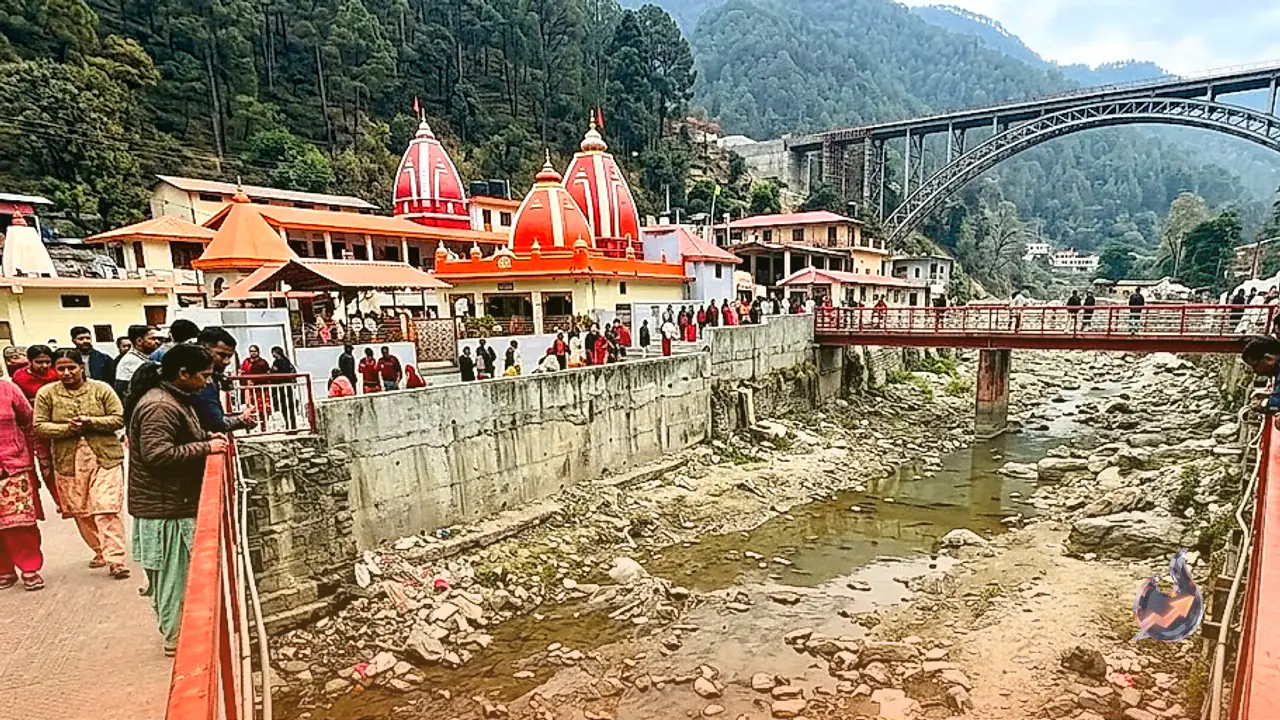

Nestled in the lush hills of Nainital district in Uttarakhand, the globally revered Kainchi Dham ashram established by Baba Neem Karoli is celebrated worldwide for its spiritual sanctity and surrounding natural landscape. Flanking this sacred complex is a perennial watercourse that ripples through the valley across all seasons, revered by devotees and residents as the Shipra river. Geographically and culturally, this mountain stream flows towards the north, designating it as an Uttarvahini stream. While it might appear as an ordinary Himalayan rivulet at first glance, deep religious lore and enduring local legends envelop its waters. For pilgrims journeying to Kainchi Dham, the banks of the Shipra hold profound spiritual importance, and visiting crowds now actively bathe in its current, regarding it as the revered saint's own sanctified stream.
The Geographical Course from Forest Origins to the Kosi River
In terms of geography, the Shipra is a vital upland stream coursing through the rugged terrains of the Nainital hill tract. The river sweeps past the boundary of Kainchi Dham and journeys downward until it finally merges with the larger Kosi river near Khairna. Around the Kainchi sanctuary, the river presents a striking and serene panorama. On one flank rise steep mountain faces covered in dense forest cover, while on the opposing bank sits the vibrant ashram and temple complex, blending wild nature with devotional stillness.
Community Action Revives a Depleted Himalayan Waterway
For decades, administrative apathy allowed this once perennial stream to slide toward ecological collapse. Jagdish Negi, who formed the Shipra Kalyan Samiti and has spearheaded restoration efforts for several years, explains that government authorities previously paid no heed to the waterway. This systematic neglect caused the stream to steadily lose its natural character. The river originates higher up in the forested zones of Ghorakhal and Gagar. According to Negi, widespread illegal tree felling across these upper catchment areas historically devastated the surrounding water retention, pushing the stream to the brink of running completely dry. Witnessing this decline prompted local citizens to step forward with restorative action.
Sustained civic cleaning initiatives around the source zones allowed degraded banj oak and rhododendron woodlands to regenerate naturally. This ecological recovery revived local spring discharges and raised water levels substantially, ensuring that the stream now maintains a continuous visible flow from its origin throughout the entire year. However, Negi stresses that preserving the Shipra demands continued vigilance. He points out that the unchecked release of domestic sewage and untreated runoff originating from the nearby town of Bhowali must be halted permanently to prevent the watercourse from succumbing to municipal waste.
Official Classification as a Seasonal Gully and Urban Waste Pressures
Despite the high spiritual reverence accorded to the Shipra by thousands of visiting devotees, official state records paint an entirely contradictory picture. In the ledgers of the state revenue department, this revered watercourse is officially classified not as an authentic river, but merely as a rauli, a local administrative term denoting a minor seasonal storm drain. Sudhir Kumar, Executive Officer of the Bhowali Municipal Council, confirmed this classification directly, stating that official revenue department records categorise the stream strictly under that label.
Adding to this institutional paradox, raw household sewage from residences across the uphill township of Bhowali continues to be discharged directly and openly into the waters of this revered site. This mounting municipal discharge has forced the Bhowali civic body to initiate formal countermeasures. According to Executive Officer Sudhir Kumar, a comprehensive Detailed Project Report (DPR) demanding 9 crore 26 lakh rupees has been formally submitted to the Uttarakhand state government through Jal Nigam to construct a dedicated sewage treatment system for the town.
Local authorities anticipate prompt sanction from the state administration. Once the government clears the funding, construction on the sewage treatment infrastructure will commence, which officials project will eliminate domestic wastewater inflows over the coming years and restore the river to a pristine condition. Echoing this outlook, former municipal council president Sanjay Verma noted that the state government is firmly committed to safeguarding the foundational ecological integrity of the Shipra.
The Legend of Water Transforming into Clarified Butter
The cultural and oral history of Kainchi Dham remains fundamentally incomplete without recounting its intimate connection to the Shipra river. Local folklore and historical accounts indicate that Baba Neem Karoli Maharaj held a profound spiritual affinity for this valley. Historical records of the region also document the presence of the dhuni and meditation cave belonging to the ascetic saint Somwari Baba in this exact landscape. Baba Neem Karoli Maharaj frequented the location extensively before eventually consecrating the renowned Hanuman temple on the site.
The Shipra is also deeply tied to one of the most famous miracle stories associated with Baba Neem Karoli. According to local lore, a massive religious community feast was once underway at Kainchi Dham, drawing immense crowds of visiting pilgrims. In the middle of preparations, the ashram kitchen unexpectedly exhausted its entire stock of clarified butter, known as ghee, needed to fry pooris. When kitchen attendants informed Baba Neem Karoli Maharaj of the crisis, he reportedly instructed them to fetch water directly from the flowing Shipra river. Popular devotion holds that through the saint's divine grace, the ordinary river water instantly turned into pure ghee, allowing the feast to proceed without interruption. While this account lacks any scientific documentation, it remains an enduring pillar of pilgrim faith across the valley.
Sacred Geography of the Northward Flow and Conservation Urgency
Beyond modern folklore, the Shipra carries ancient religious significance due to its northern trajectory through the valley. Traditional Hindu sacred geography places exceptional spiritual value on Uttarvahini rivers, considering streams that journey northward to be particularly auspicious for ritual ablutions and meditative retreats. This unique geographical feature continues to draw pilgrims to its banks. Furthermore, regional religious literature links this mountain stream to ancient accounts preserved within the Manaskhand section of the Skanda Purana.
As global awareness of Kainchi Dham accelerates, the daily influx of pilgrims visiting the shrine has expanded dramatically. With thousands of travellers now arriving daily and stepping into the river to wash away personal distress in waters they believe belong to Baba Neem Karoli, maintaining its purity and natural flow has turned into an urgent environmental priority. Preserving the ecological health and cleanliness of the Shipra is no longer merely a matter of regional conservation, but an essential responsibility toward cultural heritage and public faith.