






















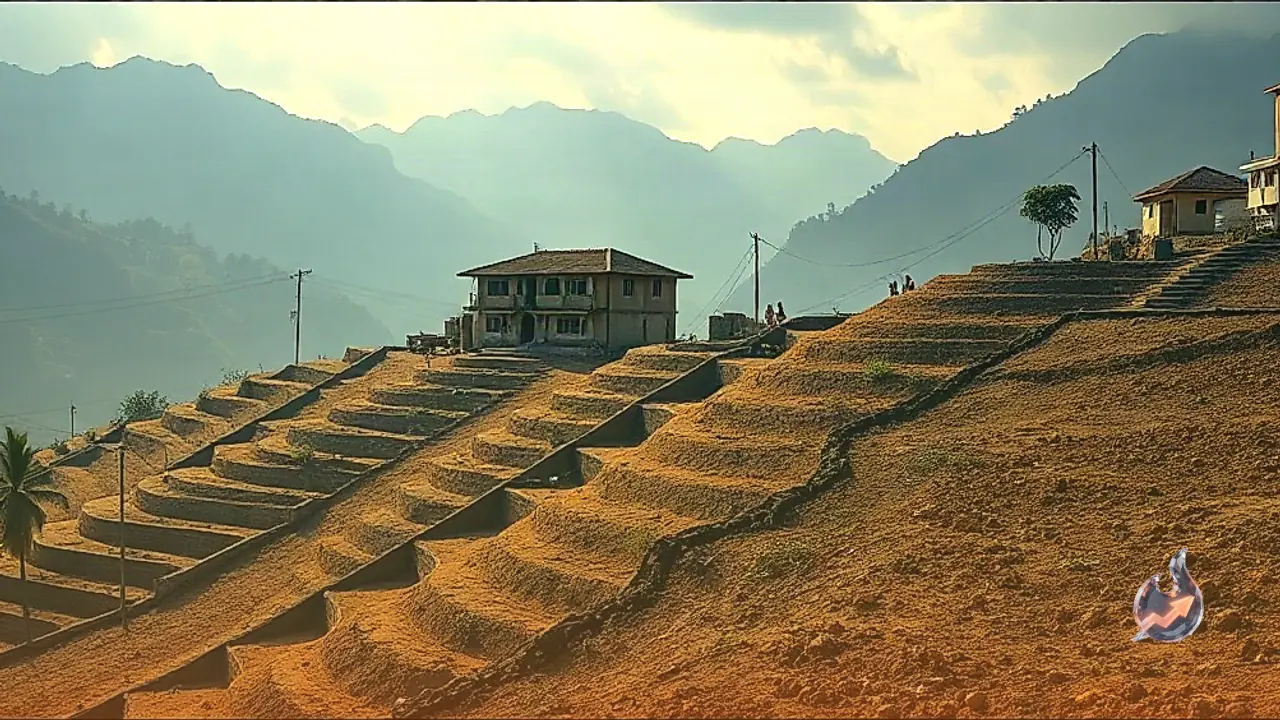

The unique terraced terrain of Uttarakhand's hills, while traditionally seen as a physical challenge for mechanized farming, presents exceptional potential when matched with high-value cash crops. Across multiple higher-altitude pockets of the state, cultivators have historically engaged in potato farming as a household practice. In Bageshwar district, small and marginal cultivators are increasingly turning to this root crop as a viable pathway to boost household revenues. Even on constrained hill plots, potato farming can deliver impressive economic returns, provided that farmers strictly adhere to scientific recommendations regarding site selection, soil conditions, certified seed material, row spacing, and soil moisture management.
Terrace Drainage and Direct Sunlight Exposure
The foundational step in hill potato production is choosing the right parcel of land across the slope. Fields must feature adequate natural drainage so that irrigation or rainwater does not pool around plant roots. Terraced plots offer a distinctive structural benefit because their natural slope facilitates the seamless runoff of excess moisture. Alongside proper drainage, unhindered exposure to direct sunlight is vital for tuber growth. Locating potato beds in excessively shaded pockets under dense tree lines or deep valley shadows impairs foliage vitality, curtailing tuber sizing and overall harvest weight.
Soil Tilth and Balanced Organic Conditioning
Root and tuber vegetables require a loose, aerated soil matrix to expand freely without mechanical resistance. According to local agricultural specialist Anand Prakash from Bageshwar, friable, nutrient-rich loam or sandy loam with good drainage properties serves as the ideal growing medium for potatoes. Waterlogging inside the field elevates the threat of tuber rot and harmful soil-borne pathogens. Prior to planting, the field should undergo thorough tilling to pulverize hard clods and achieve a fine tilth. Incorporating well-decomposed farmyard manure or quality organic compost substantially enhances the soil structure and nutrient retention capacity.
Balancing Inter-Row and Inter-Plant Spacing
Maintaining optimal spatial balance between tubers during planting is critical to harvest quality. Standard agricultural recommendations suggest an inter-row spacing of approximately 45-60 centimeters, combined with a plant-to-plant distance of around 15-20 centimeters within each row. Given the variation in microclimates, elevation profiles, and seed tuber sizes throughout the hills, seeking localized guidance from agricultural officers remains best practice. Overly congested sowing deprives expanding tubers of soil volume, leading to congested clusters of underdeveloped, undersized produce that struggle to fetch premium market rates.
Certified Seed Selection and Field Maintenance
Yield stability hinges largely on using certified, healthy, and disease-free seed stock. Rather than using excessively large potato tubers as planting material, cultivators should select well-formed, medium-sized seed tubers. Obtaining technical advice from the local agriculture department on seed dressing treatments and balanced fertilizer application is strongly recommended. Planting schedules in mountainous zones naturally shift depending on regional elevations and local weather trends. After sowing seeds into prepared furrows and ridging them with soil, growers must carry out regular weeding, hoeing, and timely earthing-up to keep tubers shielded from sunlight while maintaining optimal root zone moisture without standing water.
Market Timing, Cost Structure, and Profit Realization
Hill-grown potatoes consistently command healthy consumer demand across both regional and urban markets due to their distinct culinary quality. Nevertheless, farmgate prices fluctuate based on season, harvest volume, tuber grading, and demand patterns across mandis. Growers should track prevailing price trends across local traders, wholesale markets, and cooperative societies prior to liquidating their harvest. High-grade, uniformly sized tubers regularly secure premium pricing. Net profitability ultimately depends on controlling expenditures related to seed procurement, fertilizers, field labor, irrigation, and post-harvest transit, making prior consultation with agricultural extension centers essential before scaling commercial operations.