





















Nearly twenty-five years ago, the hills of Uttarakhand echoed with a passionate cry demanding a separate state. That slogan was not merely a chant but an aggressive pursuit of identity, rights, and a better tomorrow. A quarter of a century has passed since the state was carved out, yet the younger generation in those very mountains has taken to the streets once again. This time, the struggle is not for a distinct territory but for the fundamental right to be taught by actual educators.
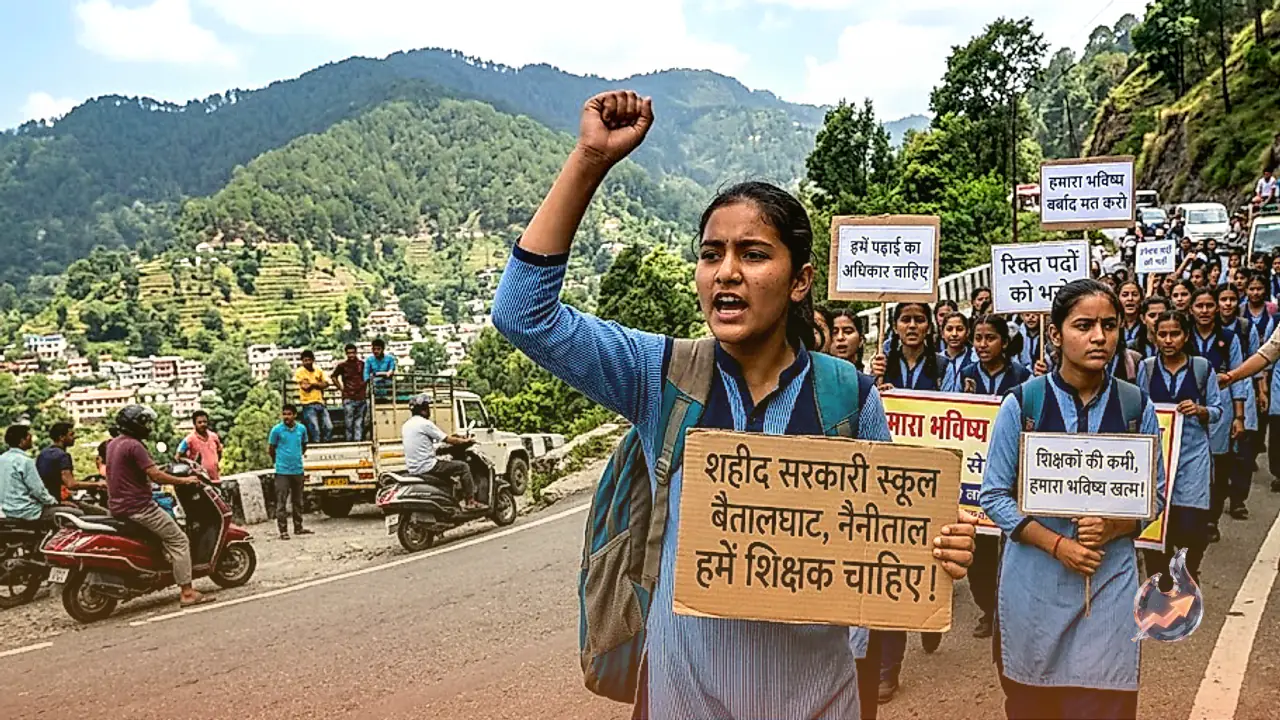
A video capturing female students from the Government Girls Inter College in Betalghat, located within the Nainital district, has recently surfaced across social media platforms. The footage shows these young scholars holding their textbooks high while chanting slogans demanding teachers immediately. The students emphasize that the severe shortage of faculty inside their classrooms is directly damaging their education and jeopardizing their upcoming futures.
According to official records detailing the school staffing structure, a total of nine lecturer positions are officially sanctioned at the intermediate level. Shockingly, not a single one of these designated posts is currently filled, leaving every intermediate teaching position completely vacant. Furthermore, out of ten sanctioned positions at the graduate teaching level, five have remained unoccupied for an extended period. With fourteen out of nineteen total sanctioned positions lying empty, the students face a grim reality.
Children belonging to the modern generation are growing up amid advanced digital learning, artificial intelligence, and online educational tools. Global discussions frequently focus on preparing young minds for future technological shifts and modern employment landscapes. However, the students of Betalghat face a far more basic dilemma regarding who will actually instruct them. While authorities boast about modernizing school infrastructure, government institutions in hilly regions continue to suffer from chronic vacancies.
This grim snapshot is hardly isolated to Betalghat, as hilly regions across Uttarakhand have long battled teacher shortages. Previous data highlighted that over a thousand primary schools across the state operated without a single resident teacher. Such stark realities raise serious questions about the administrative ground framework, directly impacting long-term career prospects and competitive readiness.
State Education Minister Dhan Singh Rawat has repeatedly asserted that educational frameworks are improving alongside modern study models and reliable staff availability. Yet, the open protest staged by Betalghat students severely challenges those administrative claims. The chronic issue of postings in remote areas followed by rapid transfers to urban centers remains an unresolved administrative hurdle.
The protesting students have now announced an unyielding stance, demanding that all vacant educator roles be filled promptly to safeguard their academic calendar. While the slogans echoing through the mountains may have shifted from statehood demands to educational necessities over the last twenty-five years, the core question remains whether rural children will ever receive equitable educational opportunities.