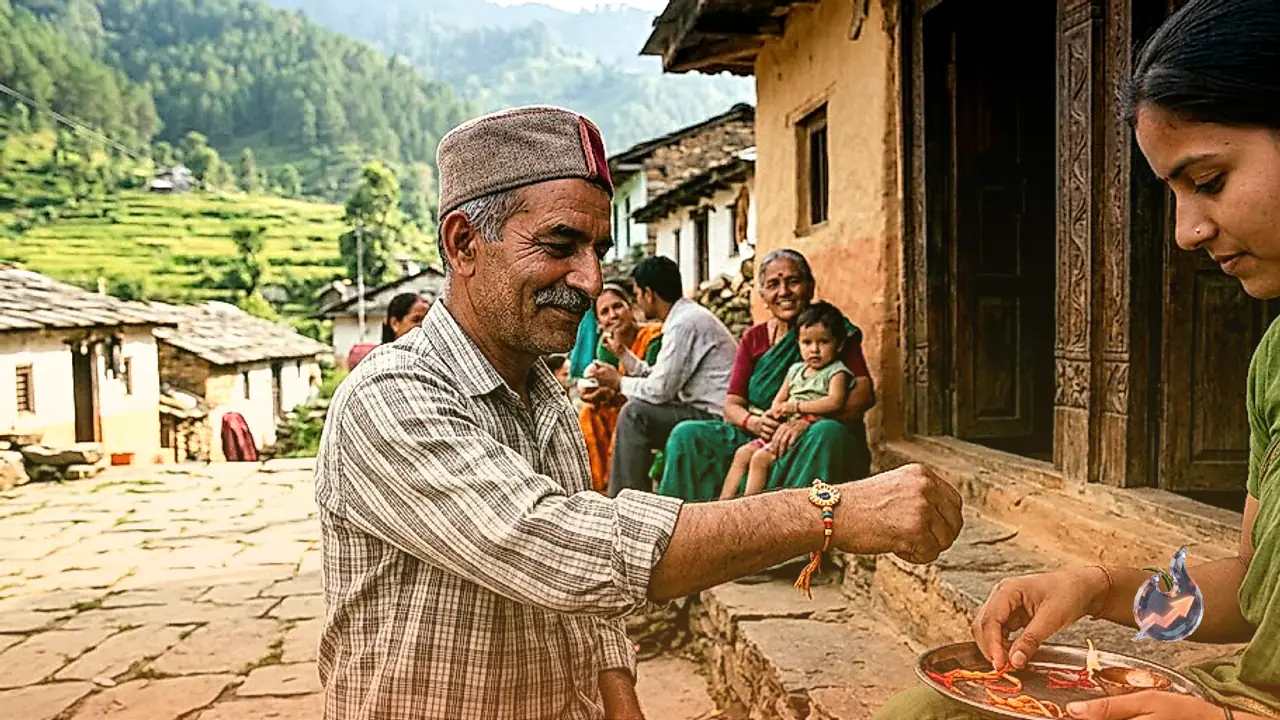





















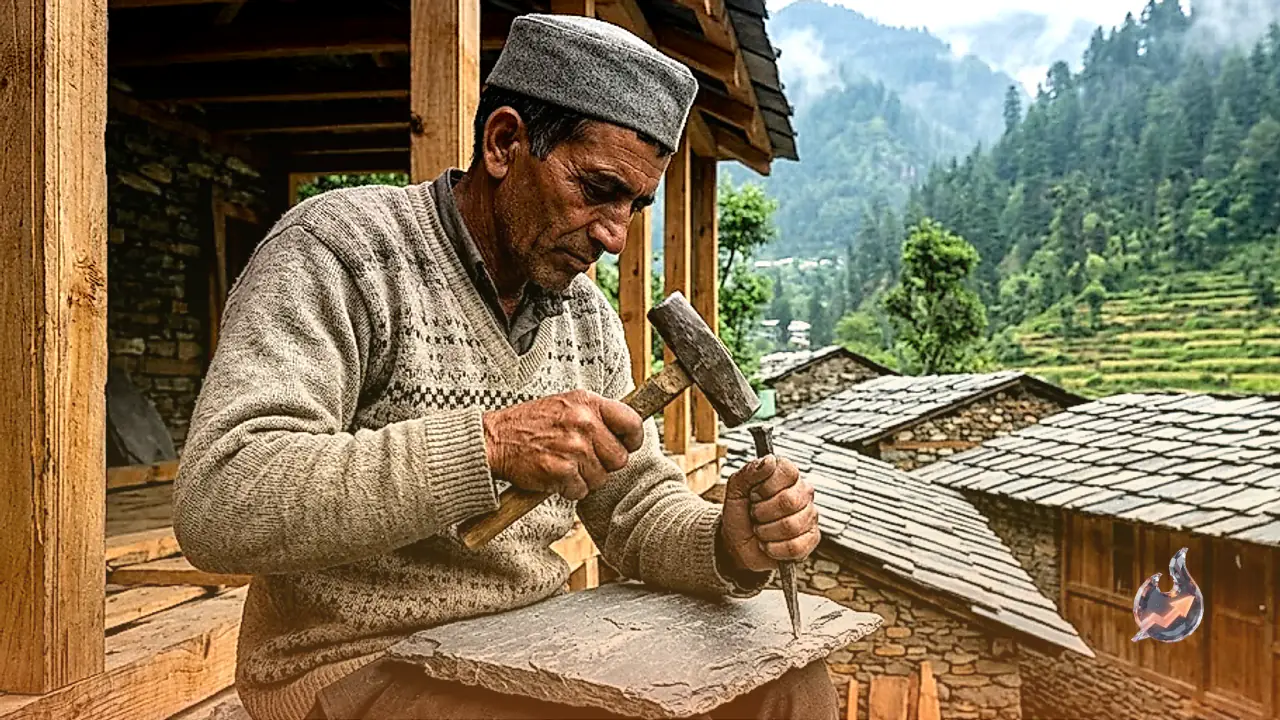

Old houses in the hilly regions of Uttarakhand have long been identified by their distinctive slate roofs. In the local dialect, slate is referred to as stone slabs. When constructing homes in the mountains, builders always took local weather patterns and available natural resources into careful consideration. This is precisely why slate became the preferred material for roofing. When viewed from a distance, rows of these neatly arranged slate tiles gave mountain dwellings a unique and striking appearance.
Local expert Kishan Malda explains that the rainy season in the mountains is notably long and often intense across many areas. To counter this, house roofs were designed to ensure rainwater could drain away rapidly. Slate roofs were constructed with a steep slope so that rainwater did not linger on the stones for long, flowing downward swiftly due to gravity. This significantly minimized the problem of water accumulation on the roof. When installed correctly, these stone slabs could withstand heavy downpours over extended periods.
High-altitude regions of Uttarakhand experience severe snowfall during the winter months. In such zones, the structural design of the roof was of paramount importance. The inclined layout of a slate roof allowed snow to slide down gradually rather than accumulating excess weight that could burden the structure. However, in heavy snow zones, the strength and steepness of the roof were customized according to local environmental conditions. Traditional artisans built these structures relying entirely on their deep understanding of local weather and geography.
Gale-force winds sweep through numerous locations across the mountains, requiring roofing materials that could endure for the long haul. Slate tiles are heavy and durable, meaning they were meticulously arranged over wooden frameworks or other robust supports. When constructed properly, the risk of these roofs blowing away during fierce winds was considerably lower compared to lighter roofing alternatives. Experienced local craftsmen traditionally handled the complex task of laying slate in old mountain homes.
The utility of slate and stone extended beyond merely strengthening the roof; they also played a crucial role in maintaining balanced indoor temperatures. Stone absorbs and releases heat very gradually. Consequently, the interior environment of these homes remained relatively cool during scorching summers and retained a balanced warmth during biting winters compared to the external weather. In mountainous terrains where daytime and nighttime temperatures fluctuate wildly, this traditional architectural trait proved exceptionally useful.
Transporting construction materials from distant locations was a daunting task in the mountains in earlier times, as roads and transport infrastructure were far from developed. Under such circumstances, builders utilized locally sourced stones for house construction. Because slate stone was readily available across many mountainous tracts, residents naturally adopted it for their roofs, which drastically reduced transportation costs and physical effort. Homes were built using local stones, timber, and mud.
The durability and resilience of slate are considered among its primary attributes. A roof built with high-grade slate and a sturdy framework could last for generations. Over time, damaged or displaced slabs could be replaced individually to repair the roof, eliminating the need to tear down and rebuild the entire structure repeatedly. Even today, slate roofs can still be spotted in several pockets of older villages. Nevertheless, incessant rainfall, heavy snow, harsh sunlight, and a lack of regular maintenance have taken a toll on many of them.
Construction methods in the mountains have undergone significant shifts with the passage of time. Nowadays, many residents opt for tin, cement, and other modern building materials instead of traditional slate. Installing these contemporary materials is often faster and more convenient in various situations. Despite this transition, slate roofs continue to serve as a vivid reminder of Uttarakhand's rich traditional architecture, local craftsmanship, and mountain lifestyle, often drawing admiration from tourists and heritage enthusiasts in old rural settlements.