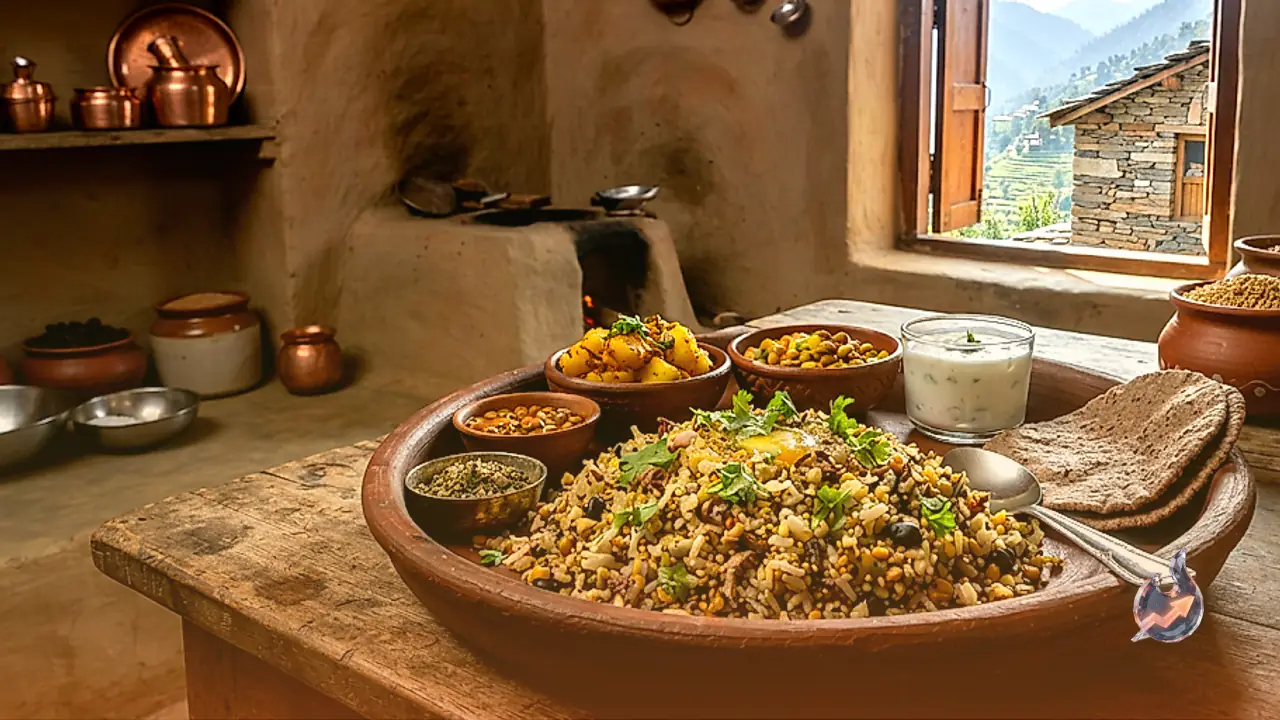

The mountainous regions of Uttarakhand boast a distinct culinary heritage that has been preserved across generations. Local kitchens feature numerous indigenous dishes and ingredients that have formed a core part of the local diet for decades. Among these is Naurangi Atta, a traditional multigrain flour that highlights the food culture of the hills. This flour is easily prepared right at home by purchasing various grains from the market, cleaning them thoroughly, and getting them milled together. It serves as a true reflection of the region's rich agricultural traditions and healthy eating habits.
Formulated From Nine Distinct Grains
According to local expert Santoshi Tamta, preparing Naurangi Atta requires the use of nine specific grains and seeds. These include wheat, finger millet (mandua), barnyard millet (jhangora), maize, barley, black soybean (kala bhatt), chickpea, amaranth (chhaulai), and flaxseed (alsi). All these ingredients are blended in a precise ratio. The notable aspect of this blend is the inclusion of coarse grains traditionally grown and consumed in the mountains. To prepare about five kilograms of Naurangi Atta at home, one typically takes three and a half kilograms of wheat and five hundred grams of finger millet. The remaining one kilogram consists of a mix of jhangora, maize, barley, kala bhatt, chickpea, chhaulai, and alsi, with exact proportions adjusted based on personal preference and availability while keeping the total weight at five kilograms.
The Step-by-Step Preparation Process
Making Naurangi Atta involves a meticulous cleaning and processing routine. Initially, every grain is cleaned individually to remove stones, dirt, husks, and other impurities. Following this, the grains are washed thoroughly with water and then spread out on clean cloths, large trays, or clean surfaces. In the next phase, the grains are sun-dried for one to two days to ensure no moisture remains. Afterward, the black soybeans, chickpeas, and flaxseeds are roasted separately over a low flame, taking care not to use high heat. Once all the individual components are fully prepped, the wheat, millets, and remaining grains are mixed together thoroughly before being taken to a flour mill for grinding.
Milling and Proper Storage
During the milling process, care is taken to ensure that all the diverse grains are ground uniformly and blended cohesively. This procedure yields about five kilograms of authentic homemade Naurangi Atta. Once the freshly ground flour cools down completely, it is transferred into a clean, completely dry airtight container for storage. This traditional flour is primarily used for making daily flatbreads, while also serving as a wholesome base for stuffed parathas and other regional preparations. Even as various commercial multigrain flours flood modern markets, this mountain staple continues to connect communities to their roots and ancestral nutritional wisdom.