





















A severe drinking water contamination disaster in the Jyolikote belt of Uttarakhand's Nainital district has claimed the lives of two residents, prompting a sharp administrative crackdown. Following direct instructions from Chief Minister Pushkar Singh Dhami and the submission of an inquiry findings dossier by the district administration, six public health and water infrastructure engineers were placed under immediate suspension. The punitive measures target technical personnel accused of gross dereliction of public duties while overseeing municipal water supply networks.
Disciplinary Measures Strike Technical Personnel Across Agencies
The punitive suspensions cover key officials across two distinct state utilities. The action removed the Haldwani-based in-charge superintending engineer of Jal Sansthan, alongside the utility's assistant engineer and additional assistant engineer stationed at Nainital. Concurrently, the drinking water corporation's Bhimtal division saw three of its officers suspended, specifically the executive engineer, in-charge assistant engineer, and junior engineer. In addition, an executive engineer from the Nainital Jal Sansthan received a formal administrative warning outlining severe consequences should any future lapses occur under their watch.
Infection Spreads Across Hill Hamlets Following Supply Taint
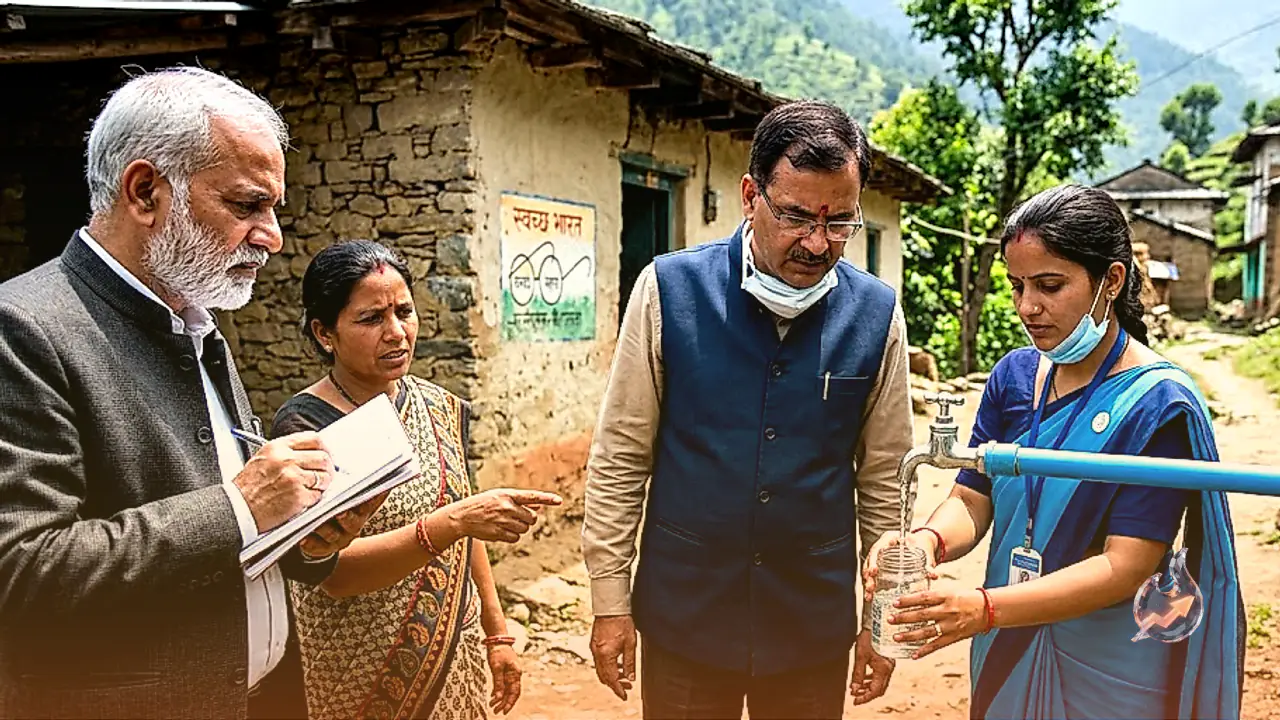
Piped water networks feeding Jyolikote and adjoining settlements delivered fouled supplies that quickly triggered an escalating medical emergency. Several residential clusters reported waves of waterborne ailments, with Beluwakhan, Gethiya, Sadiyatal, Durgapur, Ganja, Veerbhatti, and Chheena suffering extensive illness. Clinical evaluations identified jaundice as a prevalent affliction among numerous patients presenting at regional clinics.
The unfolding tragedy reached a critical juncture when a 16-year-old student and a 26-year-old woman succumbed to the infections, sparking widespread public alarm. District authorities subsequently expanded field relief efforts. Health teams conducted door-to-door visits throughout affected villages to supply oral rehydration salts alongside chlorine purification tablets, while deploying eight dedicated medical doctors and a standby ambulance to the zone.
High Court Terms Outbreak an Epidemic and Mandates Direct Oversight
The unfolding crisis drew intense judicial intervention from the Uttarakhand High Court. During proceedings conducted on September 8, the court instructed authorities to restore clean water delivery and ensure comprehensive healthcare infrastructure across Jyolikote and surrounding settlements. Bench observations described the outbreak as an epidemic, commanding Nainital District Magistrate Lalit Mohan Rayal to personally supervise all ongoing field relief operations.
Appearing during the public interest litigation hearing, Nainital Chief Medical Officer Dr. Rashmi Pant verified before the bench that fouled tap water served as the underlying catalyst for the rampant illnesses. Responding to the findings, the court mandated that water sample verifications must not depend exclusively on internal departmental evaluations, ordering supplementary testing through accredited private laboratories.
Infrastructure Audit Ordered to Prevent Underground Cross-Contamination
Judicial directives instructed both Jal Sansthan and the drinking water corporation to inspect subsurface utility lines to guarantee that underground sewage conduits do not breach potable water pipes. Officials must execute water quality sampling and sewer leakage inspections across 20 to 25 distinct testing locations throughout Nainital town.
The court further mandated that external specialists be brought in promptly if local medical teams lack adequate domain expertise to handle the patient surge. Additionally, the bench directed the relevant departmental secretary to expedite an executive ruling regarding the proposed creation of a specialized regional water testing laboratory serving the Kumaon belt.