






















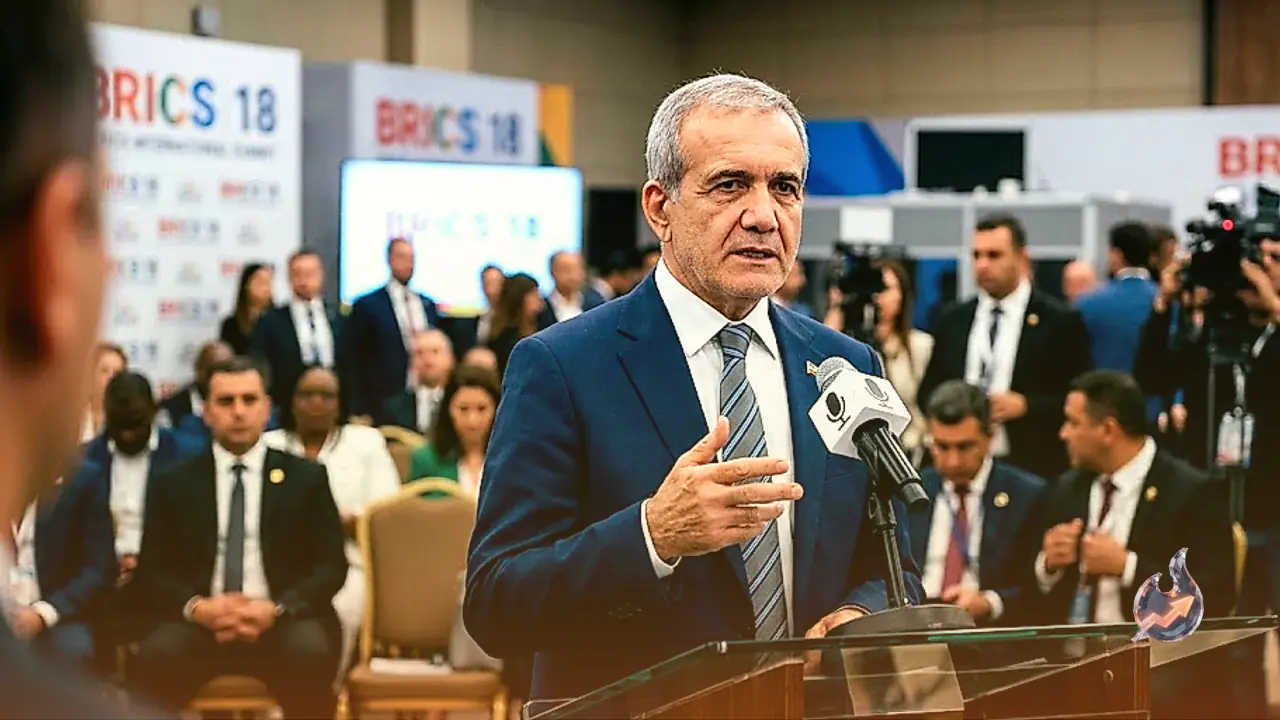

Speaking at the second session of the 18th BRICS Summit hosted under India's presidency, Iranian President Masoud Pezeshkian called on the bloc to take a more proactive role in safeguarding national sovereignty and preventing the use of military force. He emphasized that the legitimacy of international law is severely undermined when global institutions fail to respond effectively to military aggression, civilian casualties, and the destruction of human lives.
Strengthening International Law and Civilian Protections
Addressing the summit, President Pezeshkian stressed that the international community carries an unavoidable responsibility to protect innocent populations during armed conflicts. He warned against the dangerous normalization of military strikes targeting non-combatants and civilian infrastructure. According to the Iranian leader, member nations of the BRICS grouping must actively collaborate to uphold territorial integrity and enforce principles that deter aggressive military actions across regions.
Addressing Economic Sanctions and Financial Cooperation
Shifting focus to economic stability, Pezeshkian highlighted how unilateral sanctions have evolved beyond mere financial measures to directly threaten global food security and public welfare. To counteract these economic pressures, he advocated for expanding trade in local national currencies among BRICS countries. Furthermore, he urged member states to reinforce the New Development Bank (NDB) to build resilient collective capacities, noting that long-term economic growth cannot be sustained without a foundational framework of security.
Global Consequences of Infrastructure and Energy Attacks
Reflecting on recent military actions conducted by the United States and Israel against Iranian territory, Pezeshkian pointed out that attacks on a nation's energy systems, developmental assets, and core economy do not remain isolated within national borders. Such disruptions quickly cascade into broader regional and worldwide instability. He detailed the severe toll borne by the Iranian population, citing the tragic loss of lives among men, women, and children, along with the extensive damage inflicted upon vital infrastructure built over decades of effort.


