














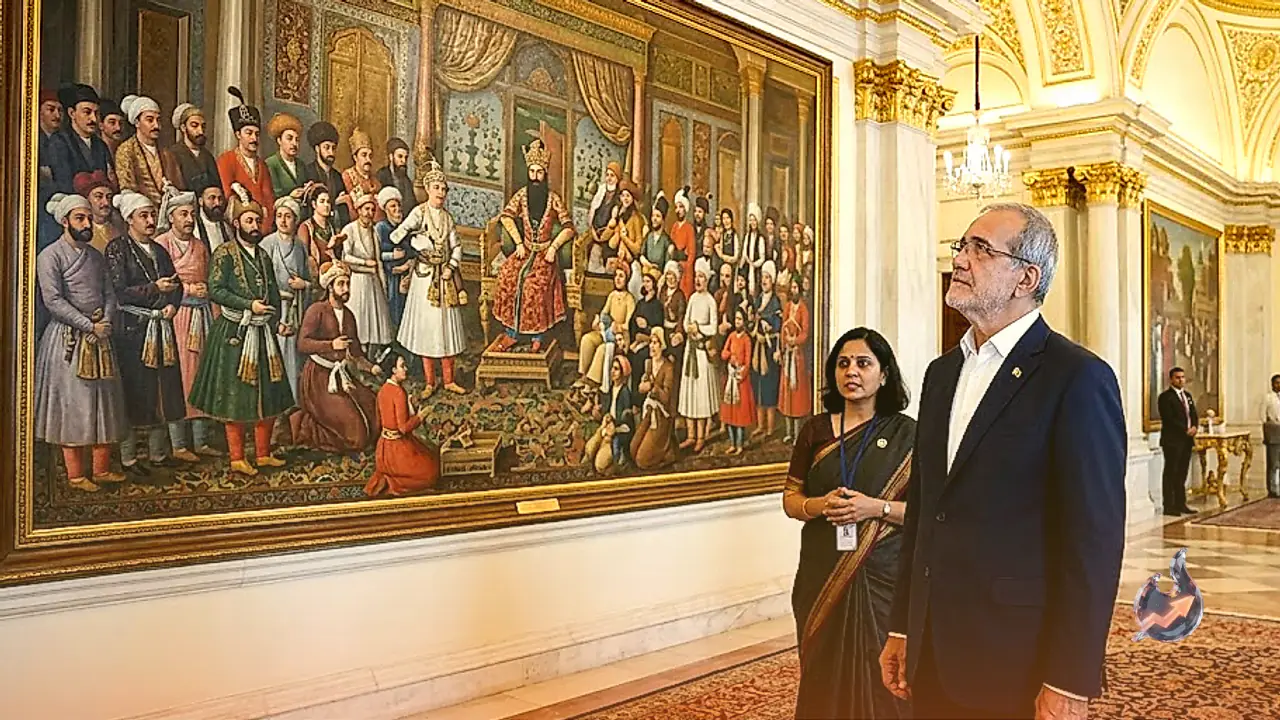

During his visit to India for the BRICS summit, Iranian President Masoud Pezeshkian toured Rashtrapati Bhavan, where his itinerary extended beyond high-level political meetings to include a historic section of the presidential palace. Formerly known as the Iranian Hall and now designated as the Ashoka Mandap, this chamber features a massive Persian painting on its ceiling dating back to approximately 1810. The artwork portrays Qajar dynasty ruler Fath Ali Shah engaged in a hunting expedition. The Iranian President's visit to this specific hall is significant as it embodies the centuries-old cultural connections shared between India and Iran. Amidst the diplomatic engagements of the BRICS summit, this historic landmark provided a tangible link to the past.
Transformation of the Ashoka Mandap and Its Architecture
This section of Rashtrapati Bhavan was originally recognized as the State Ballroom before being officially renamed the Ashoka Mandap in 2024. Despite the change in nomenclature, the interior decoration continues to reflect a distinct blend of Persian and Indian artistry. A monumental painting of Fath Ali Shah adorns the ceiling of this grand hall. According to official records maintained by Rashtrapati Bhavan, the masterpiece was created by Mehr Ali, a renowned court painter of the Qajar dynasty. The composition depicts the Iranian monarch hunting alongside his 22 sons. A notable characteristic of the artwork is its optical illusion, where viewers standing in any corner of the room perceive the ruler's gaze fixed directly upon them.
The Journey of the 1810 Painting to Rashtrapati Bhavan
The provenance of the artwork is remarkably fascinating. Fath Ali Shah originally presented this piece as a royal gift to British King George IV. Subsequently, the artwork was transferred to the India Office Library in London before making its way to India. During the tenure of Viceroy Lord Irwin around 1929, the painting was installed on the ceiling of the State Ballroom within the then Viceroy's House, which is now Rashtrapati Bhavan. To further embellish the hall, Lady Willingdon commissioned Italian artist Tommaso Colonello. Working alongside 12 Indian artists, he expanded the forest and hunting themes across the ceiling and walls. Persian inscriptions and illustrations depicting royal processions were also integrated into the hall, complemented by Belgian chandeliers that enhance its grandeur.
Legacy of Fath Ali Shah and Qajar Art
Fath Ali Shah reigned over Iran from 1797 to 1834 as the second Shah of the Qajar dynasty. His reign witnessed a notable promotion of court culture and imperial arts. The painting preserved at Rashtrapati Bhavan serves as a prime example of the artistic style prevalent during that era. The artwork emphasizes the grandeur of the sovereign, using the hunting motif not merely as entertainment, but as a visual assertion of royal magnificence and political authority. Consequently, the painting remains an important symbol of the enduring cultural ties between India and Iran.
Significance of Pezeshkian Visiting the Historic Hall
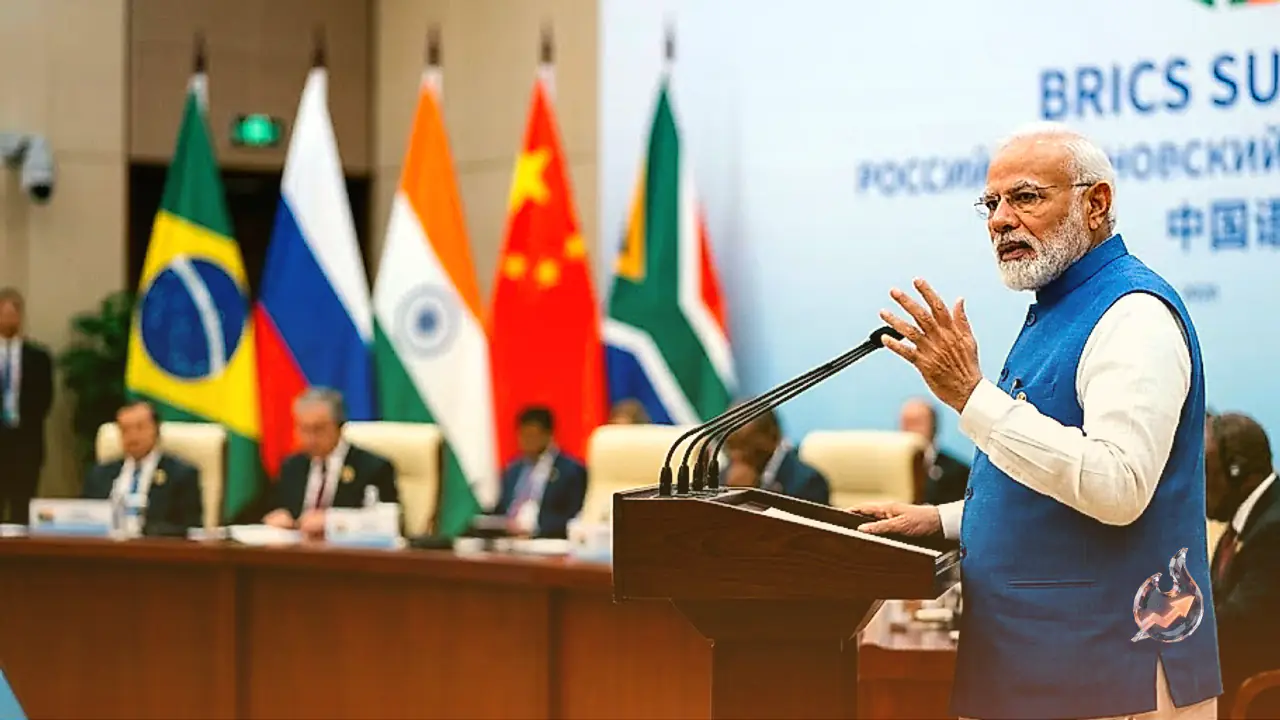
The visit of Masoud Pezeshkian to the Ashoka Mandap carries considerable weight as it coincided with high-level discussions between the top leadership of India and Iran. Throughout the BRICS summit, Masoud Pezeshkian held meetings with Prime Minister Narendra Modi and President Droupadi Murmu. These deliberations encompassed bilateral relations as well as pressing regional and international matters. Indian media reports highlighted the Iranian President's observation of the Persian artwork during his tour of the presidential residence. This tour demonstrates that the relationship between India and Iran possesses a vital cultural dimension, underpinned by historical ties in Persian language, literature, art, and architecture.
The Intersection of History and Modern Diplomacy
Modern relations between India and Iran are anchored by strategic priorities such as energy cooperation, bilateral trade, regional connectivity, and stability, with the Chabahar port serving as a key pillar of mutual engagement. However, these contemporary ties are supported by a rich foundation of centuries-old cultural exchanges. The visit of Masoud Pezeshkian to the Ashoka Mandap serves as a reminder of this shared heritage. While global politics and economic frameworks form the core of BRICS discussions, the presence of a 200-year-old Persian masterpiece on the ceiling of Rashtrapati Bhavan underscores a deeper historical connection that transcends formal diplomatic protocols.


