
























Donald Trump Threatens 50 Percent Tariffs on Canadian Steel, Autos and PartsWorld
24 Aug 2026, 11:11 pm (57 days ago)· 5

Donald Trump Threatens 50 Percent Tariffs on Canadian Steel, Autos and Parts

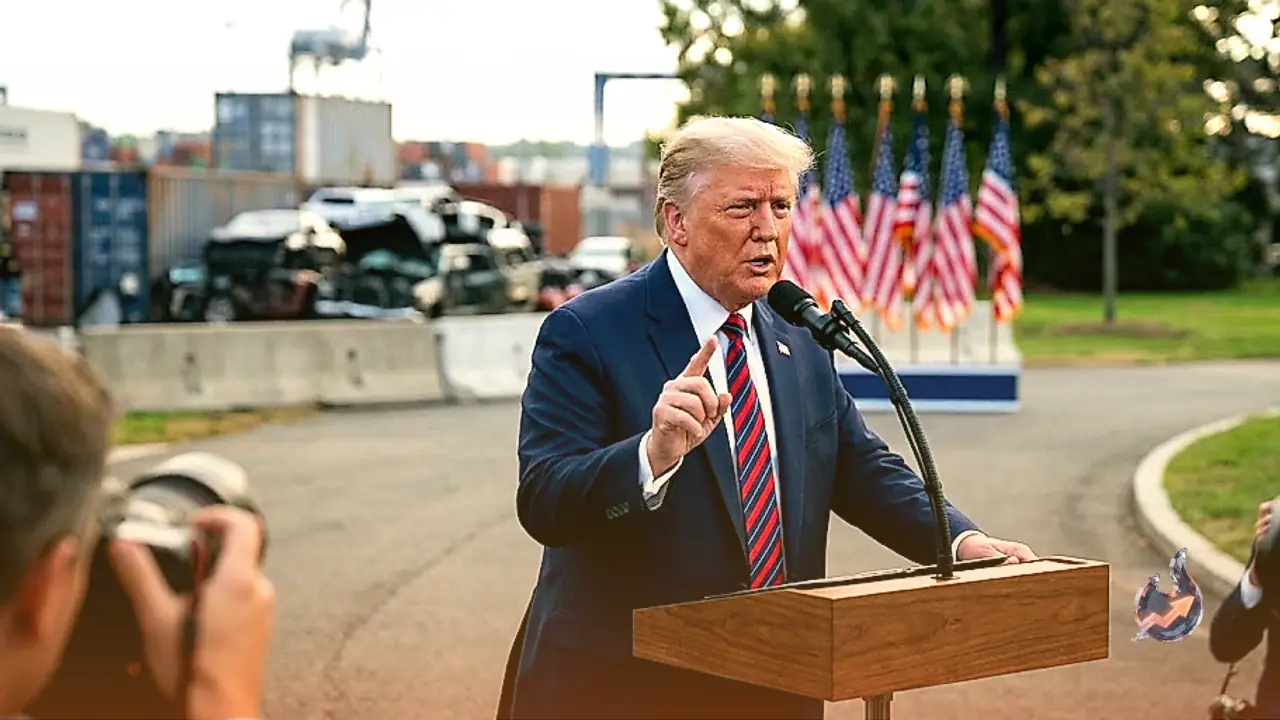
US President Donald Trump announced plans to impose a 50 percent tariff on Canadian vehicles, auto parts, and steel starting January 1 following the collapse of trade talks.

United States President Donald Trump has issued a major threat against Canada, announcing plans to levy a steep 50 percent tariff on Canadian vehicles, automotive parts, and steel starting January 1 of next year. This dramatic escalation comes directly on the heels of the collapse of trade negotiations between the two long-standing allies and trusted economic partners last week. Following the breakdown of discussions, pre-planned US tariffs immediately went into effect on several Canadian goods, prompting Ottawa to vow retaliatory measures of its own.

Outspoken Post on Social Media

Taking to social media to air his grievances, Donald Trump wrote that Canada has been taking advantage of the United States for years. Directing sharp criticism at what he termed extreme Canadian duties on American farmers, he declared that the current dynamic is completely unsustainable. He emphasized that these heavy agricultural barriers have created a long-standing trade deficit of 60 billion dollars between the two neighbors, making life exceptionally difficult for American producers and patriots.

Also read

Details of the Tariff Announcement

In his detailed post on Truth Social, Donald Trump elaborated on the upcoming enforcement measures. He stated that the status quo can no longer be tolerated and confirmed that effective January 1, 2027, tariffs on all cars, trucks of both large and small sizes, automotive components, and steel will be forcefully raised to 50 percent. He added an incentive for domestic manufacturing, noting that businesses producing goods inside the United States will face zero tariffs. Furthermore, he asserted that Canada will no longer be treated as if it were a US state.

Accusations Regarding Trade Reliance

The US President further accused Ottawa of being one of the most difficult entities to negotiate with on commercial matters. He argued that the Canadian economy relies heavily on access to the American market, whereas the US does not share a comparable dependency. He noted that while Canadian authorities often act with a sense of entitlement, the reality remains that the United States does not need Canada in the same way Canada needs the US, pointing out that our northern neighbor conducts 95 percent of its trade with the American market.

Deepening Friction in Bilateral Relations

This fresh dispute injects a profound wave of friction into the already strained diplomatic and economic ties linking Washington and Ottawa. Donald Trump has repeatedly targeted Canadian commercial strategies while revisiting previous remarks about Canada potentially becoming a US state. The sudden announcement of these punitive tariffs has sown deep uncertainty among industries whose supply chains are intricately intertwined across the shared US-Canada border.


Questions & Answers

What tariff rate did Donald Trump announce against Canada?
Donald Trump announced a 50 percent tariff on Canadian vehicles, auto parts, and steel.
When are the new tariffs scheduled to take effect?
The new 50 percent tariffs are scheduled to take effect starting January 1 of next year.
What triggered this sudden escalation in trade tensions?
The escalation was triggered by the recent collapse of trade talks between the neighboring allies and ongoing disputes over agricultural barriers.
What percentage of its total trade does Canada conduct with the US?
Canada conducts 95 percent of its total trade with the United States.

Comments 5

Carlos Mendoza@carlos-mendoza·56d ago

Donald Trump's 50 percent tariff announcement threatens to escalate the trade dispute between Washington and Ottawa to an unprecedented level. If implemented, this sweeping duty will severely disrupt deeply integrated North American automotive supply chains and drive up vehicle and steel costs for American consumers. Given Canada's heavy reliance on the US market, this aggressive economic pressure will inevitably provoke retaliatory measures from Ottawa, plunging bilateral relations into a prolonged period of intense friction.

Ayesha Siddiqui@ayesha-siddiqui·56d ago

Donald Trump's announcement of a steep 50 percent tariff on Canadian steel and automotive sectors, following the breakdown of trade talks, marks a severe blow to the North American economy. This aggressive move highlights deepening commercial friction between traditional allies. If implemented, it will severely disrupt supply chains and inflict heavy economic damage on Canada, given that it conducts 95 percent of its total trade with the US market. This unfolding scenario threatens to widen the diplomatic and economic chasm between the two neighbors.

Li Wei@li-wei·56d ago

According to Li Wei, this economic clash between Washington and Ottawa is not limited to bilateral trade alone, but carries far-reaching geopolitical implications. When the United States takes such harsh measures against its closest neighbor and traditional ally, volatility in global supply chains increases further. While this policy claims to promote domestic manufacturing, it could result in higher consumer prices and inflict permanent damage on the North American free trade framework, ushering in a new wave of uncertainty in the global market.

Karan Malhotra@karan-malhotra·56d ago

Donald Trump's decision to levy a 50 percent tariff on Canadian steel, autos, and parts blurs the lines between international trade disputes and severe economic friction. Citing a 60-billion-dollar trade deficit and agricultural policy grievances, this aggressive move threatens to disrupt vital cross-border supply chains. If Ottawa proceeds with retaliatory measures, this escalation could transform into a deep legal and economic crisis, triggering profound instability across both markets.

Arjun Mehta@arjun-mehta·56d ago

This clear geopolitical pressure raises serious questions about the credibility of decades-old economic agreements between the two nations. If this tariff weapon continues to be used to promote domestic manufacturing, American automotive assembly lines will immediately face surging production costs. In the coming weeks, it will be crucial to observe whether Canadian leadership can forge a new diplomatic path or if economic divides will widen further.

Citizen journalism

Become a TrendKia journalist

Voice of the people

Share news, photos and videos from your area with TrendKia and let your voice reach the nation. Every citizen a journalist.

Join now
CH 01 LIVE
TrendKia TV ON AIR
Chamar no WhatsApp