




















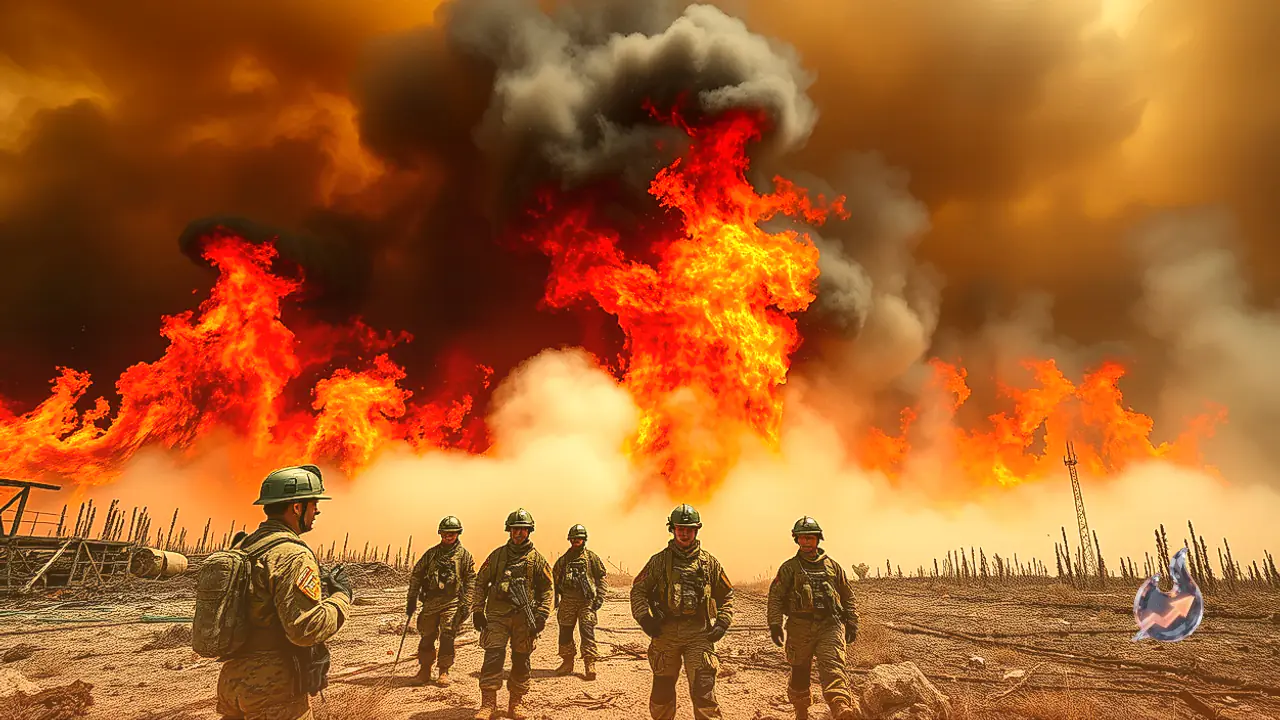

A high-intensity combat training exercise at a Canadian military base in Alberta ended in catastrophe when a fast-moving fire swept across the training grounds, killing four soldiers and injuring 39 others. Medical officials confirmed that 19 of the injured personnel remain in critical condition with severe burns. Military leadership disclosed that commanders on the ground had been aware of a fire burning on the base grounds hours before disaster struck, but they allowed the drills to proceed after determining that the flames were adequately suppressed. That assessment proved fatal when sudden atmospheric changes caused the fire to erupt directly toward troop positions.
Flames Covered One Kilometer in 36 Seconds After Wind Shift
Defense officials explained that base personnel had initially detected the fire hours ahead of the deadly incident. At that stage, monitoring teams believed the perimeter had been sufficiently contained to prevent any hazard to the exercise areas. However, an abrupt and violent change in local wind direction transformed the smoldering brush into a massive, rapidly advancing wall of fire. The sudden shift left the troops stationed in the field with virtually no escape corridor.
Addressing reporters during a news conference in Edmonton, Major General Wade Rutland stated that before the wind shifted, the main fire line was approximately one kilometer away from the personnel. He noted that a grass fire traveling an entire kilometer in roughly 36 seconds is completely extraordinary and outside normal fire behavior patterns. Rutland relayed accounts from an on-site field commander, explaining that the soldiers did not see any smoke or flames near their immediate perimeter at first, yet in under 60 seconds, the blaze materialized directly in front of them, completely engulfing the position before defensive action could be taken.
Troops Were Prepping for Latvia Deployment and Crisis Response
The tragedy unfolded on Saturday as soldiers assigned to Charlie Company of the 3rd Battalion, Princess Patricia's Canadian Light Infantry, conducted intensive tactical drills. A total of roughly 84 soldiers were participating across two separate tactical groups. One contingent was positioned in a designated live-grenade training range, while the second group was executing mock assault maneuvers against simulated enemy fortifications. The wildfire swept directly through this second assault training sector.
Military investigators have not yet pinpointed the precise origin or ignition source that started the grass fire on the base. Major General Rutland explained that the battalion was actively undergoing readiness training for rapid response deployments to address urgent global or domestic crises. Furthermore, these personnel were scheduled to deploy next spring on a vital mission to bolster Canadian forces currently stationed in Latvia, making these intensive live-action drills a core part of their operational readiness cycle.
Nineteen Patients Critical as Regional Hospitals Mobilize
Alberta Premier Danielle Smith confirmed that medical personnel are actively treating 39 injured soldiers across the region. Sarah Gelcke, chief executive officer of Acute Care Alberta, detailed the medical condition of the victims, noting that 19 soldiers remain in critical condition, eight are listed as stable, and 12 others are receiving standard treatment for less severe injuries. Smith underscored the gravity of the trauma, stating that several soldiers suffered catastrophic burns that will necessitate weeks or even months of specialized, intensive medical interventions.
Provincial healthcare authorities coordinated the evacuation of all casualties from the Wainwright area to four specialized trauma and regional medical centers across Alberta. Critical patients were transferred to the University of Alberta Hospital and the Royal Alexandra Hospital in Edmonton, the Foothills Medical Centre in Calgary, and the Red Deer Regional Hospital. Trauma teams and burn units at each location are providing around-the-clock emergency care.
One of Peacetime Canada's Darkest Days Sparks Half-Mast Honor
Canadian Prime Minister Mark Carney characterized the incident as one of the most devastating peacetime military disasters ever recorded on domestic soil. In tribute to the fallen personnel and in solidarity with the wounded, the Prime Minister ordered all national flags atop federal government buildings across the country to be flown at half-mast. Carney noted that the immediate families of the deceased soldiers have been officially notified by military authorities. The affected personnel encompass full-time members of the regular Canadian Armed Forces, military reservists, and soldiers temporarily assigned from multiple bases across the nation.