





















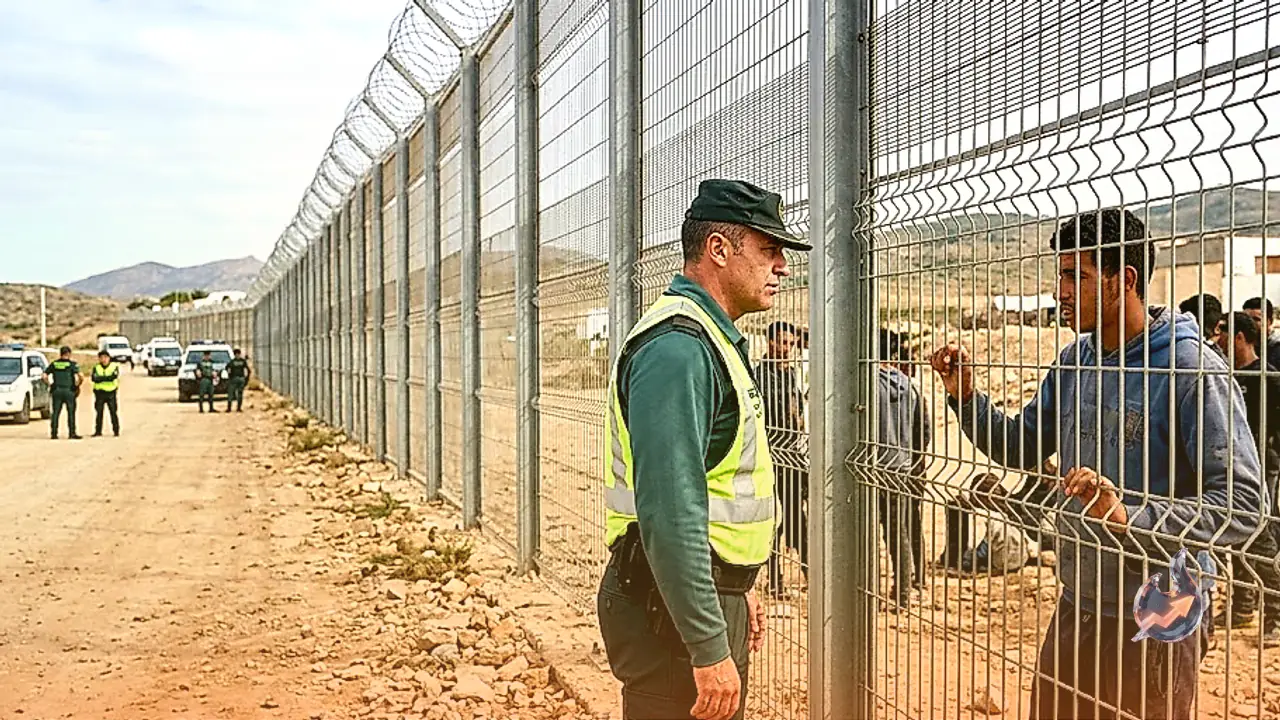

Tensions and administrative challenges have escalated across Europe following a chaotic influx of tens of thousands of migrants who crossed from Morocco into the Spanish exclave of Ceuta. In response to the developments, European Commission President Ursula von der Leyen has urged for united action and stricter border security measures across the region. The sudden crossing, which took place last week, has triggered urgent diplomatic discussions and high-level meetings among European Union member states.
Return Figures and Casualties
According to estimates provided by Spain, approximately 69,500 migrants have now returned to Morocco, a figure that surpasses initial projections of 50,000. The crisis has also resulted in significant loss of life during the border breaches and subsequent operations. Official figures indicate a death toll of 72 on the Spanish side of the border, while 11 fatalities have been recorded on the Moroccan side, highlighting the severe human cost of the unauthorized crossings.
Schengen Suspensions and Diplomatic Friction
The events in Ceuta have strained diplomatic relations among several of the European Union's 27 member states. On Tuesday, EU interior ministers are scheduled to hold an emergency video conference to debate the situation and formulate a coordinated response. In the wake of the crossings, Italy took the step of temporarily suspending the Schengen arrangement with Spain. The Schengen agreement, which abolishes internal border checks, currently encompasses over 450 million people across 29 European countries. While Finland and Denmark voiced support for Italy's decision, Czech Prime Minister Andrej Babiš went a step further by advocating for a temporary suspension of Spain's Schengen membership altogether.
Spanish Reaction and European Responsibilities
Addressing these regional developments, Spanish Prime Minister Pedro Sánchez expressed serious concerns regarding the posture of certain European governments, pointing out that Ceuta falls outside the geographical scope of the Schengen area. Sánchez remarked that while many nations demonstrated solidarity, other governments chose to criticize Spain due to prejudice, misinformation, ignorance, or domestic political interests. In her correspondence with the Spanish leader, von der Leyen praised his administration's rapid handling of the situation but maintained that protecting external borders remains a shared European obligation, recommending vigilant monitoring and physical barriers where necessary.
Five-Point Strategy for Future Border Security
Tuesday's upcoming video conference is expected to serve as a platform to draw critical lessons from the Ceuta episode. Von der Leyen emphasized that confronting illegal immigration demands a cohesive European response and mutual solidarity. She outlined a five-point approach for the EU to intensify its efforts: preventing irregular migration through international cooperation with partner states, reinforcing external borders, deploying advanced early warning systems, dismantling criminal smuggling networks, and streamlining the return of individuals who do not qualify for asylum.
Domestic Measures and Ongoing Controls
Domestically, the Spanish government has pointed to legal complications affecting immigration enforcement. Sánchez asserted that human traffickers have exploited a recent ruling by the country's supreme court that restricted the administration's authority to immediately deport individuals arriving via maritime routes. However, Interior Minister Fernando Grande-Marlaska provided an update stating that conditions had largely returned to normal, with authorities actively developing an inflatable barrier in the water to deter future illegal crossings.